
SNOOKER CUE · BUYER'S SPECIFICATION GUIDE
How to Read Snooker Cue Specifications Before You Buy
A useful specification sheet describes one physical cue, its playing configuration and the reference behind every measurement.
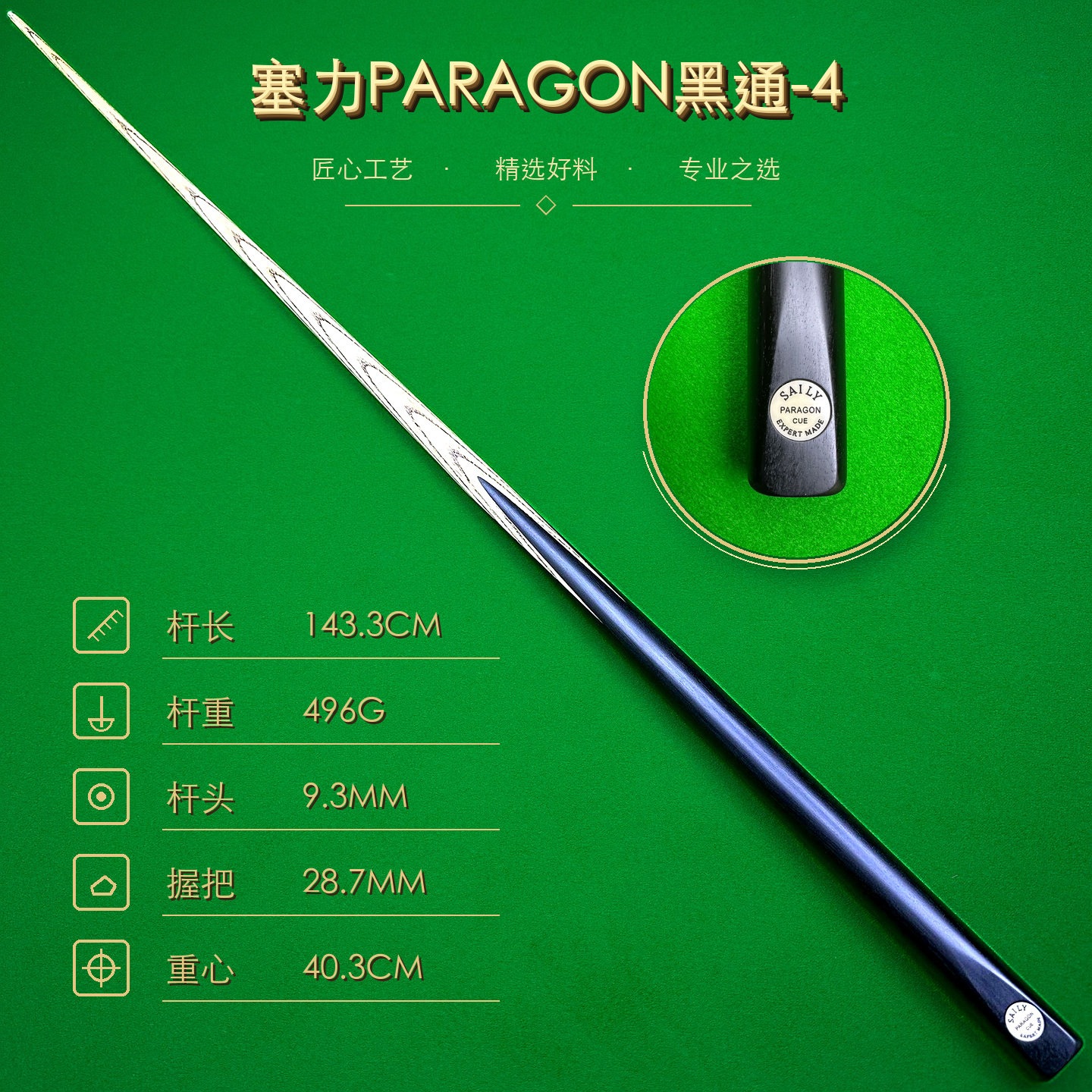
Short answer: connect every number to the exact cue, confirm whether measurements describe the complete playing configuration, and check the unit and reference point. Compare equivalent records only. Length, weight, tip size, butt diameter and balance point describe different physical facts; none is a stand-alone promise of quality or accuracy.
Start with the identity and format of the exact cue
A specification sheet is useful only when it belongs to the physical cue being offered. Record the product name, individual reference or code, current real photographs and whether the cue is one-piece, three-quarter-jointed, centre-jointed or another format. A series name alone does not prove that every cue has the same dimensions.
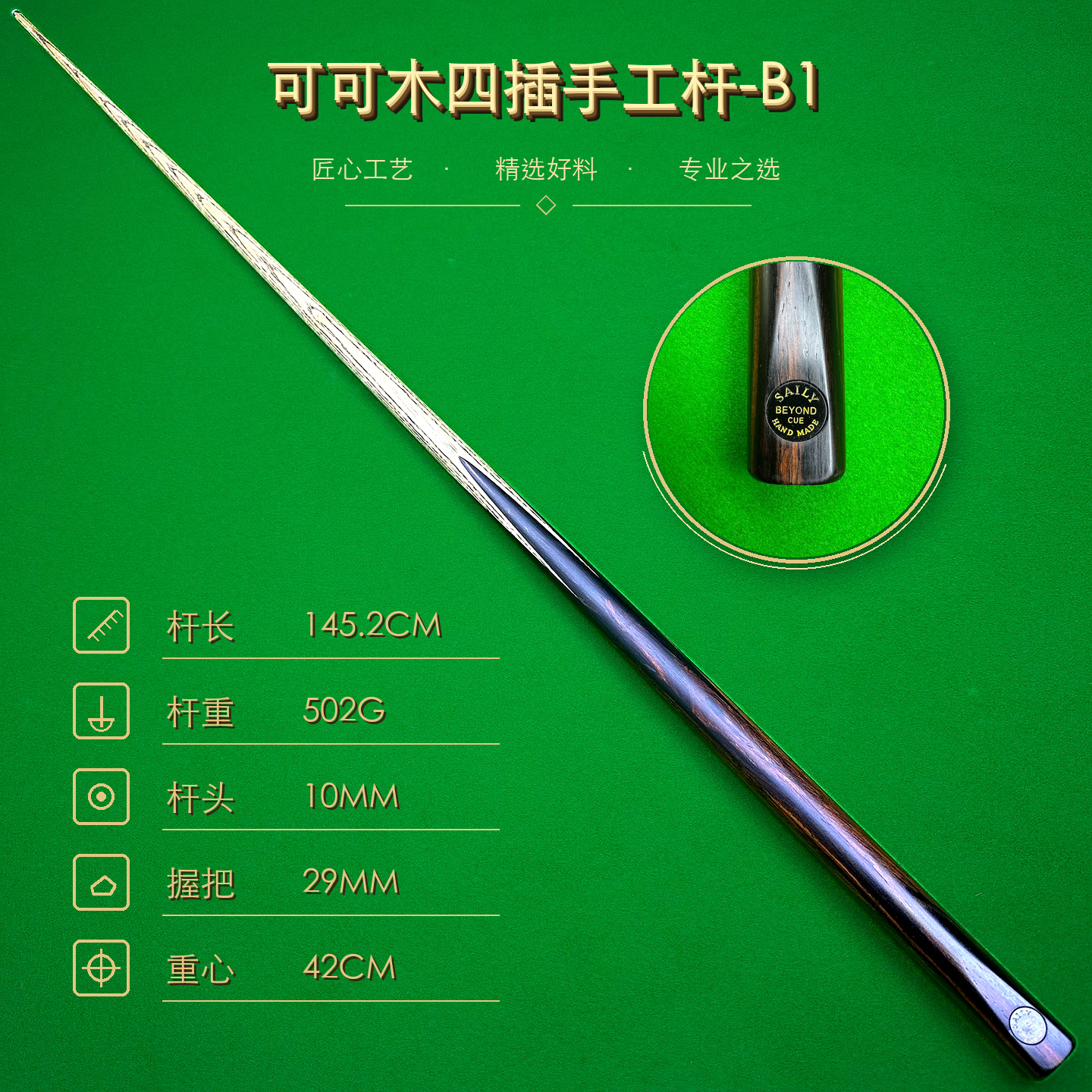
SAILY CUE's English catalogue attaches real photographs and individual references to each listed cue. For example, the Paragon Ebony Cue No. 4 and the Cocobolo Four-Splice Handmade Cue B1 have separate records. Their measurements describe those two cues, not every cue made with the same timber or construction style.
Also identify the playing configuration. A jointed cue may be weighed assembled, while an extension, joint protector or case should normally be listed separately unless the seller clearly says it is included in the figure. Ask what is installed or attached when a number was taken.
Read length and weight as complete, labelled measurements
Length should state the unit and the endpoints. The standard public SAILY CUE record uses the complete cue length in centimetres. When comparing another listing, confirm whether the measurement runs from the tip face to the butt end, whether the cue was assembled and whether any detachable extension was excluded.
The snooker cue length guide explains how to create a repeatable tip-to-butt record. Do not treat a rounded phrase such as “about 57 inches” as identical to a measured value with a clearly stated method. Conversions are useful, but the original unit should remain visible and the converted figure should not imply extra precision.
Weight should describe the complete cue in its normal playing configuration. The cue-weight guide covers stable scale placement and grams-to-ounces conversion. Ask whether a detachable extension, joint protector or packaging was included. Two numbers cannot be compared fairly if one is the cue alone and the other includes accessories.
Keep tip size, shaft diameter and butt diameter separate
Tip size normally refers to the diameter of the installed tip at its stated measuring point. It is not automatically the same as the ferrule or timber shaft behind it. The snooker cue tip-size guide explains why the measuring point, installed condition and unit belong beside the number.
Butt diameter describes a different part of the cue. Ask where it was measured: at the end, at one named point in the grip area or by another method. A circumference estimate should be labelled as an estimate rather than presented as a direct caliper reading. See the butt-diameter guide for a careful comparison method.
Do not infer one dimension from another. A 10 mm tip does not supply the shaft diameter, and a photograph cannot provide a precise butt measurement without a known scale and method. If the specification matters to your choice, request it for the exact cue.
Ask where the balance point was measured from
A balance-point number is incomplete without its reference end. SAILY CUE records the distance from the butt end for the assembled cue. Another seller may use a different reference, so confirm the end, unit and cue configuration before comparing values.
The balance-point measurement guide uses a stable support and a repeatable butt-end reference. Even with a consistent method, balance point is one physical fact rather than a complete description of feel. Total weight, length, taper, diameters, joint format and personal preference also shape how two cues differ in the hand.
Never assume that a larger or smaller balance-point number means better construction or greater accuracy. Use it to answer a fit or comparison question, then consider the rest of the record.
Check units, precision and measuring method
A strong listing explains enough for another person to reproduce the measurement. Look for the original unit, tool or method, cue configuration and reference point. If a value is estimated, it should say so. If it is converted, sensible rounding should preserve the precision of the original reading.
Be cautious when two sheets use the same label but different methods. “Butt 29 mm” may be a direct diameter at a named point, an end measurement or a circumference-based estimate. “Length 145 cm” may or may not include the tip or an attached extension. The label is not enough; the reference makes the comparison valid.
Ask the seller to measure the exact cue. Do not fill a blank from another item, a generic series description or the apparent scale of a photograph.
Compare complete records instead of chasing one ideal number
Place equivalent fields side by side: identity, format, assembled length, complete playing weight, installed tip size, stated butt reference and balance point from the same end. Add current condition, real photographs, included items and order terms. Mark any field whose method is unknown instead of treating it as directly comparable.
The snooker cue selection guide explains how length, weight, tip size and balance can enter a broader buying decision. This specifications guide serves a narrower purpose: it helps you understand whether the numbers themselves are complete and comparable.
No combination of numbers guarantees suitability. Detailed records reduce ambiguity and make follow-up questions more precise, but the player's needs and preferences still matter. Timber names, decorative style or price do not replace measurements, and measurements do not replace honest condition photographs.
Eight checks before you rely on a specification sheet
- Exact cue identity.Match the name or individual reference to the current real photographs.
- Physical format.Confirm one-piece or jointed construction and the normal playing configuration.
- Length reference.Check endpoints, assembly and original unit.
- Weight configuration.Ask which installed or detachable items were included.
- Tip measuring point.Separate the installed tip from ferrule and shaft dimensions.
- Butt reference.Identify the location and whether the value was measured or estimated.
- Balance reference.Record the end, unit and assembled condition.
- Missing facts and terms.Request unclear measurements, condition details, included items, final price, shipping and return terms.
Use the online snooker cue buying checklist to combine the specification review with photographs, condition and order questions. Keep the series name separate from the exact cue record; if the component names are unfamiliar, start with the parts of a snooker cue. Then browse the SAILY CUE collection to see how individual references, real images and core measurements appear together.
Snooker cue specifications FAQ
Which snooker cue specifications should a listing include?
A useful record identifies the exact cue and normally states its assembled length, complete playing weight, installed tip size, a clearly named butt-diameter reference and a balance point measured from a stated end. Format, condition, photographs and included items also matter.
Can I compare two cue specification sheets directly?
Only when the units, cue configuration and measuring references are equivalent. Ask how each number was taken if one seller includes a joint, extension, bumper or different reference point and the other does not.
Do detailed specifications prove that a cue is better?
No. Specifications describe physical facts about one cue. They support comparison and fit questions, but no single number or combination of numbers guarantees quality, accuracy or suitability.
What should I do when a cue listing is missing a measurement?
Ask the seller to measure the exact cue and explain the reference and unit. Do not infer a precise value from a photograph, a series name or another cue that looks similar.
SAILY CUE COLLECTION
Compare individual cue records
Review real product photographs, individual references and listed measurements, then request any missing method for the exact cue.