
SNOOKER CUE SPECIFICATIONS · BUYER GUIDE
Snooker Cue Tip Size Guide: How to Read and Compare the Measurement
Learn where a tip-size number comes from, how to check a seller’s wording and how to compare diameters without turning one measurement into a promise about your game.
Short answer: tip size normally means the diameter of the installed playing tip, stated in millimetres. Confirm the measuring point and cue configuration, then compare repeated readings in the same unit. A diameter is a specification to understand, not a guarantee of accuracy.
What “tip size” means on a snooker cue listing
When a seller writes “9.5 mm tip” or “10 mm tip”, they are usually describing the width of the leather or other playing tip where it meets the ferrule. The number is a diameter, not a radius and not the length of the tip from ferrule to crown. Millimetres are the most useful unit for this comparison because a one-millimetre difference is easy to lose when a listing mixes inches and metric figures.
Read the wording alongside the product configuration. A cue can be photographed before a tip is fitted, after a tip has been shaped, or with a replacement already installed. A seller’s “tip size” may therefore refer to an actual installed measurement or to the intended size of a replacement. If the listing is unclear, ask which one it means before comparing it with another cue in the English cue catalogue.
Where and how to check the measurement
For a simple home comparison, use a clean ruler or digital caliper and measure across the widest visible part of the installed tip, from one edge to the opposite edge. Keep the tool square to the tip rather than measuring diagonally. Do not press hard enough to compress a soft leather tip, and do not sand or reshape a new cue just to obtain a number.
- Confirm the configuration.Write down the cue model, whether it is assembled, and whether the tip has already been shaped or replaced.
- Inspect the edge.Look for a lifted edge, uneven crown or visible damage. A damaged tip can make an edge-to-edge reading misleading.
- Place the measuring tool.Measure the playing diameter at the ferrule line or the widest stable section, and state which point you used.
- Repeat the reading.Take at least two or three readings without changing the tip. Record the cluster rather than reporting precision your tool cannot support.
- Save the note.Record the unit, date, tool and whether the number came from a seller, a photograph or your own check.
A ruler is often sufficient for a broad comparison, while a caliper can help when the edge is easy to access. Neither method turns a home reading into a certification. If the tip is already heavily rounded, measure the widest consistent area and label the result as approximate.
How to compare 9 mm, 9.5 mm and 10 mm listings
First make the units and reference point match. “9 mm installed” and “10 mm replacement blank” answer different questions. Compare installed-to-installed measurements, or replacement-to-replacement measurements, and keep the tip shape and condition in your notes.
Next, look at the rest of the cue record. Tip diameter sits alongside length, total weight, butt diameter and balance point. The snooker cue balance-point guide explains why a balance number also needs a stated reference and a repeatable method. A tip figure without the surrounding specifications is a small piece of the buying decision, not a complete description of feel.
Finally, compare a seller’s number with the actual question you are asking. If you want to replace a worn tip, confirm the ferrule and technician’s available working size. If you are choosing a new cue, ask whether the listed diameter is the supplied playing setup. The complete snooker cue selection guide can then help you consider length, weight, taper and grip together.
Smaller and larger measurements: what the number can tell you
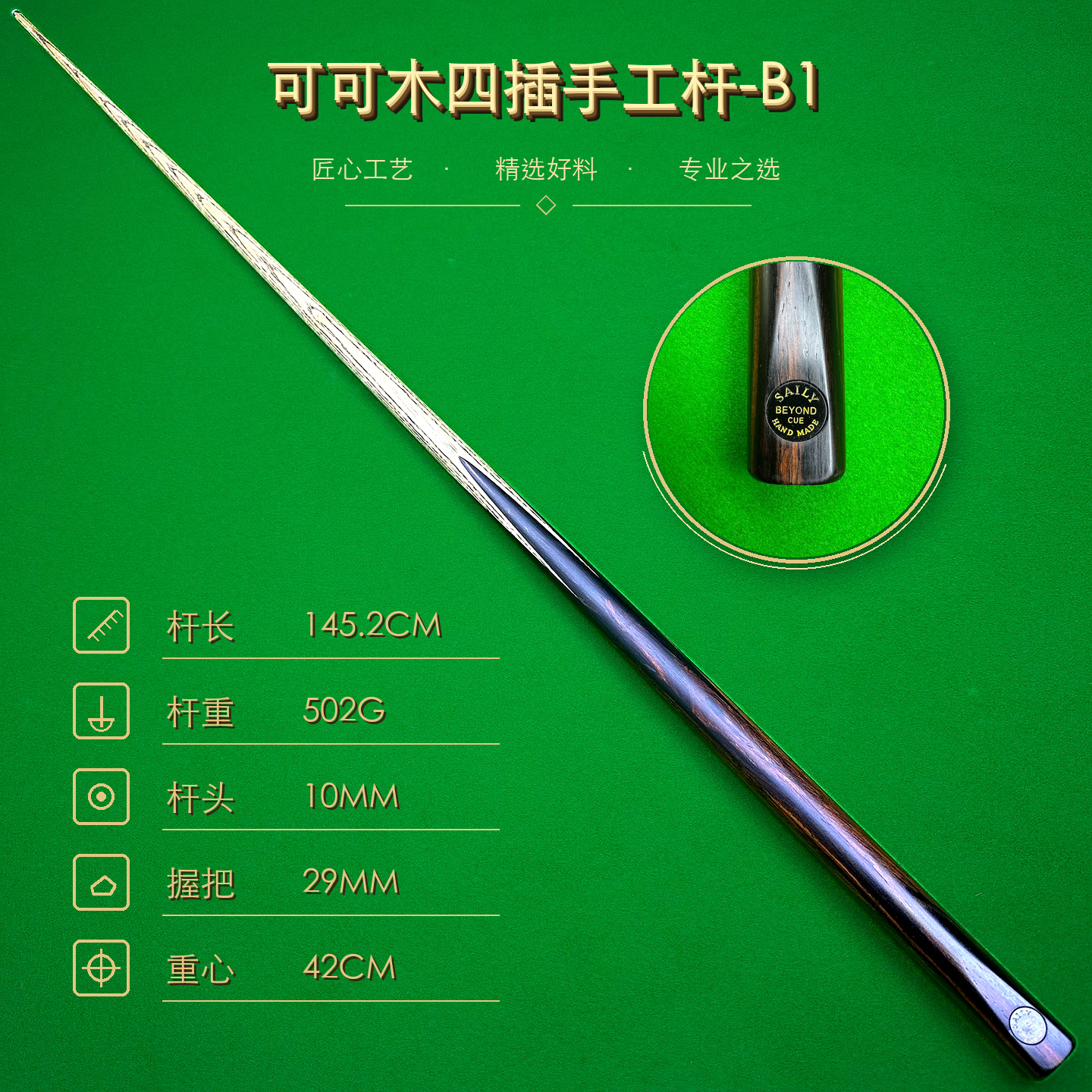
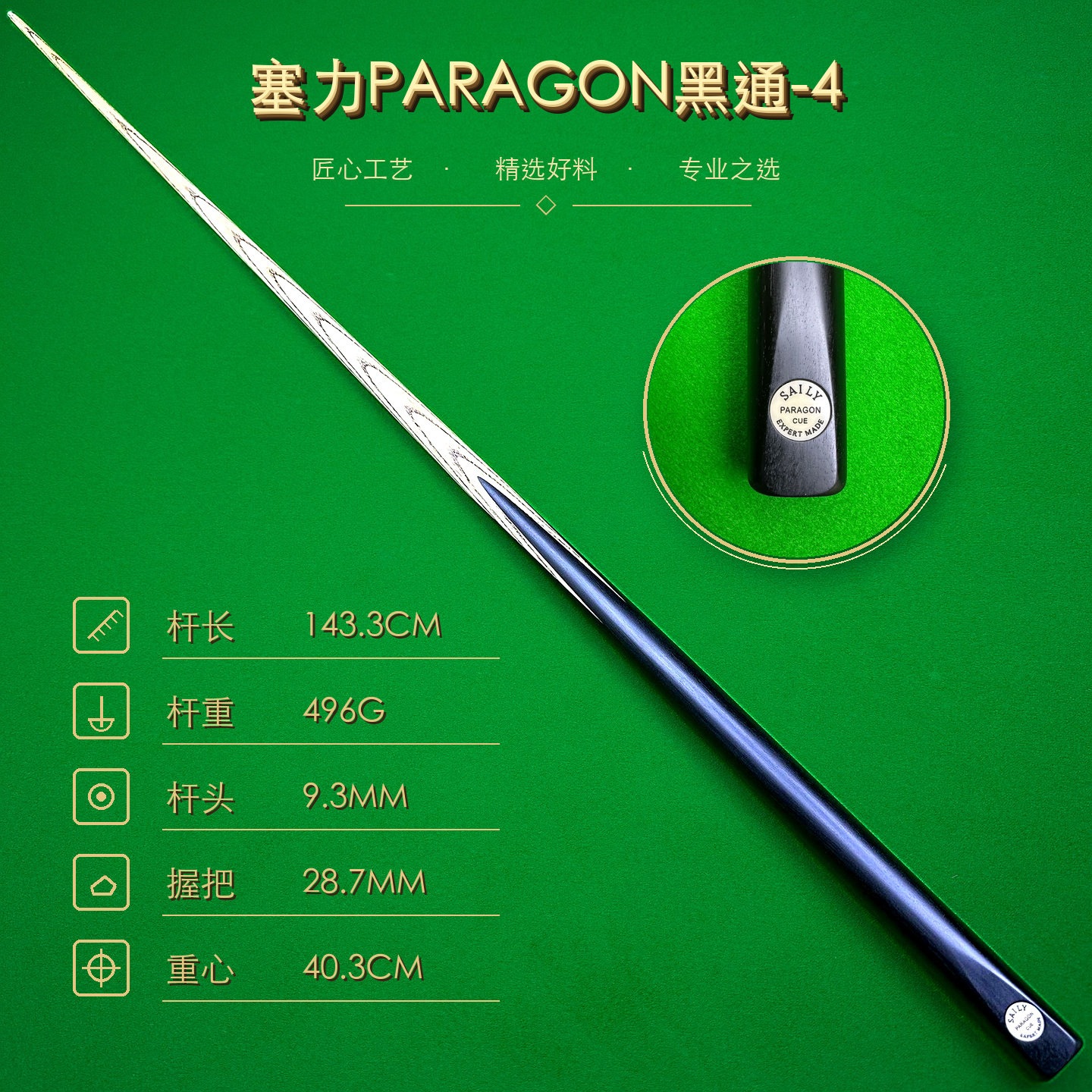
Within the SAILY CUE catalogue, individual records document different installed tip measurements. For example, the Paragon Ebony No. 4 listing records 9.3 mm, the Cocobolo Four-Splice B1 records 10 mm, and other current records include 10.2 mm and 10.5 mm. These are real specifications for individual cues, not a universal range or a ranking.
A lower figure simply describes a smaller measured diameter. It does not automatically create more spin or accuracy, and a higher figure does not automatically correct an inconsistent stroke. Tip shape, condition, cue delivery and the rest of the cue specification remain separate questions. Use the number to narrow a comparison, then judge the complete cue rather than chasing one millimetre in isolation.
Tip diameter helps you compare equipment. It cannot diagnose technique, predict a potting result or guarantee that one size will suit every player.
Common mistakes when reading tip-size listings
Assuming every number is an installed tip
Some descriptions refer to a replacement or a target size. Ask for clarification before treating the figure as the cue’s current playing specification.
Comparing a rounded tip with a fresh blank
Wear and reshaping change the visible profile. Record the condition and avoid false precision when the edge is uneven.
Using an image as a scale
Perspective, cropping and camera distance can make a tip look wider or narrower. Use the written measurement or request a direct measurement from the seller.
Picking a cue from tip size alone
Review documented length, weight, condition and balance, then browse real listings such as the SAILY CUE Cocobolo Four-Splice B1 before deciding.
Snooker cue tip-size FAQ
What tip sizes appear in SAILY CUE listings?
The individual English listings show the measured tip size for each cue rather than one standard figure. Current documented examples include 9.3 mm, 10 mm, 10.2 mm and 10.5 mm, so compare the actual cue record and its installed configuration.
Is a smaller snooker cue tip more accurate?
Tip diameter alone cannot predict accuracy. A smaller number describes a smaller measured diameter; it does not prove better aim, spin or cue delivery. Compare the full cue specification and choose through practical evaluation where possible.
Are 9 mm and 10 mm tips interchangeable?
They describe different diameters and should not be treated as identical. Whether a replacement fits depends on the ferrule, current tip, trimming and the work available from a competent cue technician.
Should I measure the tip before buying a cue?
If the listing does not state a clear tip measurement, ask the seller where and how it was taken. For a comparison, measure the installed playing tip across its widest visible diameter, repeat the reading and record the date and cue configuration.
SAILY CUE COLLECTION
Compare real cue specifications
Browse current English listings with product photographs and the measurements available for each individual cue.