
SNOOKER CUE · PARTS AND TERMINOLOGY
Parts of a Snooker Cue Explained: Tip, Ferrule, Shaft, Joint and Butt
Learn the vocabulary from the playing end to the butt, then connect every name to a useful inspection or measurement.
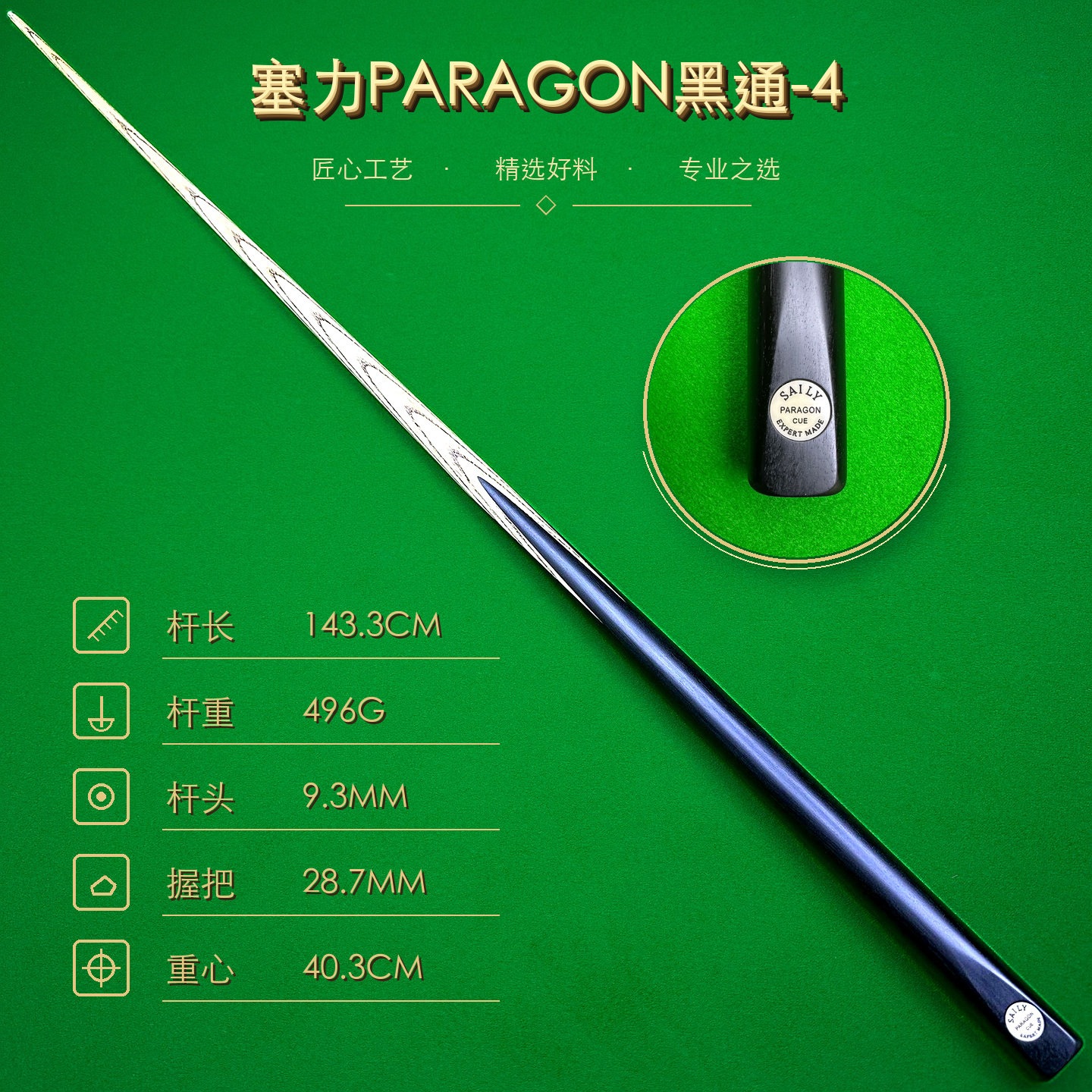
Short answer: read a snooker cue from the playing end towards the hand: tip, ferrule, shaft and butt. A joint is present only when the cue separates, and an end fitting for an extension is not universal. Weight, balance point, length and diameter are measurements, not extra parts. Use the vocabulary to compare photographs and specifications for one exact cue rather than assuming every cue shares the same construction.
Read the cue from the tip to the butt
The simplest way to learn the parts of a snooker cue is to follow the cue in one direction. Start at the small playing end, where the tip meets the cue ball. Immediately below it is the ferrule. The long forward body is the shaft. Continue towards the thicker gripping end and you reach the butt. If the cue can be separated, the joint sits somewhere between those sections.
Those names identify locations; they do not prove a material, method or level of quality. Two cues can share the same basic vocabulary while differing in length, playing weight, tip diameter, shaft profile, joint position and decoration. A listing should therefore connect each term to current photographs and measurements of the exact cue.
Begin with one full-length image, then use close photographs for the tip, ferrule, joint and butt end. SAILY CUE's English cue collection presents individual references with real photography and measured fields so a buyer can move from the overview to the exact record.
Tip and ferrule: two neighbouring parts
The cue tip
The tip is the small playing surface at the narrow end of the cue. It is the part that makes contact with the cue ball. When checking a cue, look at the tip face, its edge and the line where it is attached. A photograph should be close and sharp enough to show the current condition without relying on a verbal grade.
Tip diameter is a measurement taken across that playing end; it is not a universal recommendation. A seller should state the value, units and measurement method where possible. The separate snooker cue tip inspection guide explains how to record visible attachment, edge damage and remaining serviceable material without twisting, sanding or guessing from one photograph.
The ferrule
The ferrule is the collar directly beneath the tip. It gives the tip a defined seating area and forms the visible transition into the shaft. Do not use “tip” and “ferrule” interchangeably: a sound-looking tip does not confirm the condition of the collar below it.
Inspect the full circumference for a visible crack, gap, movement or edge damage. Colour alone does not identify ferrule material or condition. The ferrule condition guide provides a non-destructive sequence and clear stopping points.
Shaft: the long forward section
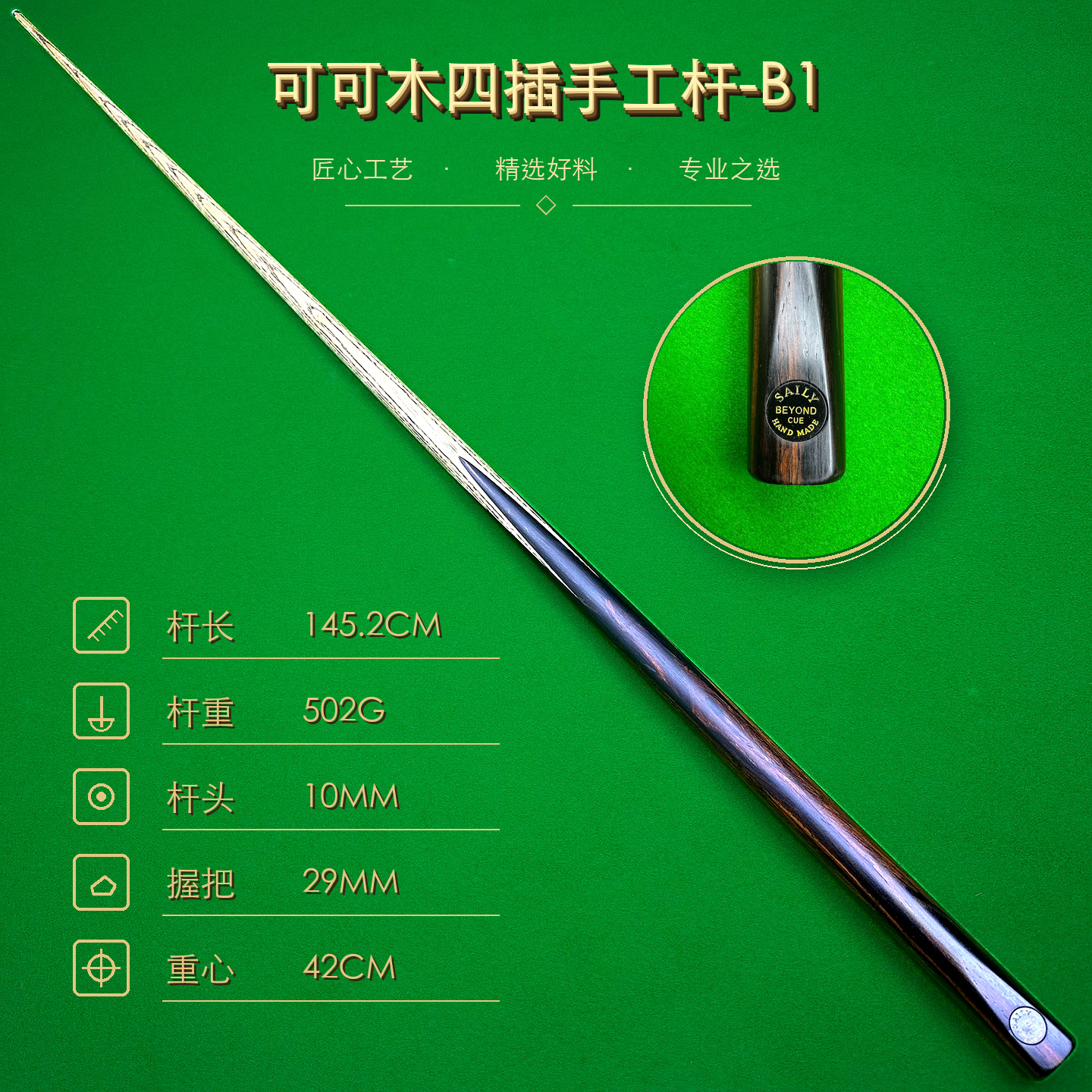
The shaft runs from the ferrule towards the butt or joint. It passes across the bridge hand during normal cueing and changes diameter along its length. That change in profile is the taper. “Shaft diameter” is incomplete unless the measurement position is also stated, because the shaft is not normally the same diameter from end to end.
Check the shaft in even light from several angles. Current full-length and close photographs can show surface marks, finish condition and obvious changes in profile, but a photograph cannot prove straightness through every viewing angle. If a dimension matters, ask for the value and the reference point instead of estimating it from perspective.
The snooker cue taper guide explains how to record diameters at stated positions. Keep those numbers descriptive. A thinner point, a particular taper label or a preferred feel does not by itself establish durability, workmanship or suitability for every player.
Joint: only on a cue that separates
A one-piece snooker cue has no separable joint. A jointed cue divides for transport, and the position can vary. A 3/4-jointed cue separates closer to the butt than a centre-jointed design, but the name alone does not confirm the thread, mating faces, assembled length or accessory compatibility.
Identify both halves of the exact cue and inspect the mating faces before assembly. Bring the sections together gently by hand; never force a connection that feels crossed, obstructed or mismatched. Once assembled, check the fit and visible alignment without using the joint as a handle for bending or leverage.
Read the cue-joint inspection guide for condition checks, and compare the practical transport trade-offs in the one-piece vs 3/4-jointed guide. A case and extension should be selected for the documented configuration, not for the generic word “snooker cue.”
Butt, splice area and end fitting
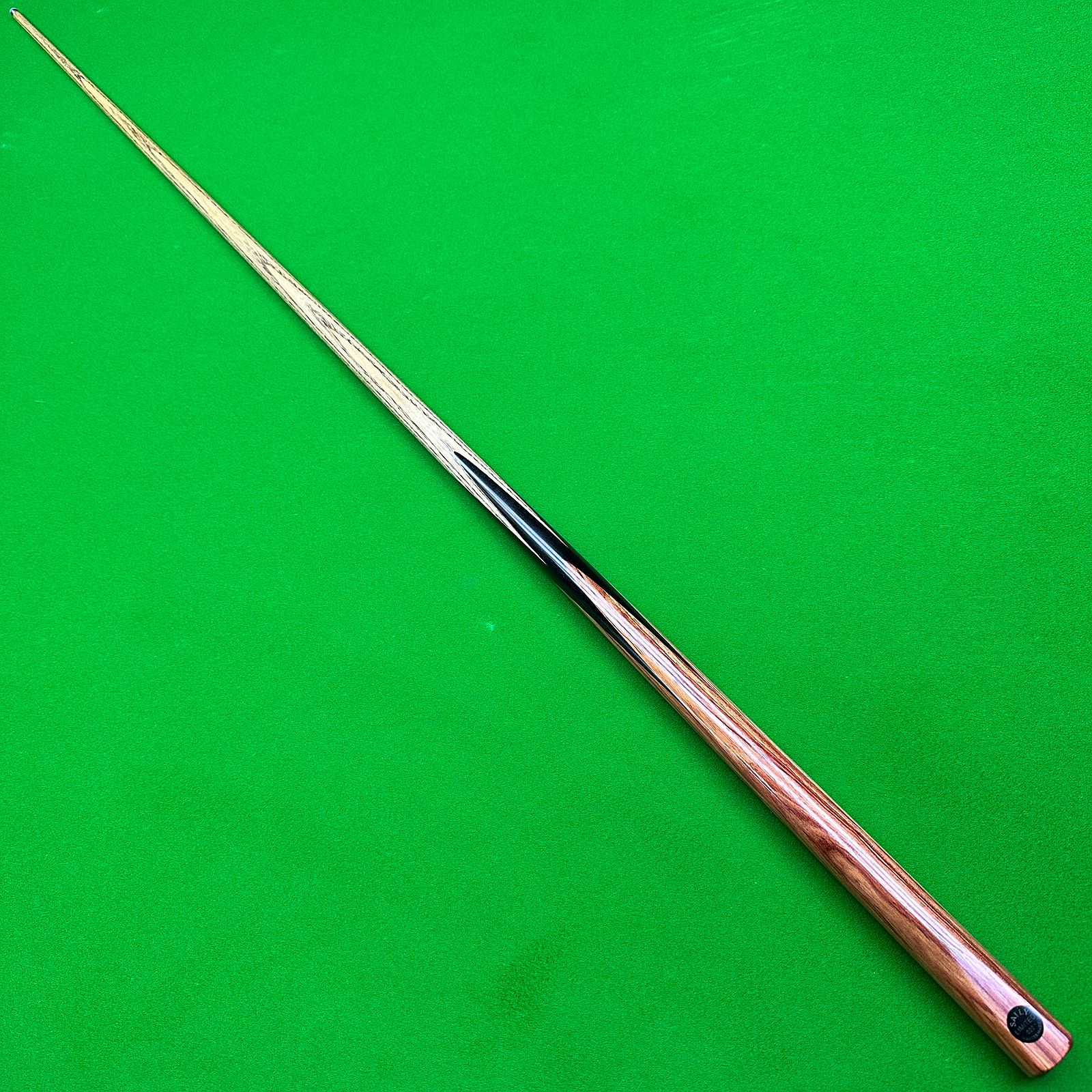
The butt is the thicker rear section held by the grip hand. It may include visible splice work, veneers, decorative details, a maker or model mark, and a butt-end fitting. Those visible features help identify one cue, but decoration should not be turned into an unsupported statement about hidden construction or performance.
The very end may carry a bumper, badge, cap or fitting for an extension, depending on the cue. Do not assume an extension will attach merely because the butt looks threaded in a photograph. Ask for the exact connection and included items, then confirm that the case has room for the intended assembled or separated configuration.
Keep parts separate from specifications
Length, complete playing weight, balance point and diameter are measurements applied to a cue or component. They are not parts. Record the assembled configuration for length and weight, state the reference end for balance point, and label the location for every diameter. Otherwise two accurate-looking numbers may describe different setups.
Material names are another separate field. A visible grain or colour may support a description, but photography alone should not be used to invent a timber species, ferrule composition or internal construction. Use the seller's documented material record and keep any uncertainty explicit.
The snooker cue specification guide connects the common measurements to clear labels. Read it alongside the component photographs so the record answers both “where is this part?” and “how was this value obtained?”
Use the names in a practical buying checklist
Before buying, request a full-cue image plus close views of the tip and ferrule, shaft surface, every joint face and the butt end. Match the photographs to one individual reference. Then list the configuration, assembled length, complete weight, tip size, butt-diameter reference and balance-point method when available.
Separate confirmed facts from questions. “3/4 joint visible in current photographs” is a fact; “will feel perfect” is not. “Extension fitting shown” still needs an exact compatibility check. If condition cannot be seen, ask for another image rather than converting missing evidence into a positive assumption.
This vocabulary makes a listing easier to read and a comparison easier to audit. It does not select a cue on its own. Comfort, intended use, room, transport, condition, seller terms and the complete exact-item record still belong in the decision.
Snooker cue parts FAQ
What are the main parts of a snooker cue?
The usual visible sequence is tip, ferrule, shaft and butt. A joint appears only on a jointed cue, while an extension fitting or bumper may be present at the butt end depending on the exact cue.
Is the ferrule the same as the cue tip?
No. The tip is the playing surface that contacts the cue ball. The ferrule is the collar directly beneath it. Inspect the tip, its bond line and the ferrule as separate areas.
Do all snooker cues have a joint?
No. A one-piece cue does not separate for transport. Jointed cues may use different joint positions and fittings, so identify the exact configuration before choosing a case or extension.
Are weight and balance point parts of a cue?
No. They are measurements of the assembled cue or a stated configuration. Record where and how they were measured instead of treating them as named components.
REAL CUE RECORDS
Apply the vocabulary to an exact cue
Compare full-length photographs, component details and measured specifications without filling gaps with assumptions.