
SNOOKER CUE BUYING · CUE CONSTRUCTION
One-Piece vs 3/4-Jointed Snooker Cue: What Should You Choose?
Understand the physical difference, then compare transport, case fit, storage and seller evidence without assuming that either format plays better.
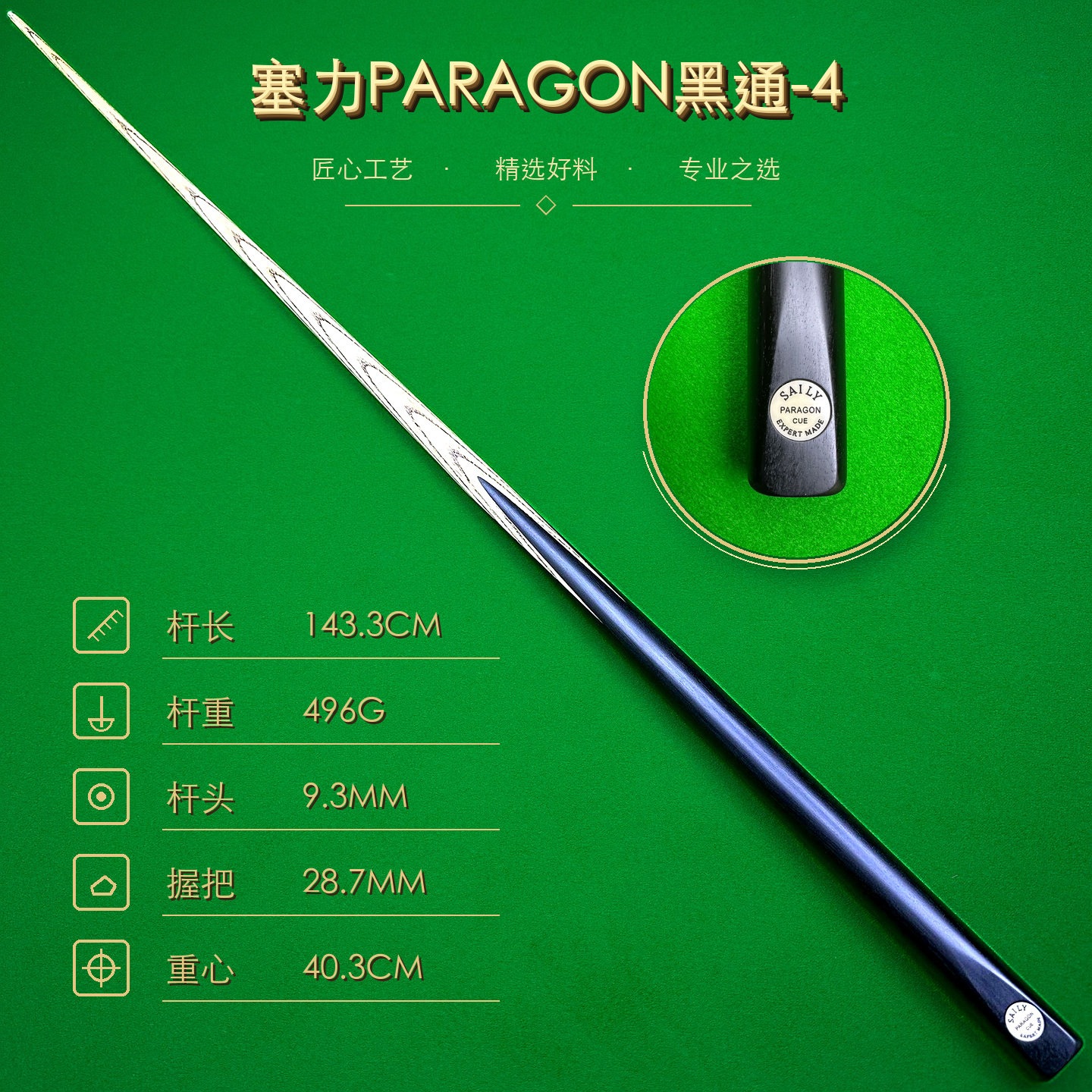
Short answer: a one-piece cue stays in one continuous section, while a 3/4-jointed cue separates at a joint, usually into a butt and a longer shaft section. The practical choice is about carrying, case fit, storage and what evidence you can inspect—not a promise that one format delivers better results.
What “one-piece” and “3/4-jointed” mean
A one-piece snooker cue is handled and stored as one continuous cue. There is no user assembly point between the butt and shaft. A 3/4-jointed cue is built with a connection roughly in the rear three-quarters area of the cue: the shaft is the longer section and the butt is the shorter section. The two parts meet at a joint for normal play and separate for carrying.
“3/4” is a description of the joint position and section arrangement, not a measurement of playing quality. Sellers may use different joint hardware and terminology. Do not infer the exact pin, insert, collar or construction from the phrase alone.
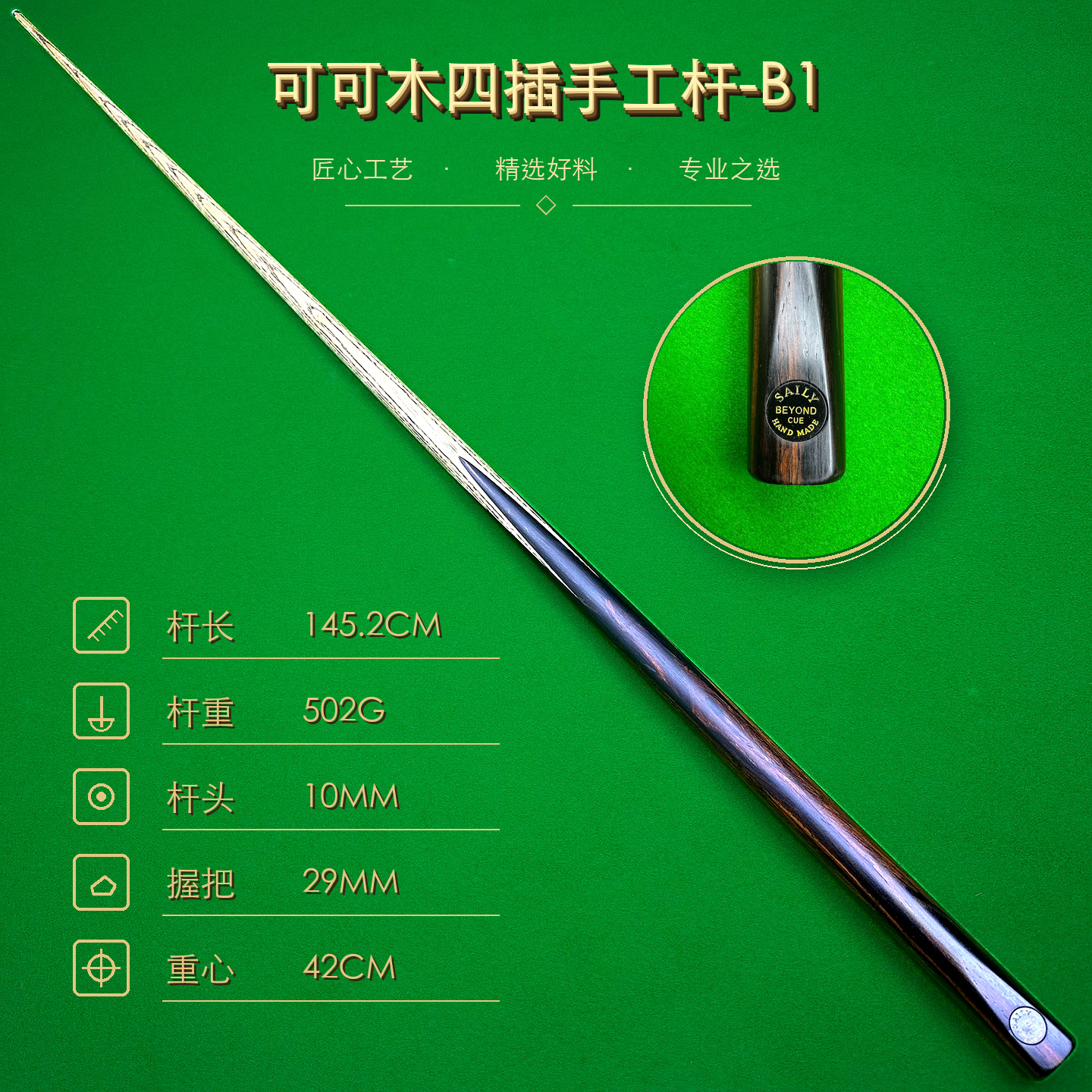
Measured length, weight, tip size, butt diameter and balance point do not establish joint type. The SAILY CUE catalogue’s measured fields should be read as individual specifications; confirm the one-piece or 3/4-jointed configuration directly with the seller.
When a one-piece cue may suit you
The simplest advantage is fewer assembly decisions. At the table, there is no joint to seat, clean or check before play. At home, the cue can be stored in a rack or case designed for its full length. That can be convenient for a player who travels little and has a suitable full-length storage space.
Transport is the trade-off. A one-piece cue needs a case long enough for the complete cue and may be less convenient in a small car, on public transport or when checking luggage. A long case can also need more room at home. Measure the actual cue and the inside length of a case; do not rely on an external case label alone.
For any format, normal care still matters. Keep the cue supported, dry and away from rapid temperature changes. The guide to checking whether a snooker cue is straight explains why a slow roll, visual sighting and good seller evidence should be considered together.
When a 3/4-jointed cue may suit you
A 3/4-jointed cue separates into two pieces, which can make a shorter case possible. That may help with transport and storage, especially when a full-length case is inconvenient. The benefit depends on the real shaft and butt lengths, the case’s internal compartments and how securely those compartments protect each section.
There is an extra handling step: assemble the cue correctly before play and separate it carefully afterward. Keep the joint faces clean and avoid forcing a tight connection. A joint protector or dedicated compartment can help prevent contact with loose accessories, but the seller or maker should confirm what fits the specific cue.
A 3/4 joint also creates one more area to inspect before buying. Look for a clean meeting surface, visible damage, rocking, gaps or signs of repair. These checks describe condition and fit; they do not prove that a cue will remain unchanged in every environment.
Compare the format with your real routine
Transport and case fit
Write down the full assembled length and the available case’s internal compartment lengths. For a 3/4 cue, ask for the length of each section, including whether a joint protector or extension changes the fit. For a one-piece cue, confirm that the full cue can be inserted without bending or forcing it.
Storage at home
Choose a stable rack or a case that supports the cue without pressure. A shorter disassembled cue can be easier to store, but it still needs protected sections and a clean joint. A full-length cue needs a suitable space where it will not lean against furniture or be knocked.
Buying from an online catalogue
Use the snooker cue selection guide to compare documented length, weight, tip, butt and balance information. Treat those numbers as the record for that cue, not as clues that reveal its joint type. Browse the SAILY CUE collection, then ask about any configuration the listing does not state.
Questions to ask a seller before you buy
- What is the exact configuration?Ask whether this specific cue is one-piece or 3/4-jointed, rather than relying on a series name or photograph.
- What are the assembled and section lengths?Request measurements in the normal playing configuration and separately for a jointed cue.
- What is included?Confirm whether the case, joint protectors, extension or other accessories shown are part of the sale.
- Can you show the actual joint?Ask for clear photos of both faces and a video or photograph of the cue assembled, if relevant.
- Has the cue had repairs or refinishing?Request a straightforward condition history and check the return policy before payment.
Assembly and inspection checklist
Before assembling a 3/4-jointed cue, inspect the contact surfaces for visible debris or damage. Align the sections as intended and tighten only to the maker’s normal hand-tight position. Do not use pliers or excessive force. Once assembled, sight along the cue and check for an obvious gap or rocking connection.
For a one-piece cue, inspect the full length on a clean, flat surface and check the shaft, tip, butt and finish. For either format, photograph the cue’s condition when it arrives and compare it with the listing. If the joint or alignment is unclear, pause and ask the seller rather than treating missing evidence as a guarantee.
One-piece vs 3/4-jointed snooker cue FAQ
Is a one-piece snooker cue better than a three-quarter-jointed cue?
Neither format is automatically better. One-piece and three-quarter-jointed describe how the cue is made and transported. Choose based on your storage, travel, case and inspection needs, then assess the complete documented cue.
Does a 3/4-jointed cue fit in a shorter case?
It may, because the cue separates into a butt and a longer shaft section, but the actual section lengths and case compartments still matter. Confirm the assembled length, section lengths and case dimensions with the seller.
Can I tell a cue joint type from its listed length or weight?
No. Length and weight do not establish whether a cue is one-piece or three-quarter-jointed. Ask the seller to confirm the joint configuration and show a clear photograph of the connection.
Should I inspect a three-quarter joint before buying online?
Yes. Ask for clear photographs or video of the joint faces, threads or pin area, and the assembled cue. Also ask about repairs, refinishing, storage and the return policy.
SAILY CUE COLLECTION
Compare documented cue specifications
Browse real product photographs, then contact SAILY CUE to confirm any joint configuration not stated in the measured fields.