
CUE SPECIFICATIONS · MEASUREMENT
How to Measure Snooker Cue Length Correctly
Use a clear tip-to-butt reference, state the playing configuration and compare centimetres with inches without adding false precision.
Short answer: assemble the cue in its normal configuration without a detachable extension, lay it straight beside a rigid rule or supported tape, and measure from the top of the installed tip to the extreme butt end. Repeat once and report both the configuration and unit.
What “snooker cue length” should mean
When a product listing gives one cue-length figure, the most useful interpretation is the complete playing length of the assembled cue. That normally runs from the upper surface of the installed leather tip to the furthest point of the butt. Stating both endpoints removes the ambiguity.
A shaft-only measurement, butt-only measurement and cue-plus-extension measurement answer different questions. They should not be placed in the same comparison column. A jointed cue can also be measured incorrectly if the two sections are laid end to end while separated, because the joint components overlap when assembled.
Length helps a buyer judge reach, playing space and whether a cue resembles one already familiar to them. It is not a quality score. Height, stance, bridge length, rear-hand position and the room behind the table all affect whether a particular length feels comfortable.
Prepare the cue and measuring surface
- Use the cue in its normal playing configuration with the joint seated correctly.
- Remove a detachable extension, joint protector and any temporary accessory.
- Leave the installed playing tip in place; it is part of the complete playing length.
- Choose a flat, clean surface long enough to support the entire cue safely.
- Use a rigid rule, long straightedge with scale or a tape measure held straight and supported.
Do not lean the cue against a wall and measure its vertical projection. A tilted cue produces a shorter reading on the floor or wall. Protect the finish, keep the shaft and butt supported, and avoid pulling a metal tape edge across the tip or wood.
How to measure snooker cue length step by step
- Assemble the cue normally.Tighten the joint as intended for play without forcing it, and confirm no extension is fitted.
- Lay the cue straight.Support it along a flat surface so the shaft and butt follow one line.
- Set the zero point.Align zero with the top of the installed tip, not the ferrule below it.
- Run the scale beside the cue.Keep a tape taut and straight rather than following a curve or diagonal.
- Read the extreme butt end.Use the furthest fixed end of the normal cue and state whether a bumper is included.
- Repeat the reading.Reset the rule or tape once. If the readings differ, check the endpoints and alignment.
- Record the configuration.Write “assembled, tip to extreme butt, no extension” with the value and unit.
Convert centimetres and inches carefully
International listings may use either system. One inch equals exactly 2.54 centimetres. Divide centimetres by 2.54 to get inches; multiply inches by 2.54 to get centimetres.
For example, a documented length of 145.2 cm converts to about 57.17 inches. A listing may reasonably round that to 57.2 inches. Keep 145.2 cm as the original measurement rather than turning the conversion into a claim of greater accuracy.
Likewise, a cue listed as exactly 57 inches converts to 144.78 cm. Do not quietly round it to 145 cm and then treat the two figures as separate measurements. Note which value was measured and which was converted.
How to compare cue-length listings fairly
First confirm that each figure covers the assembled cue from tip to butt and excludes detachable extensions. Then compare the original units or use the same conversion method. Ask the seller to clarify vague labels such as “standard length,” especially when ordering online.
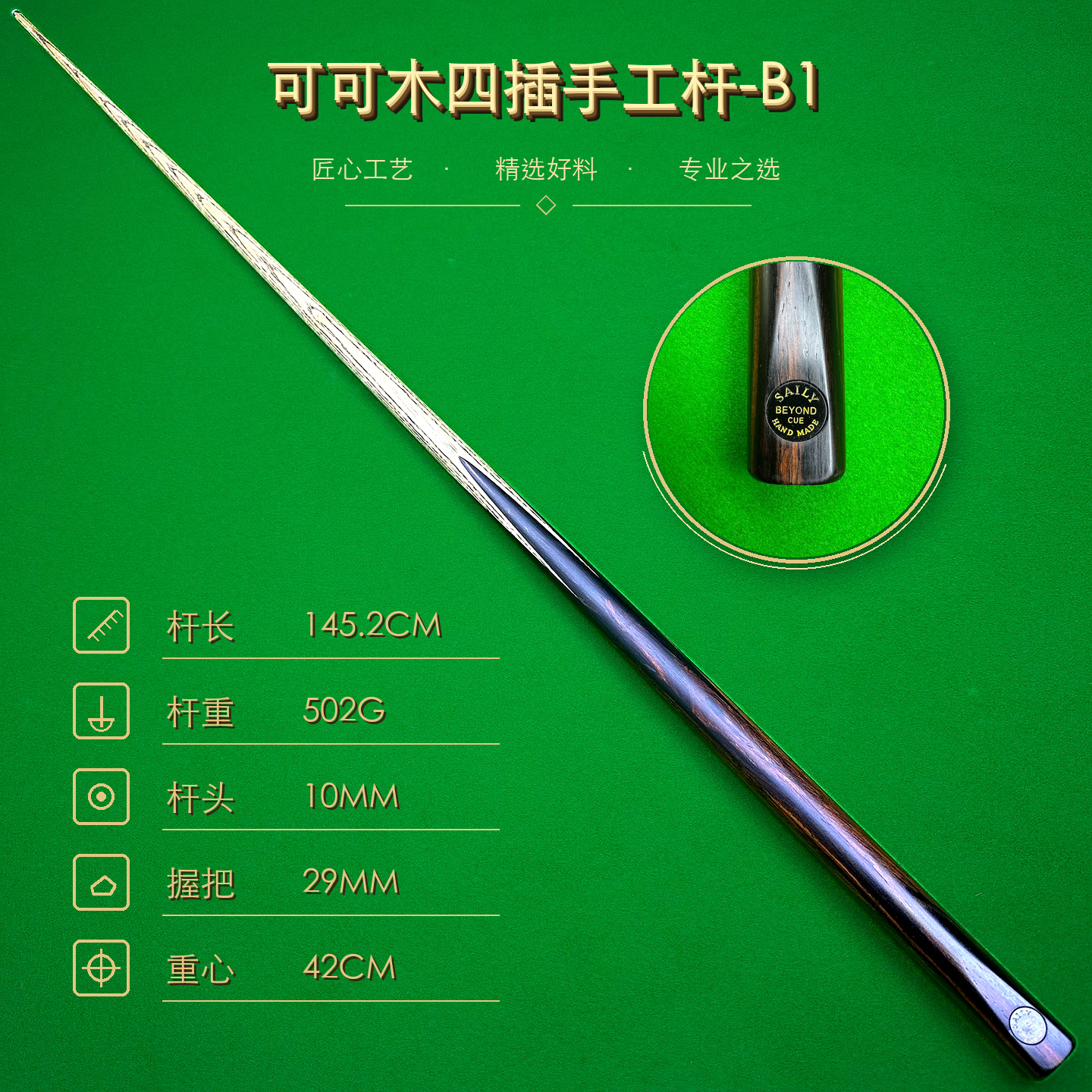
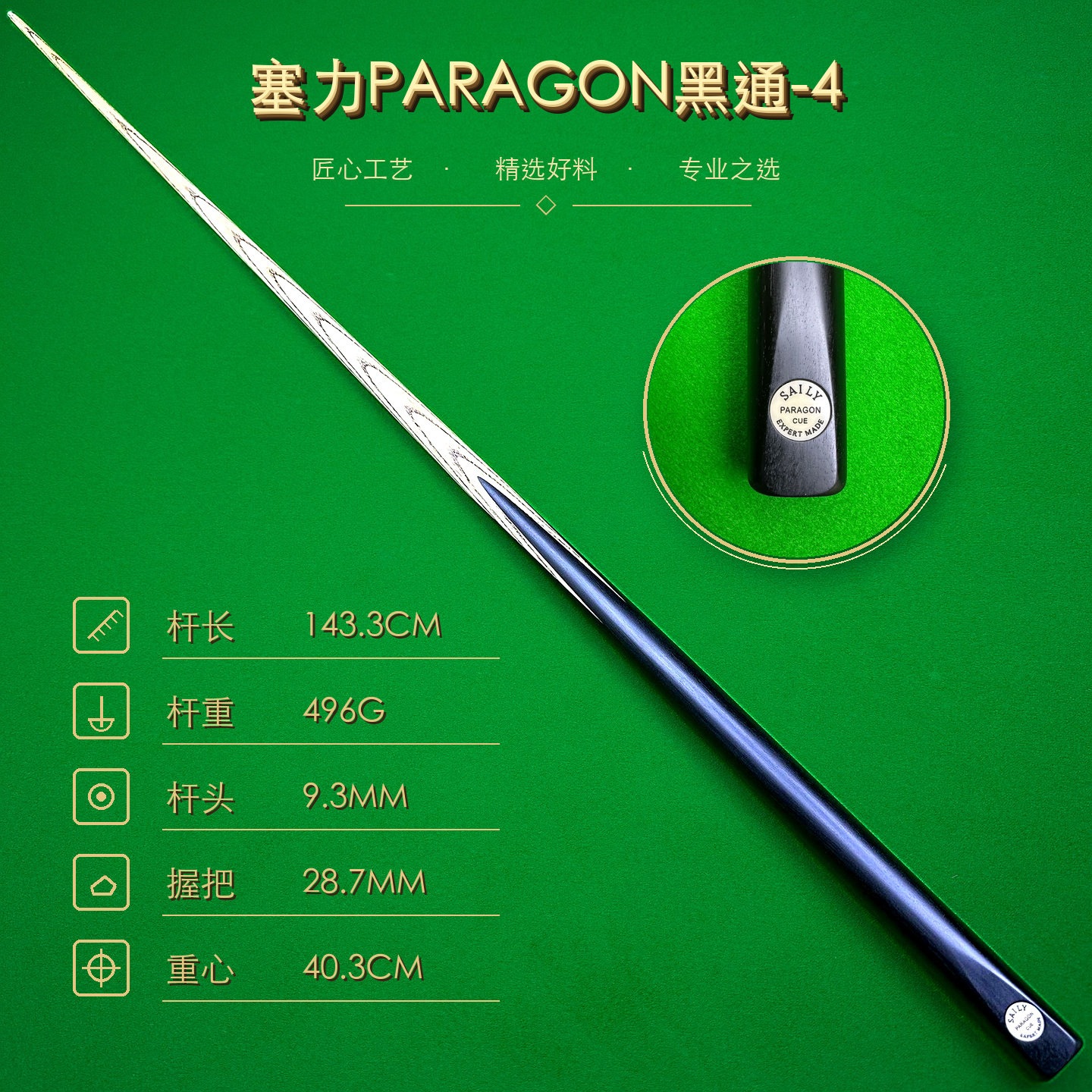
SAILY CUE product records show why an individual figure is more useful than a generic label. The Cocobolo Four-Splice Handmade Cue B1 is listed at 145.2 cm, while the Paragon Ebony No. 4 is listed at 143.3 cm. These are product-specific records, not target lengths for every player.
Compare length together with weight, tip diameter, butt diameter and balance point. If the cue will be used in a compact room, also measure the available space behind the normal cueing position. For the broader choice, read how to choose a snooker cue; to document weight distribution, use the separate balance-point measurement guide.
Common cue-length measurement mistakes
Measuring the two sections separately
Adding loose shaft and butt lengths can count joint parts that overlap when assembled. Measure the assembled cue.
Starting at the ferrule
Excluding the installed tip shortens the complete playing length. State a different reference explicitly if you need it for repair work.
Including an extension without saying so
Standard and extended configurations should be separate records. Note the extension type and added length if you measure both.
Using a curved or diagonal tape
A tape that bows away from the cue or crosses at an angle can change the reading. Keep it straight and supported beside the cue.
Treating length as a performance promise
A correctly measured cue may still be unsuitable for a particular stance, room or preference. Use the number for comparison, not as a guarantee of accuracy.
Snooker cue length FAQ
Where do you measure a snooker cue from?
For complete playing length, measure the assembled cue in a straight line from the top of the installed tip to the extreme butt end, and state that reference clearly.
Do you include the cue tip in the length?
Yes, when reporting complete playing length. If a seller excludes the tip or uses another reference, the listing should say so.
Should a cue extension be included?
Not in the standard cue length. Remove detachable extensions and record the extended configuration separately if it matters to the comparison.
How do I convert cue length from centimetres to inches?
Divide centimetres by 2.54. For example, 145.2 cm is about 57.17 inches. Keep the original measured unit and use sensible rounding.
SAILY CUE COLLECTION
Compare individual cue measurements
Browse real cue photographs with documented length, weight, tip, butt and balance-point specifications.