
CUE SPECIFICATIONS · MEASUREMENT
How to Weigh a Snooker Cue at Home
Use a stable scale setup, record the complete playing configuration and convert grams and ounces without false precision.
Short answer: assemble the cue in its normal playing configuration without a detachable extension, zero a suitable digital scale, and support the entire cue so nothing touches the table, wall or floor outside the scale. Repeat the reading and record the original unit.
What “snooker cue weight” should describe
A product weight is most useful when it describes the complete cue as played: installed tip, ferrule, shaft, joint and butt, assembled normally. Detachable extensions, joint protectors and temporary accessories should be removed unless the listing clearly says they are included.
Weight is a comparison number, not a quality score. Two cues with similar total weight can feel different because the mass is distributed differently. Length, butt diameter, tip diameter, balance point and the player’s grip position all influence the handling impression.
Before comparing two listings, check whether both use complete playing weight. A shaft-only number, a loose-section total and a cue-plus-extension number do not describe the same configuration.
Choose a scale and safe support
Use a digital kitchen, parcel or workshop scale with enough capacity for the cue and a display resolution suitable for small differences. A scale that reads in one-gram steps is easier to interpret than one that jumps in large increments.
The cue is much longer than most platforms. A lightweight tray or shallow cradle can help, but it must sit completely on the scale. Place the cue so its balance point is over the support and the assembly cannot roll. Protect the finish with a clean, soft, non-slip layer.
The entire cue must be supported through the scale. If the tip, butt or tray touches a table, wall, floor or your hand, some load bypasses the scale and the reading will be too low. Do not use an unstable cantilever arrangement that could drop or bend the cue.
How to weigh a snooker cue step by step
- Prepare the cue.Assemble the normal playing sections, seat the joint correctly and remove any detachable extension.
- Check the scale.Place it on a hard, level surface and select grams as the original measuring unit.
- Add the support.Set the empty tray or cradle on the platform and press tare so the display returns to zero.
- Position the cue safely.Centre the balance area over the support and confirm no part touches anything outside the scale.
- Wait for a stable reading.Keep hands clear and record the displayed value only after it stops changing.
- Repeat once.Remove the cue, verify zero, reposition it and compare the second reading.
- Label the result.Write the value, unit and configuration, such as “502 g, assembled, no extension.”
How to handle a jointed cue on a small scale
Directly weighing the assembled cue is the clearest method because it measures the exact playing object. If the cue cannot be supported safely, a jointed cue can be measured section by section and the readings added.
Zero the same support before each section, weigh the shaft, then weigh the butt, and write both values. Add them once. Label the result as a calculated section total rather than a direct assembled reading. Small scale tolerances apply to both measurements, so do not present the sum with more precision than the scale can support.
Do not weigh one section while the other end rests on a table and assume the display shows total cue weight. That setup measures only part of the load and depends on where the support points are.
Convert cue weight between grams and ounces
One avoirdupois ounce equals approximately 28.3495 grams. Divide grams by 28.3495 to convert to ounces; multiply ounces by 28.3495 to convert to grams.
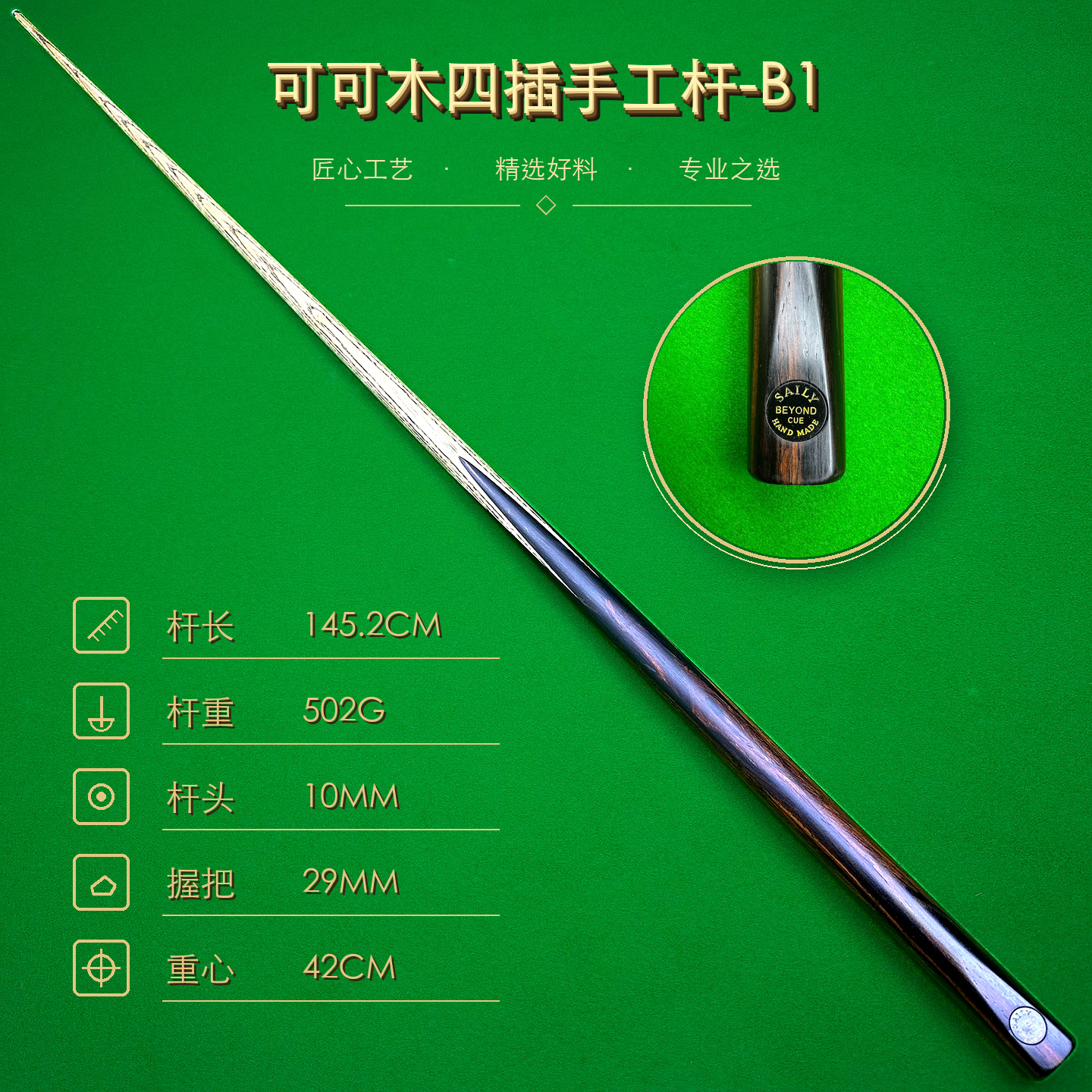
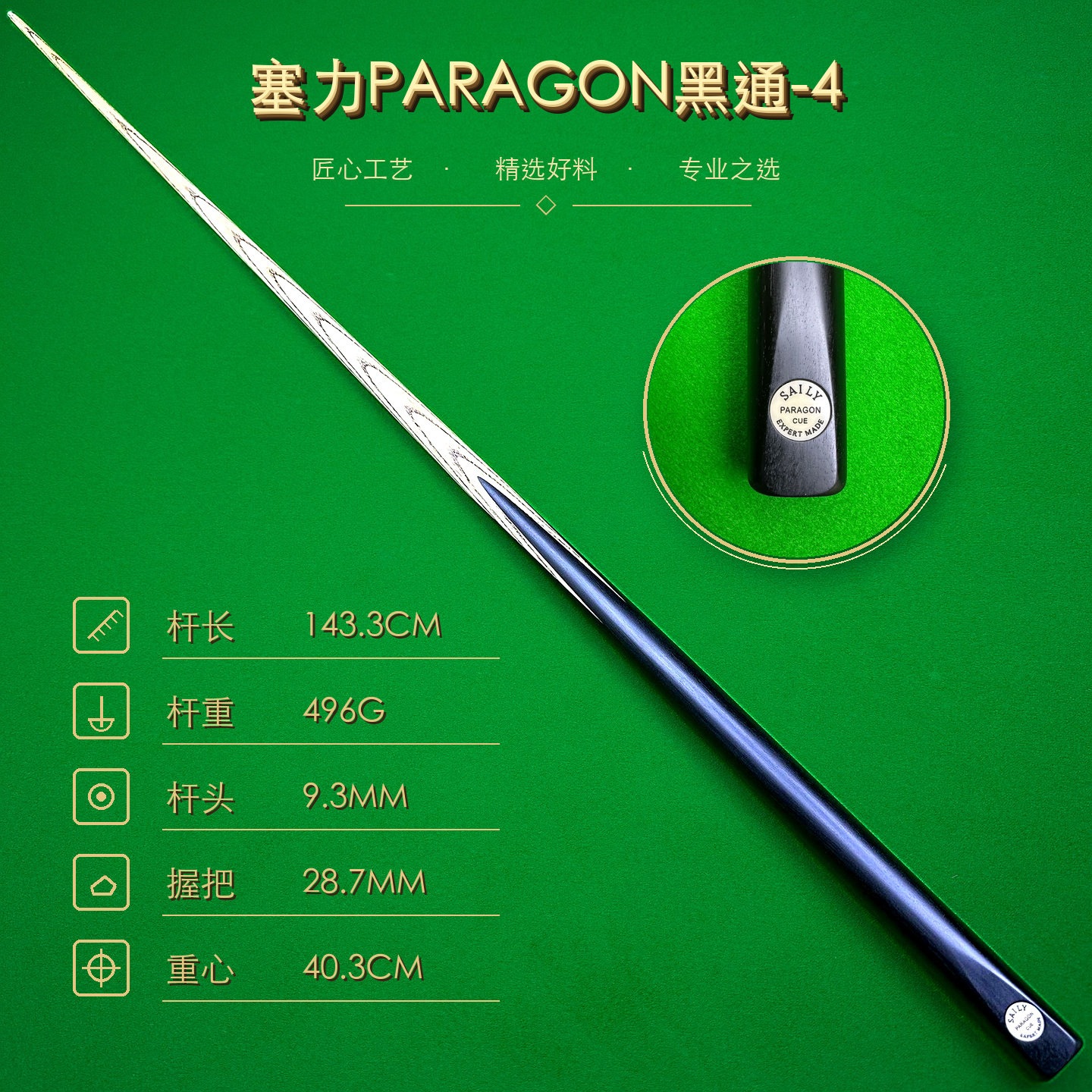
For example, 502 g is about 17.71 oz, while 496 g is about 17.50 oz. Keep the gram value as the original reading and treat the ounce figure as a conversion. Two decimal places are usually enough for the converted value when the scale reads only whole grams.
A listing rounded to 17.5 oz may cover more than one possible whole-gram reading. Do not reverse-convert a rounded value and present it as if it were a fresh precise measurement.
How to compare cue-weight listings fairly
Start with matching configurations and original units. Then check the other measured specifications. The Cocobolo Four-Splice Handmade Cue B1 is documented at 502 g, while the Paragon Ebony No. 4 is documented at 496 g. These are individual product records, not ideal targets for every player.
A six-gram difference does not explain the complete feel of two cues. Their recorded lengths, dimensions and balance points also matter. If you are comparing a cue with one you already own, use the same home scale and support method for both to reduce method differences.
For a broader buying checklist, read how to choose a snooker cue. Use the separate guides to measure cue balance point and measure complete cue length. The SAILY CUE collection presents real photographs with individual specifications.
Common cue-weighing mistakes
Letting one end touch the table
Any contact outside the scale carries part of the load and makes the displayed result incomplete.
Forgetting to tare the support
A tray, cloth or cradle has its own mass. Zero it before adding the cue.
Including an extension without saying so
Record standard cue weight and extended weight separately so another buyer can reproduce the comparison.
Mixing measured and converted precision
Keep the original unit, show sensible rounding and do not imply that a conversion is more accurate than the scale.
Treating weight as a performance guarantee
A heavier or lighter cue is not automatically better. Use the number alongside dimensions, balance, condition and personal preference.
Snooker cue weight FAQ
Should a snooker cue be weighed assembled?
Yes. For complete playing weight, assemble the cue normally without a detachable extension and weigh the whole cue as one object when the scale setup allows it.
Can I weigh the shaft and butt separately?
You can add the two section readings as a cross-check when a jointed cue will not sit safely on the scale, but each reading adds scale tolerance and should be labelled as a calculated total.
How do I convert cue weight from grams to ounces?
Divide grams by 28.3495. For example, 502 grams is about 17.71 ounces. Keep the original measured unit and round the conversion sensibly.
Does a heavier snooker cue play better?
Weight alone is not a quality or performance guarantee. Balance point, dimensions, construction, condition and personal preference also affect how a cue feels.
SAILY CUE COLLECTION
Compare individual cue specifications
Browse real cue photographs with documented weight, length, tip, butt and balance-point measurements.