
CUE SPECIFICATIONS · GRIP-END WIDTH
Snooker Cue Butt Diameter: How to Measure and Compare It
Use one clear reference point, protect the cue finish and label approximate measurements honestly.
Short answer: measure straight across the circular butt end with clean calliper jaws and very light pressure, then record the reading, unit and exact reference point. If you estimate diameter from circumference, label it as approximate rather than presenting false precision.
What snooker cue butt diameter describes
Butt diameter is the width across the grip end of a cue. On a round section, the measurement passes through the centre from one outside surface to the opposite surface. Product listings commonly express it in millimetres.
The number is useful because two cues of similar length and weight can still feel different in the back hand. However, one butt-end reading does not describe the complete shape. The cue may taper, and players hold it at different points. A measurement at the end cannot tell you the diameter at every possible grip position.
Butt diameter is also separate from tip diameter. The tip figure describes the playing end; the butt figure describes the grip-end width. Mixing the two produces a meaningless comparison.
Choose a measurement method that protects the cue
A digital or vernier calliper is the clearest tool because it reads diameter directly. The jaws must be clean, smooth and free from grit. Use only the light contact needed to meet the surface. Tight pressure can mark a finish and does not create a more truthful measurement.
Place the cue on a clean padded surface where it cannot roll. Remove a detachable extension or bumper only if the cue is designed for normal user removal and the listing defines the measurement that way. Do not dismantle or modify a cue merely to obtain a specification.
If you do not have callipers, a narrow paper strip and ruler can produce a rough circumference-based estimate. This is a fallback, not an equally precise replacement.
How to measure butt diameter with callipers
- Choose the reference point.Use the widest circular section at the butt end, or match the exact point stated by the listing you want to compare.
- Clean the contact surfaces.Check both calliper jaws and the cue for dust or grit that could scratch the finish.
- Zero the tool.Close the empty jaws gently and confirm the display reads zero in millimetres.
- Hold the jaws square.Place them at right angles to the cue rather than diagonally across the butt.
- Use light contact.Close the jaws until they just meet both sides; do not squeeze the cue.
- Repeat after rotating.Turn the cue about a quarter turn and measure again at the same distance from the end.
- Record the context.Write the reading, unit, location and whether any removable fitting was included.
Two readings may differ slightly because of tool position, display resolution or the actual shape of the section. Recheck the jaw angle and location before averaging. If a meaningful difference remains, keep both readings instead of hiding it behind an over-precise single number.
Estimate cue butt diameter without callipers
Wrap a narrow strip of plain paper once around the chosen butt reference. Keep it level and snug without pulling hard. Mark the exact overlap, remove the strip and measure that length with a millimetre ruler. The result is the approximate circumference.
Divide the circumference by pi—approximately 3.1416—to estimate diameter. For example, an approximate circumference of 91.7 mm gives a diameter of about 29.2 mm. That calculation does not remove the errors introduced by a tilted wrap, a wide mark, paper thickness or ruler resolution.
Report a sensible rounded result such as “approximately 29 mm by paper-wrap method.” Do not publish two decimal places as if they came from a calibrated direct measurement. Avoid adhesive tape, metal tape or anything that may mark or leave residue on the finish.
How to compare butt-diameter listings fairly
First confirm that both numbers refer to the same location and configuration. A widest-end reading and a grip-position reading are not interchangeable. Neither are a direct calliper measurement and an unlabeled circumference estimate.
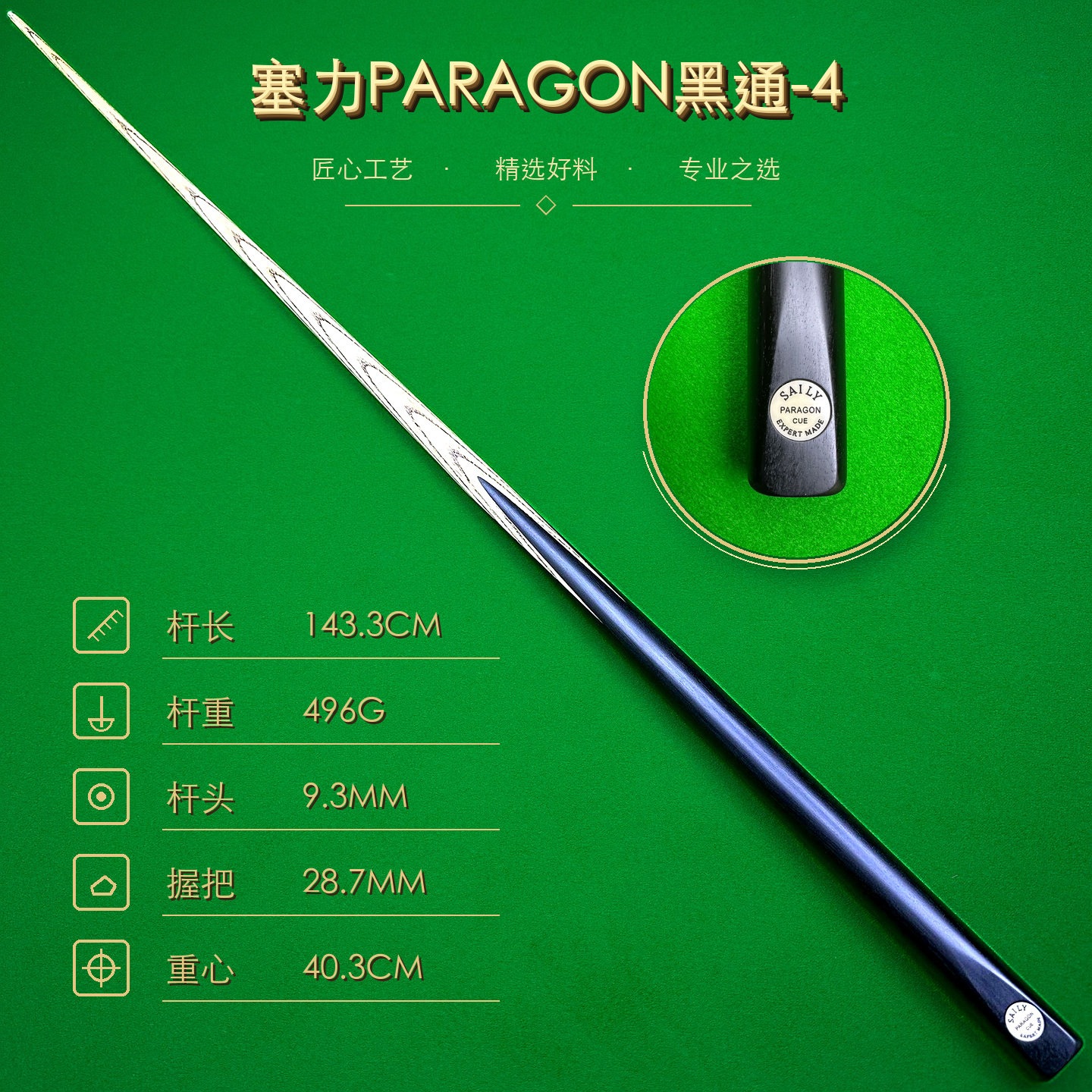
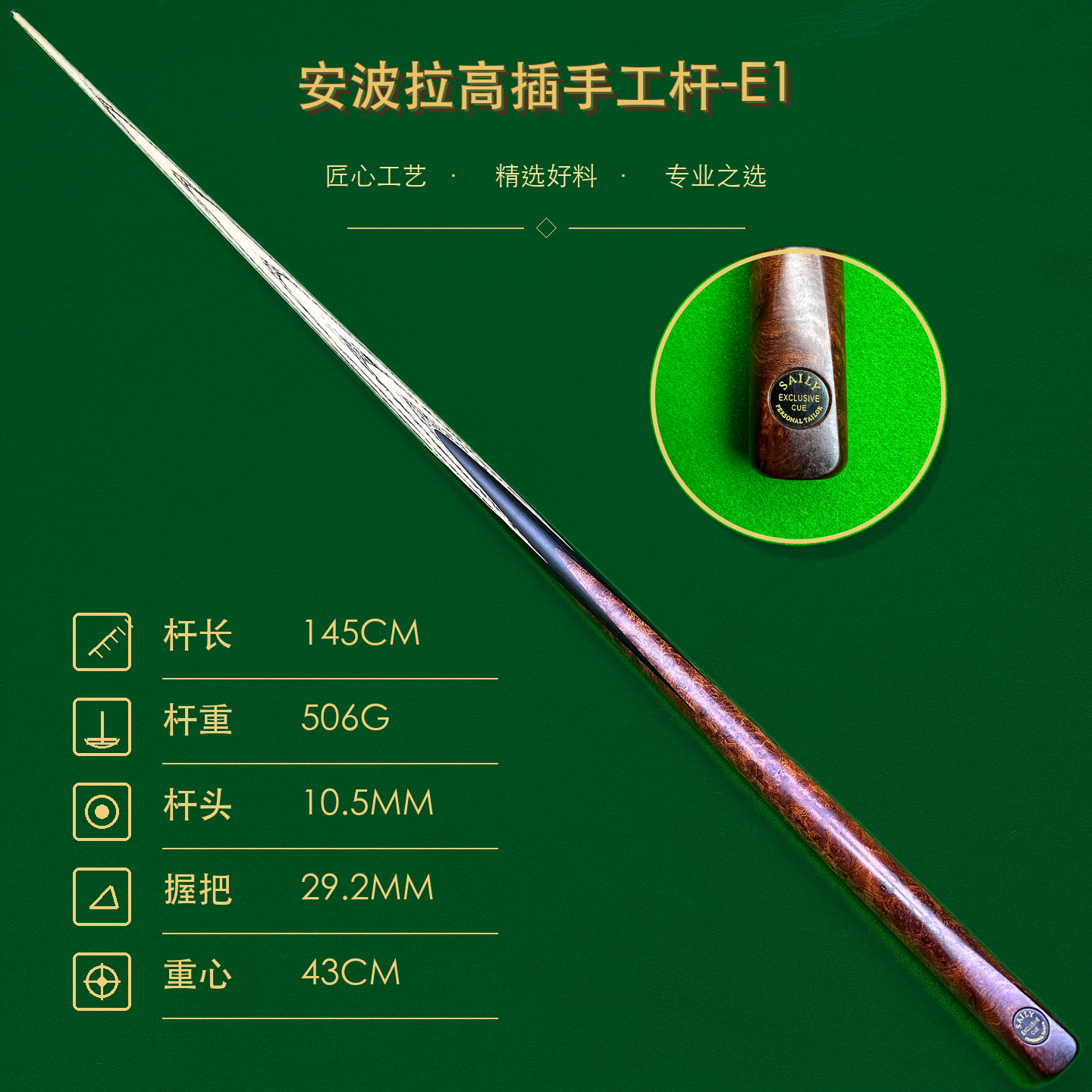
The Saily Paragon Ebony Cue No. 4 has a documented butt measurement of 28.7 mm. The Amboyna High-Splice Handmade Cue E1 is documented at 29.2 mm. The half-millimetre numerical difference is real in the product records, but it should not be presented as proof that one cue will suit every hand better.
Compare butt diameter alongside the complete set of measurements. The Paragon record lists 143.3 cm length, 496 g weight, 9.3 mm tip and 40.3 cm balance point. The Amboyna record lists 145 cm, 506 g, 10.5 mm and 43 cm. These are individual cue specifications, not universal target values.
What butt diameter can tell you about feel
A diameter can help an overseas buyer compare a cue with one already owned. Measure your current cue by the same method and at the same reference point, then use the difference as one part of the discussion with the seller.
The number cannot fully predict grip comfort. Hand size, grip pressure, grip position, taper, balance and finish all contribute. A slightly larger or smaller figure is not automatically an upgrade and does not guarantee better cue delivery.
For the wider buying context, read how to choose a snooker cue. For the playing-end measurement, use the separate snooker cue tip-size guide. The SAILY CUE collection presents real photographs with individual length, weight, tip, butt and balance-point records.
Common butt-diameter measurement mistakes
Measuring diagonally
Angled jaws travel across a longer path and can make the cue appear wider. Keep the tool square to the cue.
Squeezing the callipers
Extra pressure can mark the finish and does not improve the reading. Use gentle surface contact only.
Comparing different locations
A butt-end figure and a forward grip-position figure describe different sections of a tapered cue.
Reporting a rough estimate as exact
A paper-wrap method includes several sources of error. Label and round the result accordingly.
Treating diameter as a quality score
The measurement describes size, not craftsmanship, condition or guaranteed performance.
Snooker cue butt diameter FAQ
Where should I measure a snooker cue butt diameter?
Use the same stated reference point on every cue. For a product-style comparison, measure across the widest circular section at the butt end and record exactly where the reading was taken.
Can I measure cue butt diameter without callipers?
A narrow paper strip can give an approximate circumference. Divide that length by pi to estimate diameter, but label the result as approximate because overlap, angle and paper thickness add error.
Does a larger butt diameter mean a better snooker cue?
No. Butt diameter is a fit and comparison measurement, not a quality or performance grade. Hand size, grip position, taper, balance and preference all affect feel.
Is butt diameter the same as tip diameter?
No. Tip diameter describes the playing end of the cue; butt diameter describes the grip-end width. Record and compare the two specifications separately.
SAILY CUE COLLECTION
Compare complete cue specifications
Browse real cue photographs with individual tip, butt, length, weight and balance-point measurements.