
SNOOKER CUE CARE · CASE SELECTION
How to Choose a Snooker Cue Case: Fit, Protection and Travel Checks
Measure the exact cue and inspect the internal layout before choosing a case by appearance, label or external dimensions.
Short answer: record whether the cue is one-piece or jointed, measure the longest section that will be stored, ask for the case’s usable internal dimensions, and check how the tip, butt, joint and accessories are separated. Then compare protection, capacity, carrying weight and travel rules.
Start with the exact cue, not the case
A case cannot fit “a snooker cue” in the abstract. It must fit one specific cue and its stored configuration. Begin by recording the cue’s format: one-piece, three-quarter-jointed, centre-jointed or another arrangement. If it has detachable extensions or joint protectors, decide whether they also need dedicated space.
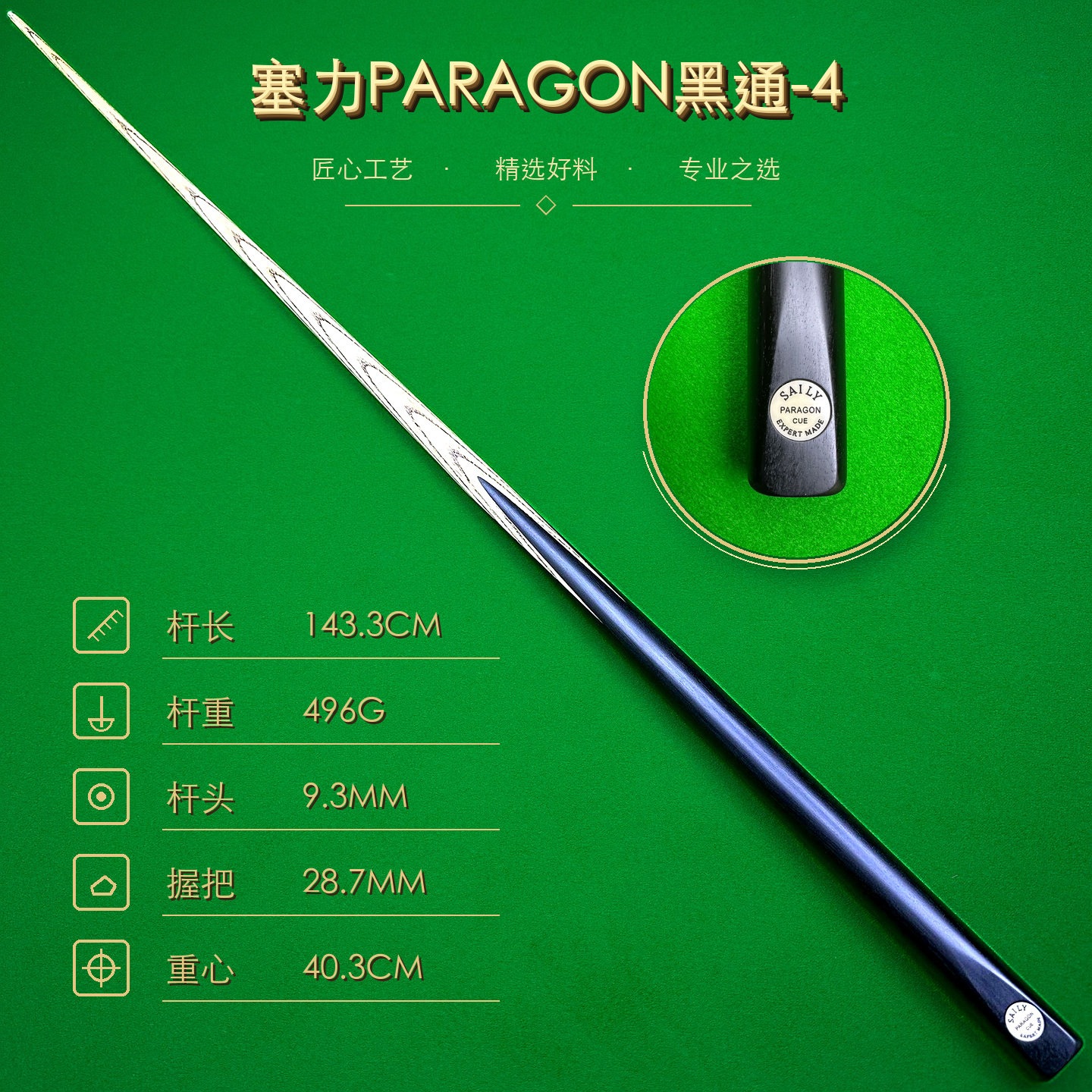
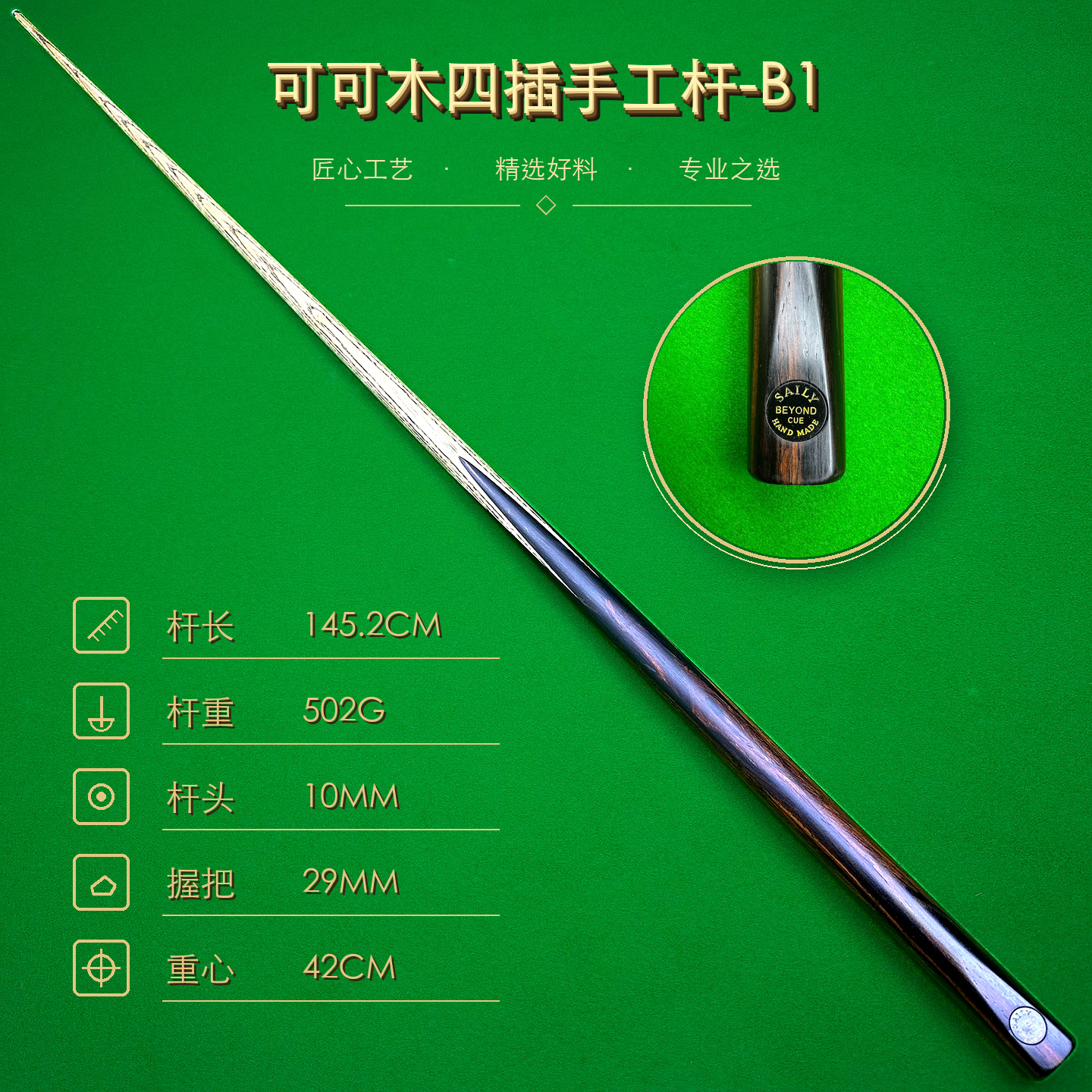
Do not assume that two cues from the same sport have the same dimensions. The real SAILY CUE product cards shown here document a Paragon cue at 143.3 cm and a Cocobolo four-splice cue at 145.2 cm. Those numbers describe assembled cues; they do not prove the internal case length required for every format.
If you are choosing between physical formats, read the one-piece versus three-quarter-jointed cue guide first. A shorter case label is meaningless if the longest stored section, joint position or internal layout is wrong for the cue.
Measure the longest stored section
For a one-piece cue, the longest section is the cue itself. For a jointed cue, assemble and identify the sections, then measure each separately from its furthest fixed end to the opposite fixed end. Note whether a joint pin, bumper, protector or permanently fitted part extends beyond the wood.
The critical comparison is between that longest stored section and the case’s usable internal length. External case length includes walls, end caps, handles and construction that may not provide cue space. Ask the seller for the internal measurement and the measuring method rather than estimating from the outside.
Allow practical clearance so the cue can be inserted and removed without pressing the tip, butt end or joint into a hard surface. More empty space is not automatically safer, however: an unsupported cue that moves freely can contact the interior repeatedly. The case must combine adequate length with suitable support.
The snooker cue length guide explains a repeatable tip-to-butt record for the assembled cue. Add separate section measurements for case shopping, because the assembled number alone does not describe how a jointed cue occupies the case.
Inspect the internal layout and contact points
Ask for clear photographs of the open case, end supports, dividers and closure. Check where the cue rests and whether the shaft, butt and jointed sections have separate channels or sleeves. The tip and joint should not be forced against a hard end when the case closes.
A useful interior limits movement without squeezing the cue. If elastic straps, foam, clips or shaped channels are present, confirm where they contact the cue and whether they suit its diameter and format. Do not assume that “padded” describes the amount, density or placement of protection.
Check the closure as part of the protective system. Latches, zips or locks should close normally with the intended contents inside. If you must press hard on the lid or bow the case, the internal load or layout is wrong. Equally, a loose cue that can slide from end to end needs better support.
Keep loose chalk, keys, coins and metal maintenance tools out of the cue compartment. Use separate spaces for accessories so hard or dusty items cannot rub against the cue.
Choose capacity for what you actually carry
Single, double and multi-slot cases serve different routines. List the cue sections and accessories that must travel, then match each item to a specific compartment instead of buying unused capacity by default. The snooker cue-case packing checklist helps separate essential, compatible items from loose chalk, hard objects and unnecessary tools.
Extra slots add space and may add weight, while an overfilled single-cue case can put accessories against the shaft. Think about the complete packed arrangement. A second cue compartment should not become a loose tool drawer.
SAILY CUE’s Cue Cases & Bags category groups single, double and multi-slot options for carrying, transport and cue protection. Availability, brands, colours, internal dimensions and exact models should be confirmed before ordering.
Match protection to the journey
Walking to a local club, driving, rail travel and checking baggage create different handling conditions. Compare the case’s construction, carrying method, closure and packed weight with the journey you actually make. A shoulder strap may help locally; a longer trip may make external protection and secure closures more important.
Airline, rail operator, venue and event rules can vary and can change. Check the current carrier limits for length, weight, sporting equipment and cabin or checked baggage before travel. A case that physically fits the cue may still fall outside a carrier’s accepted size or handling rules. Before a flight, use the snooker cue pre-flight checklist to separate airport-security permission from airline acceptance.
Keep the cue dry before closing the case. After travel, open and inspect it in a suitable indoor place rather than leaving a damp cloth or wet accessory sealed beside the cue. Use the snooker cue-case cleaning checklist for the lining, shell and hardware; the broader snooker cue storage and care guide covers temperature changes and routine cue inspection.
Eight questions to ask before buying
- Which cue format does it accept?State one-piece, 3/4-jointed, centre-jointed or the exact section layout.
- What is the usable internal length?Ask for the measuring points, not only the outside dimensions.
- How are the sections supported?Request open-case photographs showing channels, dividers and end clearance.
- Where do accessories go?Keep extensions, chalk, keys and tools separate from cue surfaces.
- Does it close without pressure?The intended load should not require forcing the lid, zip or latches.
- How much does it weigh packed?Include the case, cue sections and normal accessories.
- How will it be carried?Compare handles, straps and closure with the actual journey.
- What are the order terms?Confirm the exact model, photographs, final price, shipping and return conditions.
If a listing cannot answer the fit questions, do not infer the interior from a generic model name. Record your cue first, request the missing measurements and compare the answer with the SAILY CUE catalogue or the exact cue record you own.
Snooker cue case FAQ
How long should a snooker cue case be?
Base the decision on the longest piece that must fit inside, not only the assembled cue length or the case’s external length. Ask for the usable internal length and allow clearance for the tip, butt end, joint and any protective fittings.
Can a one-piece cue use the same case as a 3/4-jointed cue?
Usually they need different internal layouts because the longest stored section and compartment arrangement differ. Confirm the exact cue format and each section length before ordering.
Should a cue fit tightly inside its case?
It should be supported so it does not move freely, but it should not require force or press the tip, butt or joint against a hard end. Check how the seller describes the internal supports and closure.
Is a hard case always better than a soft bag?
Not automatically. Compare the protection, internal support, weight, carrying method, storage space and travel conditions you actually need. Product construction and fit matter more than a broad label alone.
CUE PROTECTION
Compare cue cases and bags
Review the accessories category, then confirm the exact model, internal dimensions, capacity, colour and availability before ordering.