
SNOOKER CUE BUYING · TIP SIZE
9 mm vs 10 mm Snooker Cue Tip: What Should You Compare?
A useful 9 mm vs 10 mm snooker cue tip comparison starts with the installed cue, not a number printed on a loose tip blank.
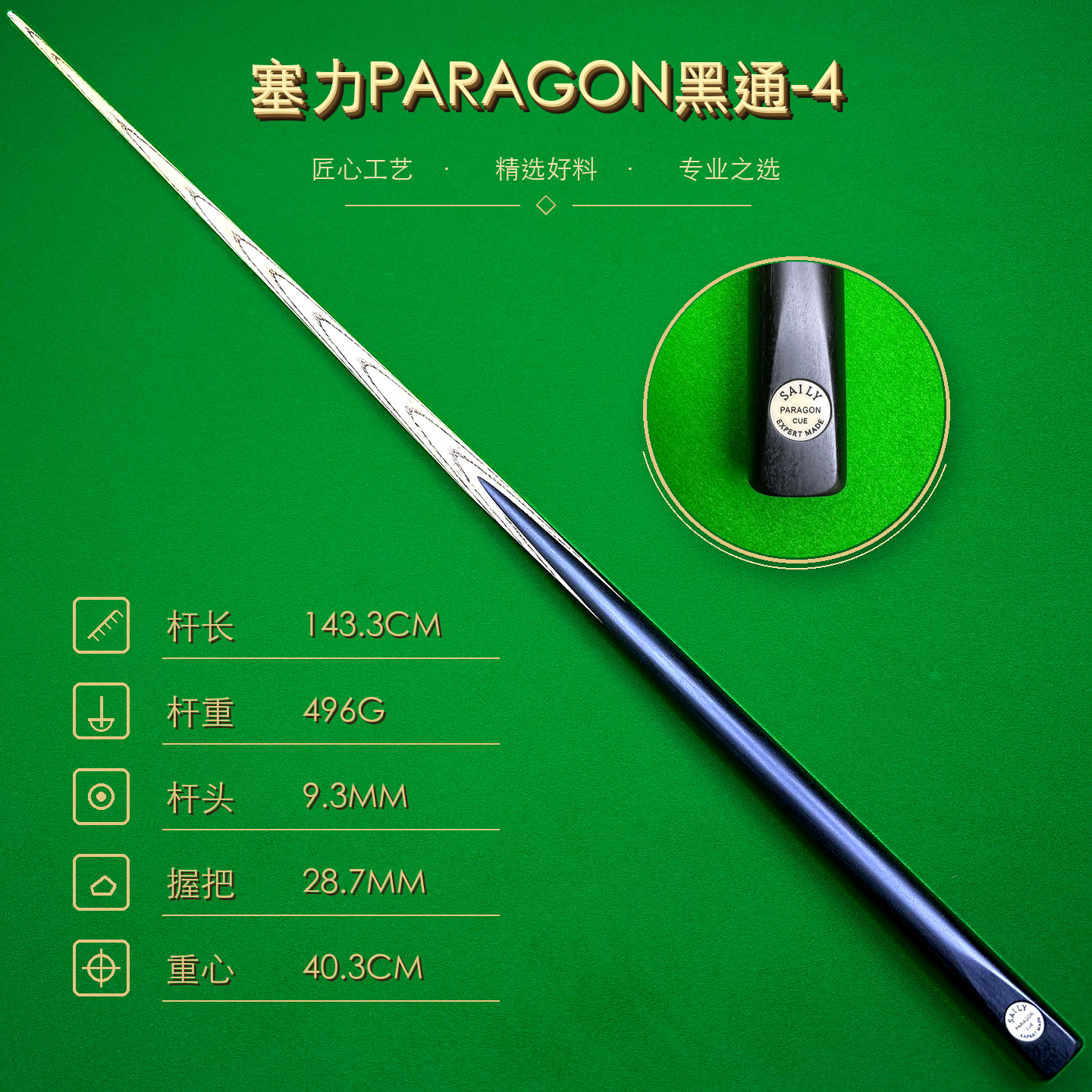
Short answer: 9 mm and 10 mm describe a small difference in the installed tip’s widest diameter, but they do not describe the whole playing setup. Measure the exact installed tip, confirm the ferrule and shaft context, inspect condition and hardness, and compare with a familiar cue. There is no universal “best” size, and neither number promises more spin, control or accuracy.
Start with the exact installed measurement
The first comparison is not a loose tip package. It is the tip after normal installation on the actual ferrule. A usable record should state the widest playing-surface measurement, the unit, the reference points and whether the edge is new, shaped, worn or damaged. A rounded seller label can be useful for browsing, but it is not a substitute for a documented measurement.
- Identify the cue.Record the product name, individual reference and the shaft or spare-shaft configuration.
- Check the playing surface.Measure across its widest point with the tip seated normally, not at a sloping edge or loose corner.
- Record the condition.Note whether the tip is new, shaped, compressed, uneven, lifting or missing material.
- Keep the method.Use the same tool and reference points when comparing two cues so the numbers mean the same thing.
For the measurement terms and practical limits, read the snooker cue tip size guide. That tutorial explains how to take a consistent measurement; this article is a purchase comparison and adds the surrounding cue decisions.
Check the ferrule, shaft and taper together
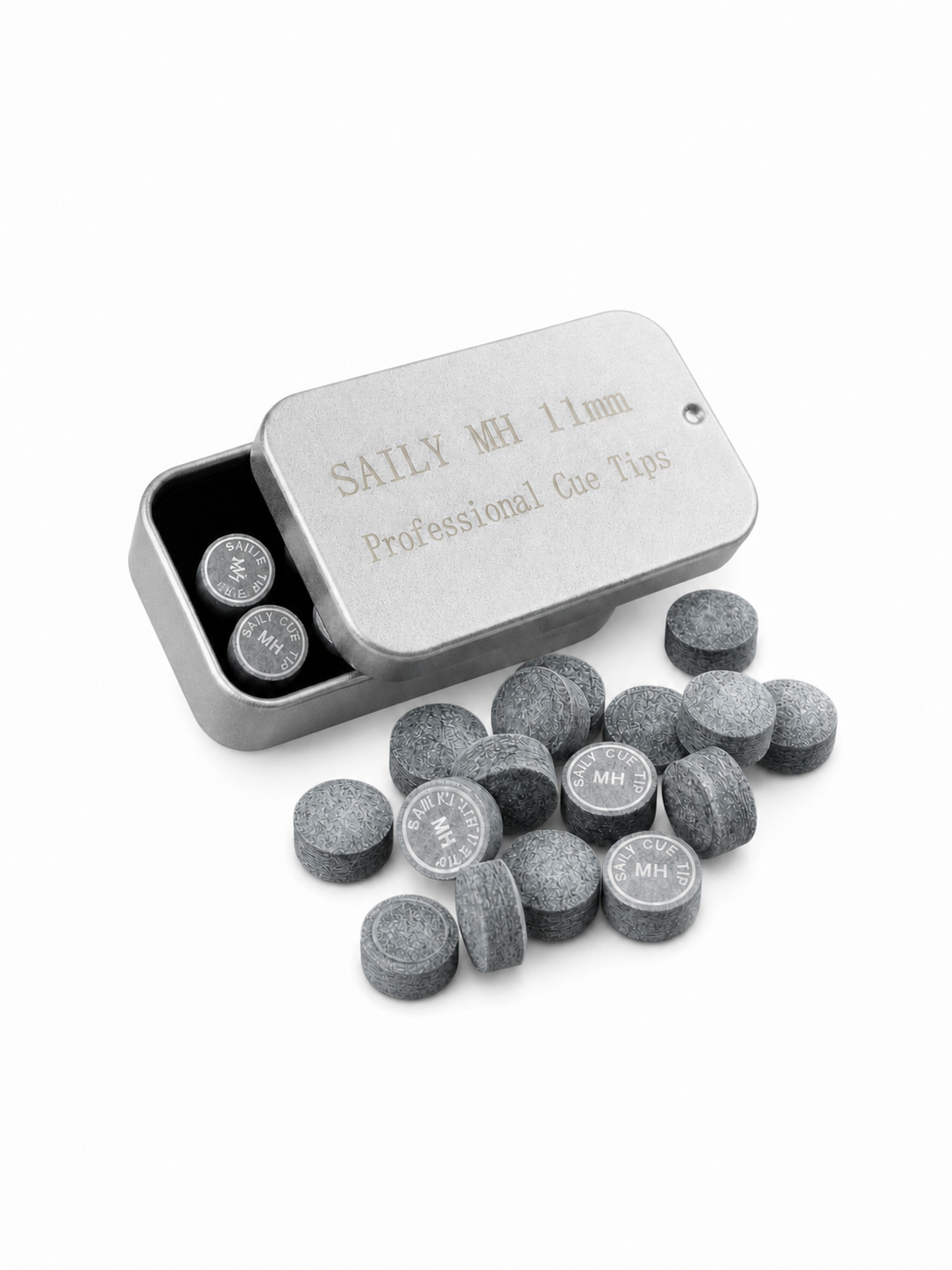
A 9 mm tip on one shaft is not automatically equivalent to a 9 mm tip on another. Compare the ferrule diameter, the shaft end, taper, collar and how the tip meets the ferrule. Also confirm whether the listed measurement refers to the playing surface, ferrule or a pre-installation blank. The snooker cue specifications guide helps keep those reference points separate.
If you are considering an alteration rather than choosing between complete cues, use the cue-tip size change assessment. Do not assume a larger blank can simply be fitted to the existing cue. Ask a qualified cue maker or technician to assess the exact shaft, ferrule and current seating before any irreversible installation.
When comparing complete cues, keep tip size alongside length, weight, balance, joint format and extension details. A tip diameter is one field in a cue record, not a quality ranking.
Compare tip condition and hardness, not diameter alone
Two tips with the same nominal diameter can be in very different states. Inspect attachment, edge continuity, surface profile, cracks, glazing, compression and remaining material above the ferrule. The cue-tip inspection guide gives a condition-first check without treating normal preference as damage.
Hardness is a separate comparison. A 9 mm tip can be soft, medium or hard, and a 10 mm tip can be the same; the diameter does not identify the hardness. Use the snooker cue tip hardness guide for terminology, then ask what is actually installed and how its condition was assessed. Do not turn a hardness label into a promise about feel, spin or control.
Use your familiar cue as the baseline
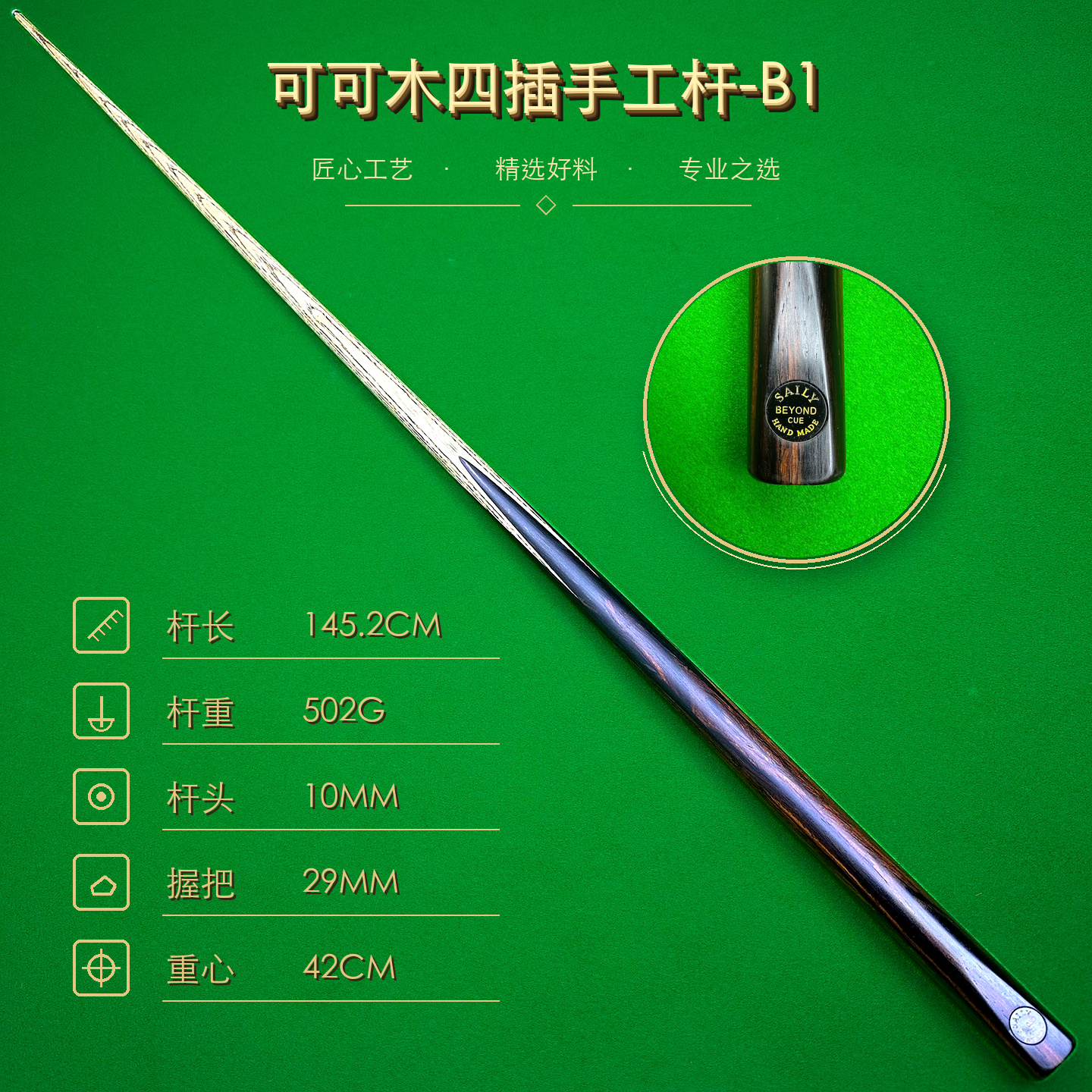
The most useful question is often “what will change from the cue I already understand?” Record your familiar cue’s installed tip size, ferrule and shaft details, hardness, profile and normal setup. Then compare the proposed cue under the same practical conditions, where possible.
A 1 mm difference is clear on a specification sheet, but whether it matters to one player cannot be decided from that number alone. Keep your evaluation separate from claims about accuracy, cue-ball control or spin. If the new cue also changes taper, length, weight or balance, you cannot fairly attribute every difference to tip diameter.
Purchase checklist for 9 mm vs 10 mm
- Exact identity: cue name, individual reference and current photographs.
- Installed measurement: widest playing-surface diameter, units and method.
- Context: ferrule, shaft end, taper, collar and normal configuration.
- Condition: attachment, edge, profile, cracks, wear and remaining material.
- Hardness: documented installed hardness or a clear statement that it is unknown.
- Baseline: your familiar cue’s setup and any other changed specifications.
- Terms: included items, price, shipping and return conditions.
Browse the SAILY CUE English cue catalogue for real product photographs and stated specifications, then ask for any missing tip or shaft detail before ordering. A careful record lets you compare the cue you will receive—not an idealised number from a generic listing.
9 mm vs 10 mm snooker cue tip FAQ
Is a 10 mm snooker cue tip automatically better than a 9 mm tip?
No. The diameter alone does not establish better control, spin or accuracy. Compare the installed tip with the shaft and ferrule, the tip condition and hardness, the cue’s full configuration and the setup you already know.
How should I measure a 9 mm or 10 mm cue tip?
Measure the installed playing surface across its widest point with the tip seated normally on the ferrule, and record the reference points and tool used. Do not compare a loose blank, a worn edge or a seller’s rounded label as if each were the same measurement.
Can I put a 10 mm tip on a shaft made for 9 mm?
Do not assume compatibility from the numbers. Confirm the ferrule diameter, shaft end, taper, tip seating and installation method with a qualified cue maker or technician. A larger blank may need careful fitting, and an irreversible installation should not be guessed.
Should I change tip size when buying a new snooker cue?
Keep your familiar cue as a baseline. Compare the complete cue, ferrule, shaft dimensions, tip condition, hardness and normal setup before changing size. If the listing does not document those details, ask the seller rather than treating 9 mm or 10 mm as a performance promise.
SAILY CUE CATALOGUE
Compare the complete cue record
Review real photographs and documented measurements before choosing a tip size or installation.