
SNOOKER CUE SPECIFICATIONS · COMPARISON
Snooker Cue Weight vs Balance Point: Which Specification Should You Compare?
Total mass and its measured balance location answer different questions; use both without turning either into a quality score.
Short answer: cue weight describes total mass; balance point describes where the assembled cue balances from a stated reference end. Compare weight when you want to understand mass, compare balance point when you want a repeatable distribution reference, and use both with length, dimensions, configuration and your familiar cue.
Cue weight and balance point are not interchangeable
A listing may place weight and balance point next to each other, but they are different measurements. Weight is recorded in grams or ounces. Balance point is a distance—usually centimetres or inches—from a named end of the cue to the location where the assembled cue balances.
Total mass cannot show where that mass sits. Two cues can weigh the same and still have different balance points. Two cues can also share a similar balance-point distance while their total weight, length, butt diameter or construction differs. That is why a single number cannot describe the complete handling impression.
Neither value is a performance guarantee. A heavier cue is not automatically more stable, and a particular balance position is not automatically more accurate. These specifications help you ask clearer questions and compare individual cue records.
Use weight to compare complete playing mass
A useful cue-weight figure describes the complete cue in its normal playing configuration: assembled sections, installed tip, ferrule and butt, but no detachable extension unless the seller says otherwise. A butt-only value, loose-section total or cue-plus-extension value belongs to a different configuration.
Use the original measured unit when possible. If one listing uses grams and another uses ounces, keep both originals and add a sensibly rounded conversion. The home cue-weight guide explains scale support, taring and unit conversion without letting part of the cue touch outside the scale.
Weight helps answer a narrow question: how much mass does this complete cue have? It does not reveal how the cue will feel in your hand unless you also know dimensions, balance and how you personally hold and move it.
Use balance point to compare a location reference
A balance-point record needs an endpoint and a configuration. SAILY CUE product records measure the assembled cue and state the distance from the butt end. Another seller may use a different endpoint or include an extension, so confirm the method before placing the values in one column.
The number gives a repeatable physical location, not a universal “front-balanced” or “rear-balanced” verdict. Cue length matters: the same distance occupies a different proportion of two cues with different total lengths. Grip position matters too, so a catalogue measurement should not be treated as a prediction of one player's feel.
Read the balance-point measurement guide for a safe at-home method and clear labelling. When comparing with a familiar cue, measure both from the same end, in the same assembled configuration and with the same support method.
See how real cue records separate the two fields
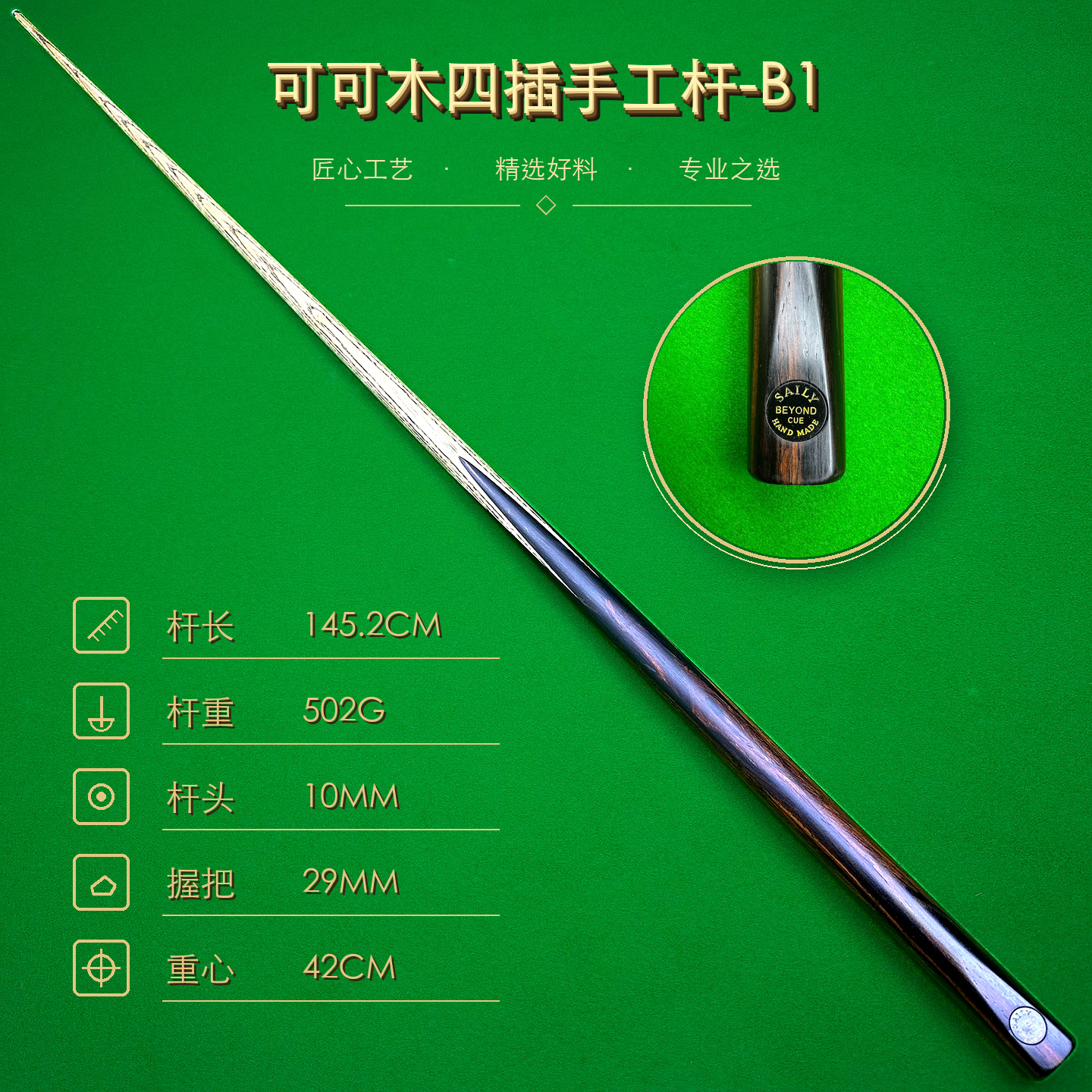
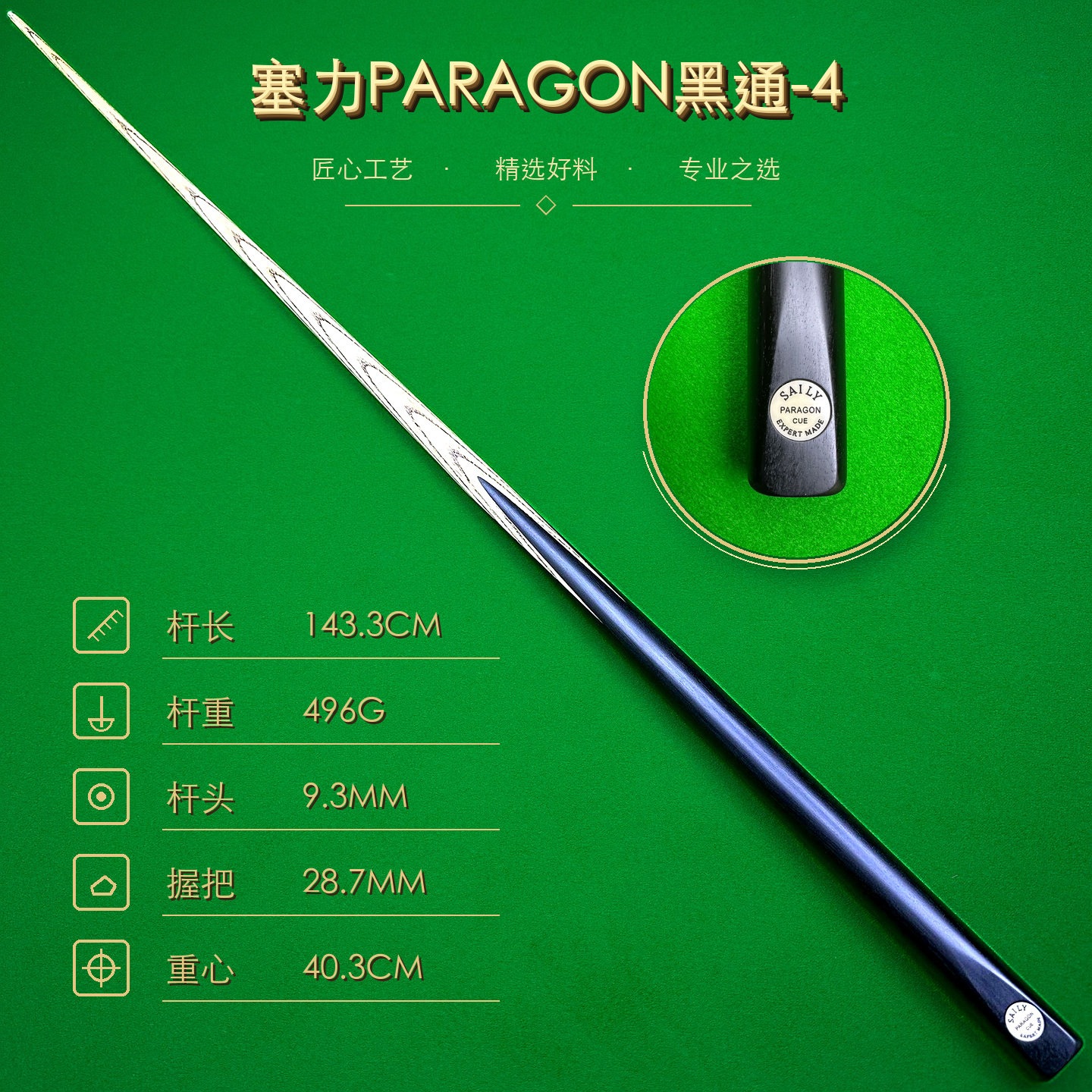
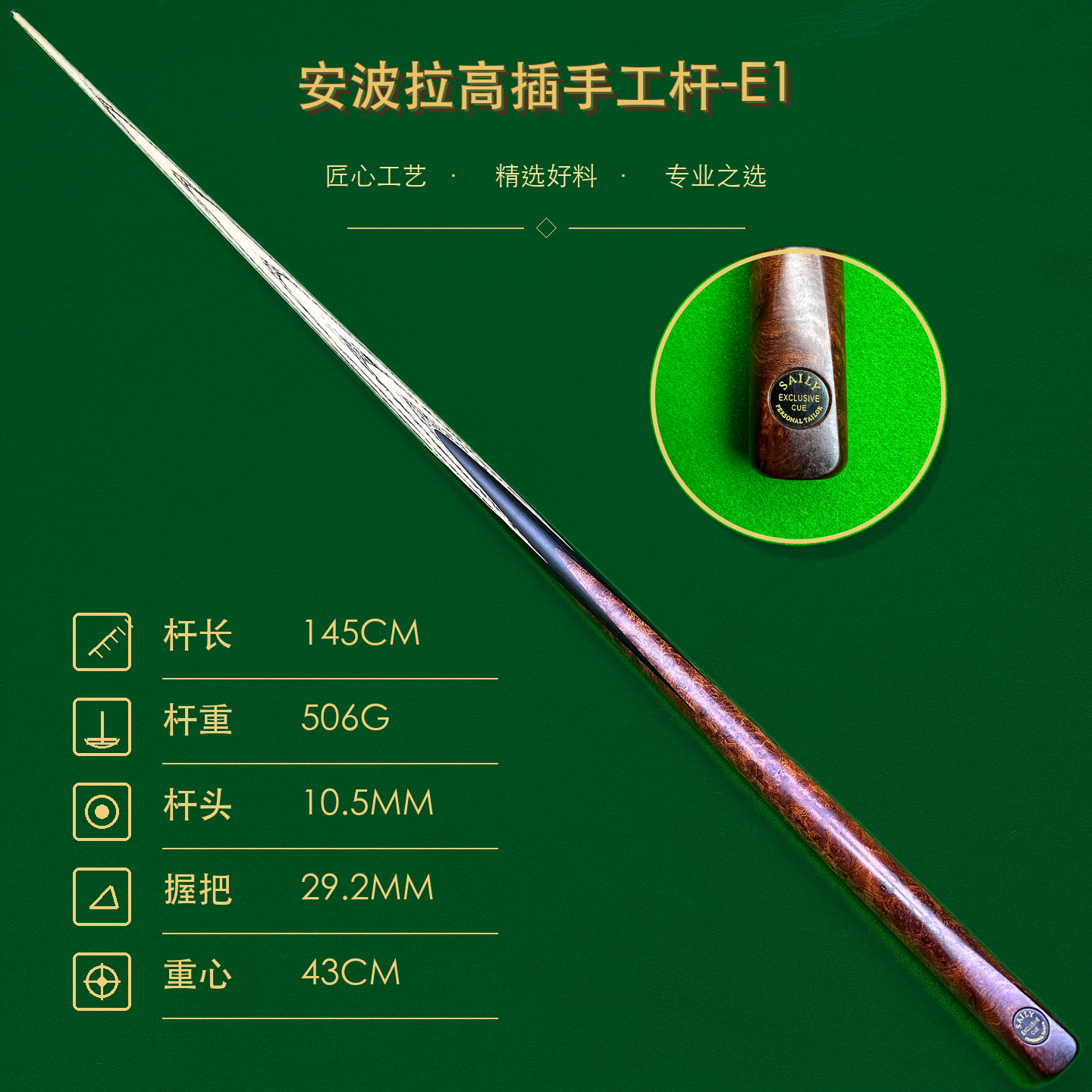
The Cocobolo Four-Splice Handmade Cue B1 is documented at 502 g with a 42 cm balance point from the butt. The Saily Paragon Ebony Cue No. 4 is documented at 496 g with a 40.3 cm balance point from the butt. The Amboyna High-Splice Handmade Cue E1 is documented at 506 g with a 43 cm balance point from the butt.
These figures describe three individual cues. They do not create a ranking. The records also have different lengths, tip sizes and butt diameters, so attributing every handling difference to the six- or ten-gram weight gap would ignore the rest of the cue.
Real product photographs help connect the measurements to the exact item. They cannot prove hidden construction details or predict personal suitability. Ask the seller when the configuration, measuring reference or condition is unclear.
Build a fair weight-and-balance comparison table
- Identify the exact cue.Record its individual name or code and current real photographs.
- Match the configuration.Confirm that weight and balance describe the complete assembled cue without an extension.
- Keep original units.Record grams and the stated balance distance before adding any conversion.
- Match the endpoint.Compare balance points only when both are measured from the same named end.
- Add length and dimensions.Include total length, tip size and butt diameter so one number is not isolated.
- Add a familiar reference.Measure a cue you already use with the same methods when practical.
The snooker cue specifications guide explains how to keep every field and reference clear. Mark missing data as unknown instead of estimating a precise value from a photograph or another cue in the same series.
Use the numbers to narrow questions, not choose for you
If you are mainly sensitive to total mass, start by comparing weight with a familiar cue. If you are trying to understand why two similarly weighted cues do not feel alike, add the balance-point record, length, butt diameter and your normal grip position. When both cues are available in person, handle them safely and compare the complete setup rather than chasing one preferred number.
For an online purchase, ask whether the seller measured the exact cue, how it was assembled and which end was used for the balance reference. Browse the SAILY CUE collection to see individual cue photographs and listed measurements, then confirm availability and any unresolved details before ordering.
Weight and balance point describe physical specifications. They do not guarantee quality, accuracy, durability, value or suitability for a particular player.
Snooker cue weight and balance FAQ
Are cue weight and balance point the same thing?
No. Weight is the total mass of the complete playing cue. Balance point is the location where that cue balances, measured from a clearly stated end. They describe different physical facts.
Does a heavier snooker cue always feel more butt-heavy?
No. Total mass does not show where the mass is distributed. Two cues can have similar weights but different balance points, dimensions and handling impressions.
Which specification should I compare first?
Start with your purpose. Use weight to compare total mass and balance point to compare the recorded distribution reference. Then include length, butt diameter, tip size, construction, condition and your own familiar cue.
Can these numbers tell me which cue will play better?
No. Neither measurement guarantees quality, accuracy, durability or suitability. They support a more informed comparison when the cue configuration, units and measuring methods are consistent.
SAILY CUE COLLECTION
Compare complete individual cue records
Review real photographs with documented length, weight, tip, butt and balance-point measurements.