
SNOOKER CUE LENGTH · HOME ROOM PLANNING
What Snooker Cue Length Do You Need for a Small Room?
Measure the real cueing corridor at restricted shots before treating room size—or the shortest cue listing—as the answer.
Short answer: choose from the space behind the cue ball at the room’s most restricted playable positions, not from floor area alone. Measure the exact cue in its complete playing configuration, allow room for your bridge and backswing, and test several real shot positions before deciding whether a different cue length is necessary.
Measure a playing corridor, not just the room
A room can look generous on a floor plan and still restrict cueing near one wall, a column, furniture or a doorway. The useful number is the straight path available behind the cue ball when you settle into a normal stance. That path changes around the table, so one wall-to-wall dimension is not enough.
Start with the table in its intended position. At each side, measure from the cushion edge to the nearest fixed obstruction along a realistic cue direction. Then place a cue ball near the cushion and rehearse the setup without striking. Your body may fit while the butt reaches the wall during the final backswing.
Do not build the plan around a cramped, twisted motion. Record whether you can stand comfortably, place the bridge, address the cue ball and make your normal backswing without contacting anything. If a position forces the cue upward or the body sideways, mark it as restricted even if the cue technically fits.
Test the shots most likely to expose a space problem
Use at least three positions: a cue ball close to the cushion facing directly toward the nearest wall, a diagonal shot into a corner, and a side-of-table shot beside the tightest obstruction. These checks reveal different relationships between the cue, player and room.
- Use your normal bridge.A shorter bridge may create room, but it should be a deliberate choice rather than an accidental measuring shortcut.
- Rehearse the full backswing.Leave the balls still and check the movement several times at ordinary speed.
- Include the player.A paper cue-length line cannot show whether feet, hips or shoulders meet the wall first.
- Check movable items separately.A chair that can be moved is a different constraint from a permanent wall or column.
- Record the tightest repeatable position.Base the buying question on the genuine bottleneck, not the most open side.
If the room has not yet been built or furnished, reproduce the corridor with tape on a clear floor. Use a current cue or a straight lightweight reference of the same length, and keep the rehearsal controlled so nothing is damaged.
Compare the complete playing length of the exact cue
A listing should identify the assembled length from the installed tip to the end of the butt. Follow the same endpoints when checking a cue at home; our cue-length measurement guide explains that method and shows how to record an extension separately.
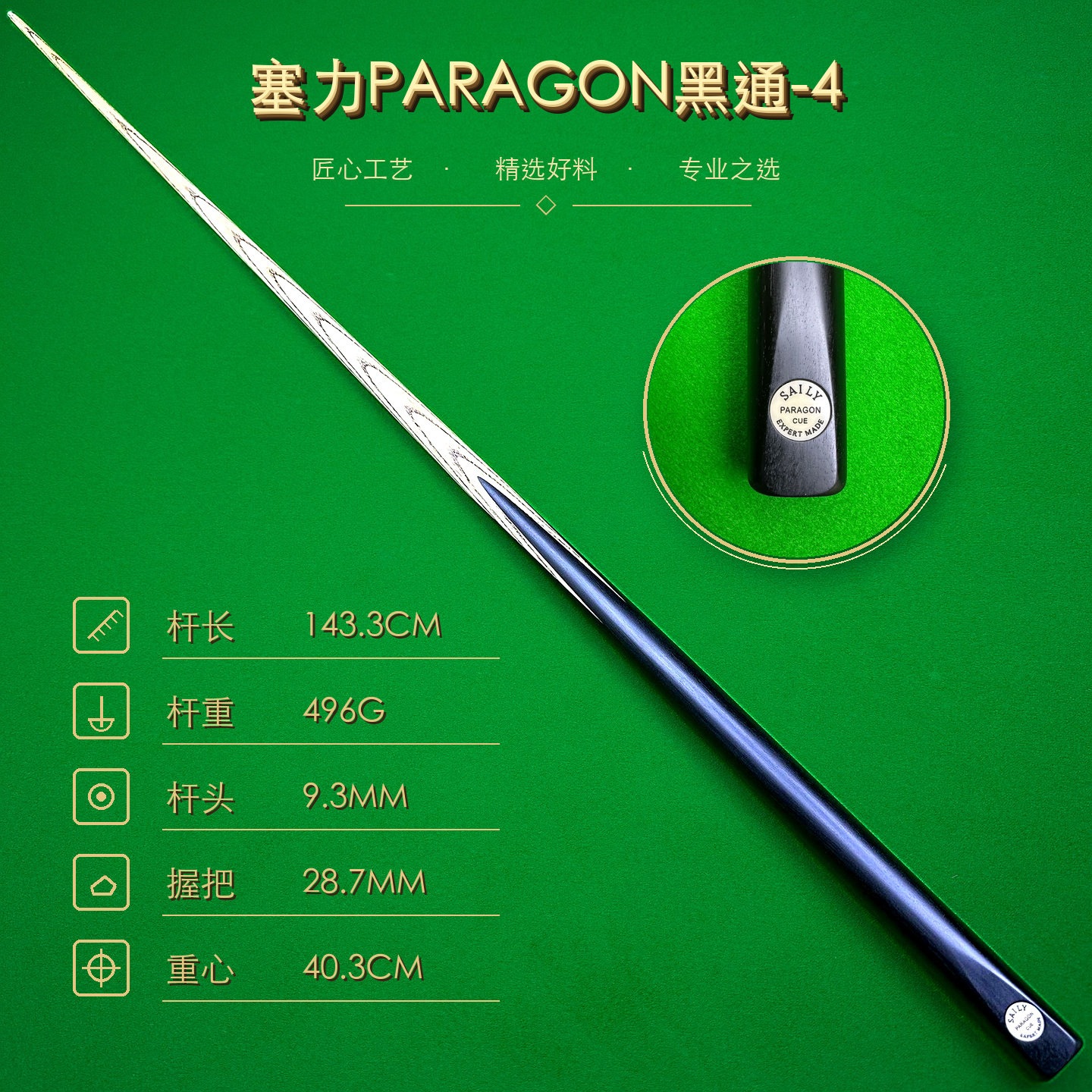
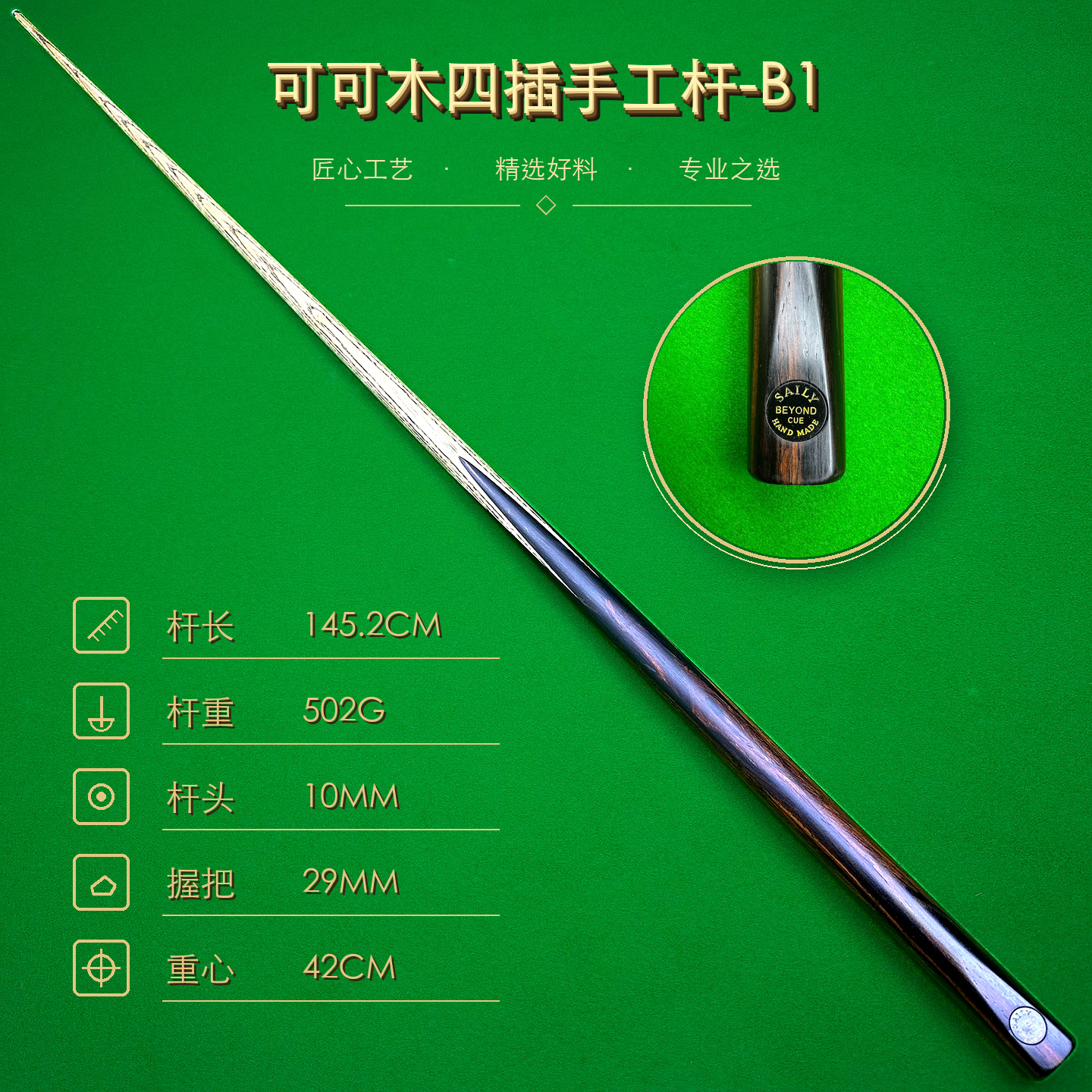
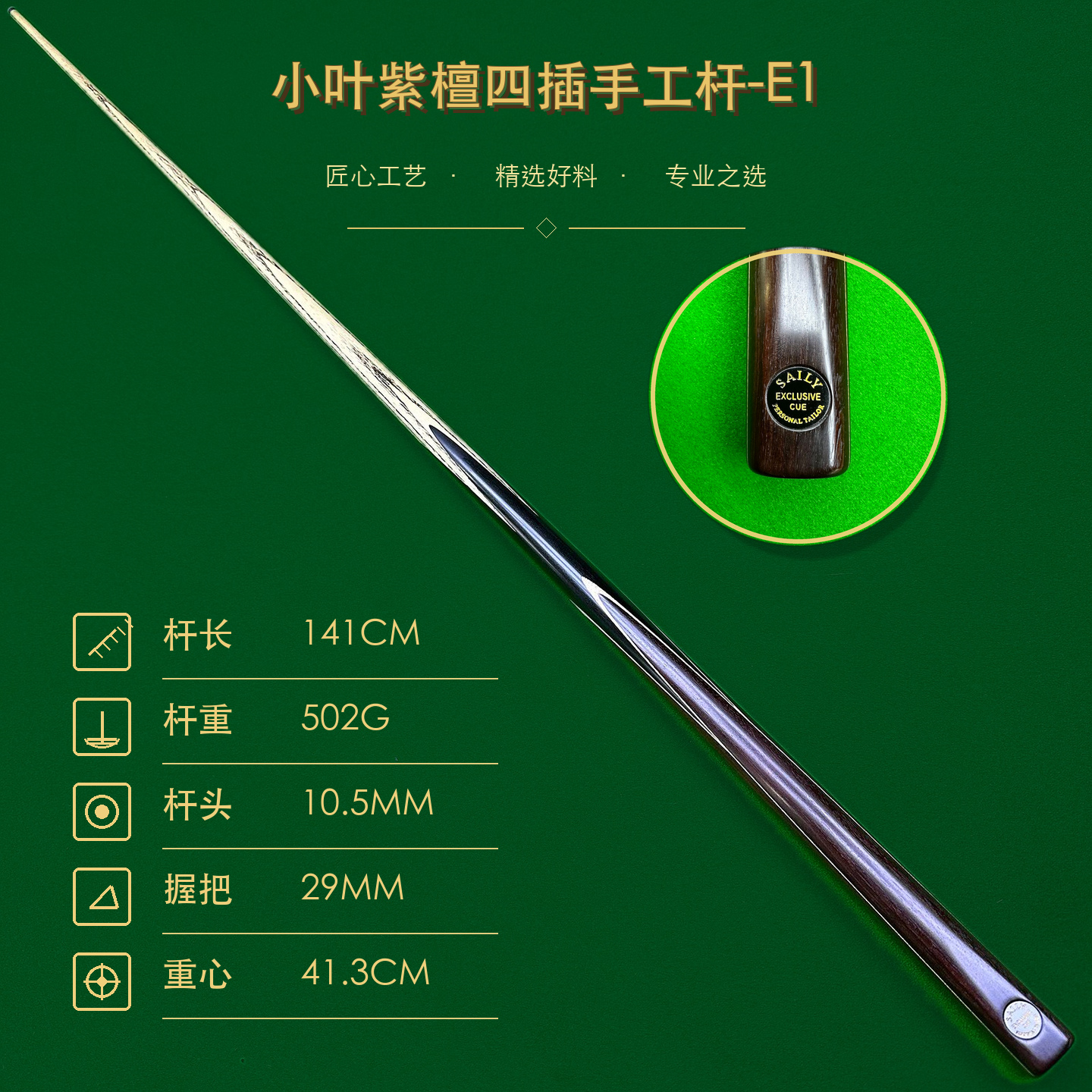
Real SAILY CUE catalogue examples show why the exact record matters. The Red Sandalwood Four-Splice Handmade Cue E1 is listed at 141 cm, the Paragon Ebony Cue No. 4 at 143.3 cm, and the Cocobolo Four-Splice Handmade Cue B1 at 145.2 cm. These are individual measured cues, not recommended room-size categories.
A difference of a few centimetres may matter at one blocked shot and make no difference elsewhere. It also does not tell you which cue will feel better. Review length beside weight, tip size, butt diameter, balance point, construction and condition using the cue-specification guide.
Joint position changes storage length, not necessarily playing length
A one-piece cue and a three-quarter-jointed cue can have similar assembled playing lengths. The joint mainly changes how the cue separates for transport and storage. It does not automatically solve a wall that blocks the butt during a shot.
When the doorway, stairs or storage cabinet is the problem, the longest separated section and the case interior become important. Compare the one-piece and three-quarter-jointed formats, then check the usable internal dimensions described in the cue-case selection guide. Keep this storage question separate from the playing corridor.
Decide whether a shorter cue is actually needed
First count how many practical positions are restricted. If one rare shot is blocked, moving a chair or keeping a dedicated shorter house cue nearby may be more proportionate than changing the main cue. If an entire side is unusable, table placement or the room layout may need attention before any cue purchase.
Do not assume that the shortest available cue is automatically best. A different playing length changes the physical setup and may require an unfamiliar bridge position or stance. Test the proposed length if possible, and avoid claims that a certain cue length guarantees accuracy, comfort or suitability for every player.
A small-room cue buying checklist
- Which three shot positions create the least space behind the cue ball?
- What clear distance remains during a comfortable bridge and full backswing?
- Is the obstruction fixed, or can furniture be moved before play?
- What is the exact assembled tip-to-butt length of the cue?
- Will any extension be used, and what is the separate extended length?
- Does the joint format solve a transport problem but leave playing length unchanged?
- Can the proposed length be rehearsed safely before purchase?
Send the seller the exact constraint rather than asking only for a “small-room cue.” A clear question might be: “The tightest playable position gives me this much clear space behind the cue ball; what is the complete assembled length of this exact cue?” That produces a verifiable comparison.
Snooker cue length for small rooms: FAQ
What snooker cue length is best for a small room?
There is no single length that fits every small room. Measure the usable cueing corridor at the most restricted shots, then compare that space with the complete playing length of the exact cue you are considering.
Does a 3/4-jointed cue need less space while playing?
Not automatically. Joint position changes how a cue separates for storage and transport, but the assembled playing length may still be similar to a one-piece cue. Compare complete length, not section length alone.
Should I buy the shortest cue I can find?
Not solely because the room is compact. First identify which shots are genuinely blocked, how often they occur and whether a shorter house cue or a room-layout change solves the problem. Length alone does not guarantee comfort or performance.
Do cue extensions count in the room measurement?
Yes when you plan to use one. Record the normal assembled cue length first and the cue-plus-extension length separately, then test both against the available space behind the cue ball.
SAILY CUE CATALOGUE
Compare exact cue records
Review real photographs and individual length, weight, tip, butt and balance measurements before asking about room fit.