
SNOOKER CUE · JUNIOR PLAYER FIT
How to Choose a Snooker Cue for a Junior Player
Choose for the player’s current reach, balance and free cue movement, then verify the exact cue rather than relying on age alone.
Short answer: to learn how to choose a snooker cue for a junior player, begin with the player’s current comfortable setup—not an age chart. Check the complete playing length, grip position, bridge reach, balance, free backswing and ability to carry the cue safely. Record weight, tip, butt and balance point in the same configuration. Inspect the exact cue and case, involve a responsible adult or coach, and reassess fit as the player’s body and technique change.
Start with a usable fit, not a predicted age size
Two junior players of the same age can have different height, arm length, stance, grip position and coaching needs. A universal age-to-length table cannot see those differences. It can also encourage buying a cue for future growth while the player struggles with it now.
Begin with the player standing naturally behind a simple shot and moving into a comfortable address under adult or coach supervision. The bridge hand should reach the cloth without an exaggerated stretch. The grip hand should have a practical area on the butt, and the cue should move through gentle practice feathers without hitting the body, floor or nearby furniture.
Do not force a prescribed low head position or copy an adult player’s coordinates. The general snooker cue selection guide explains length, weight, tip and balance; for a junior, every specification must return to present-day comfort and control.
Check the complete playing length in context
Measure a cue from tip to butt in the configuration the player will actually use. State whether an extension or other removable part is fitted. Our cue-length measurement guide gives a repeatable reference so two listings can be compared without mixing methods.
Length is usable when the player can stand, walk in, bridge and move the cue without crowding. A cue can be too long for a tight home room even if the player can hold it; it can also place the natural grip area farther back than is comfortable. A very short cue, meanwhile, should not force the grip hand onto an unsuitable section or leave insufficient reach for ordinary table positions.
- Record the exact cue.Write the product reference and complete measured configuration.
- Use an easy table position.Avoid stretching across a cushion during the first fit check.
- Watch the full approach.Check the standing start, bridge reach, grip area and backswing room.
- Try more than one position.A single straight shot cannot represent every reach needed in play.
- Stop awkward movement.Do not accept lost balance or restricted cue travel merely to use a particular length.
Consider weight and balance together
A lower weight is not automatically better for a younger player. The same listed weight can feel different when two cues have different lengths, butt dimensions or balance points. The practical question is whether the player can support the cue, settle it on the bridge and move it smoothly without squeezing, lifting the shoulder or steering around the body.
When comparing two cues, use the same simple setup and short blocks. Let the player make gentle warm-up movements, then describe support, grip effort, balance and cue clearance separately. Reverse the order later so unfamiliarity with the first cue does not decide the result.
Do not turn a few potted balls into a quality ranking. Shot choice, contact, speed and experience all affect the outcome. The documented measurements are evidence about the cue; they are not guarantees of comfort or accuracy.
Read tip size as one specification, not an age label
Tip diameter matters to the cue’s specification, but a smaller tip does not make a cue a junior model. Check which cue-sports discipline the player practises, the fitted tip’s visible condition and whether the measurement belongs to the exact cue being considered.
Inspect the tip, ferrule, shaft, joint and butt before use. Deep damage, movement, open gaps or unusual resistance during assembly are reasons to stop and ask the seller, maker or a qualified cue technician. Do not reshape, sand or alter a new cue simply to make a listing seem more suitable.
The specifications guide helps keep tip, butt, balance and weight fields separate. This is especially useful when adults are comparing several online listings for a junior and need consistent notes.
Use a junior snooker cue buying checklist
Ask whether the photographed cue is the exact item offered, which components are included and how every measurement was taken. Confirm availability and the seller’s current delivery, return and support terms before ordering. A label such as “junior,” “short” or a series name should never replace measurements and present-condition evidence.
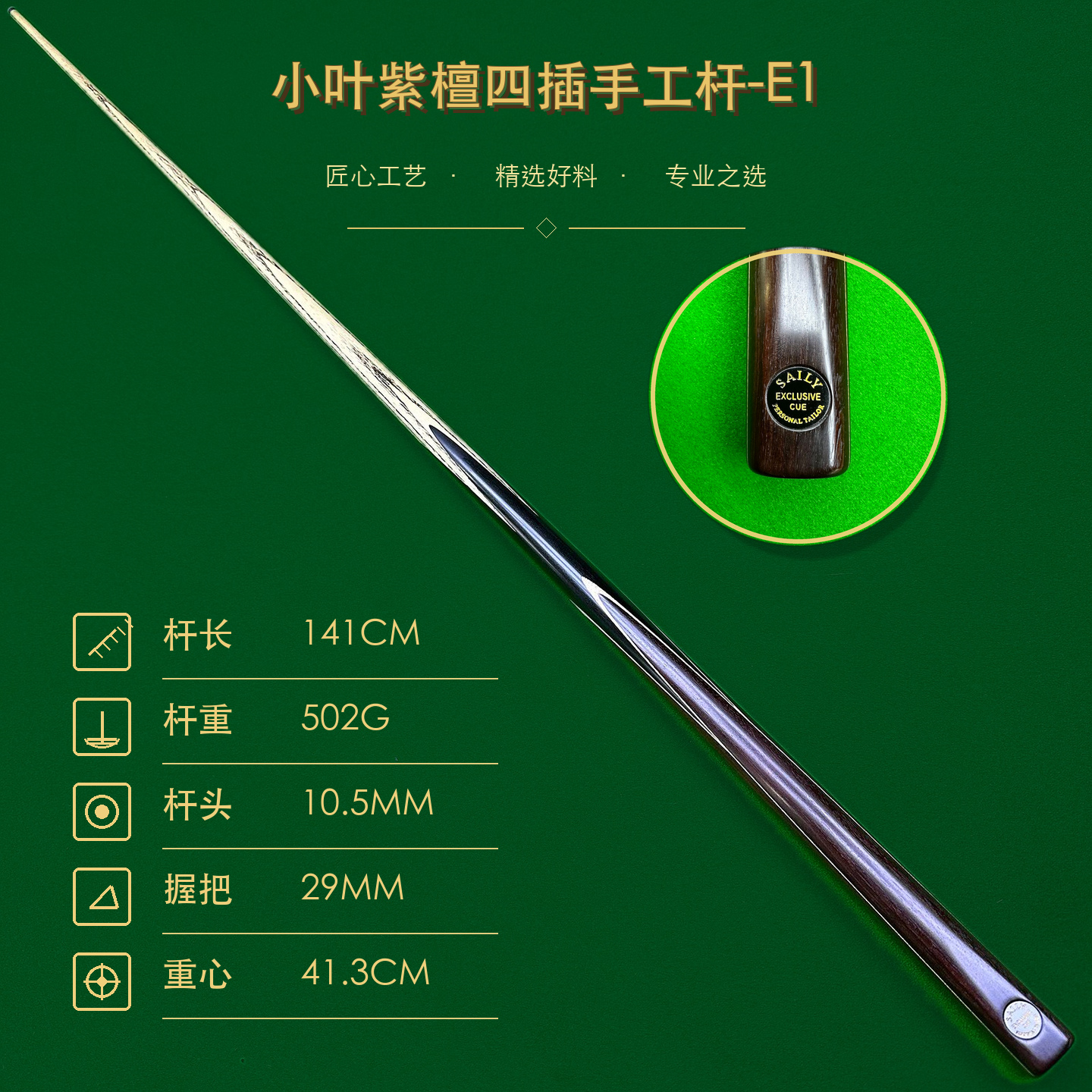
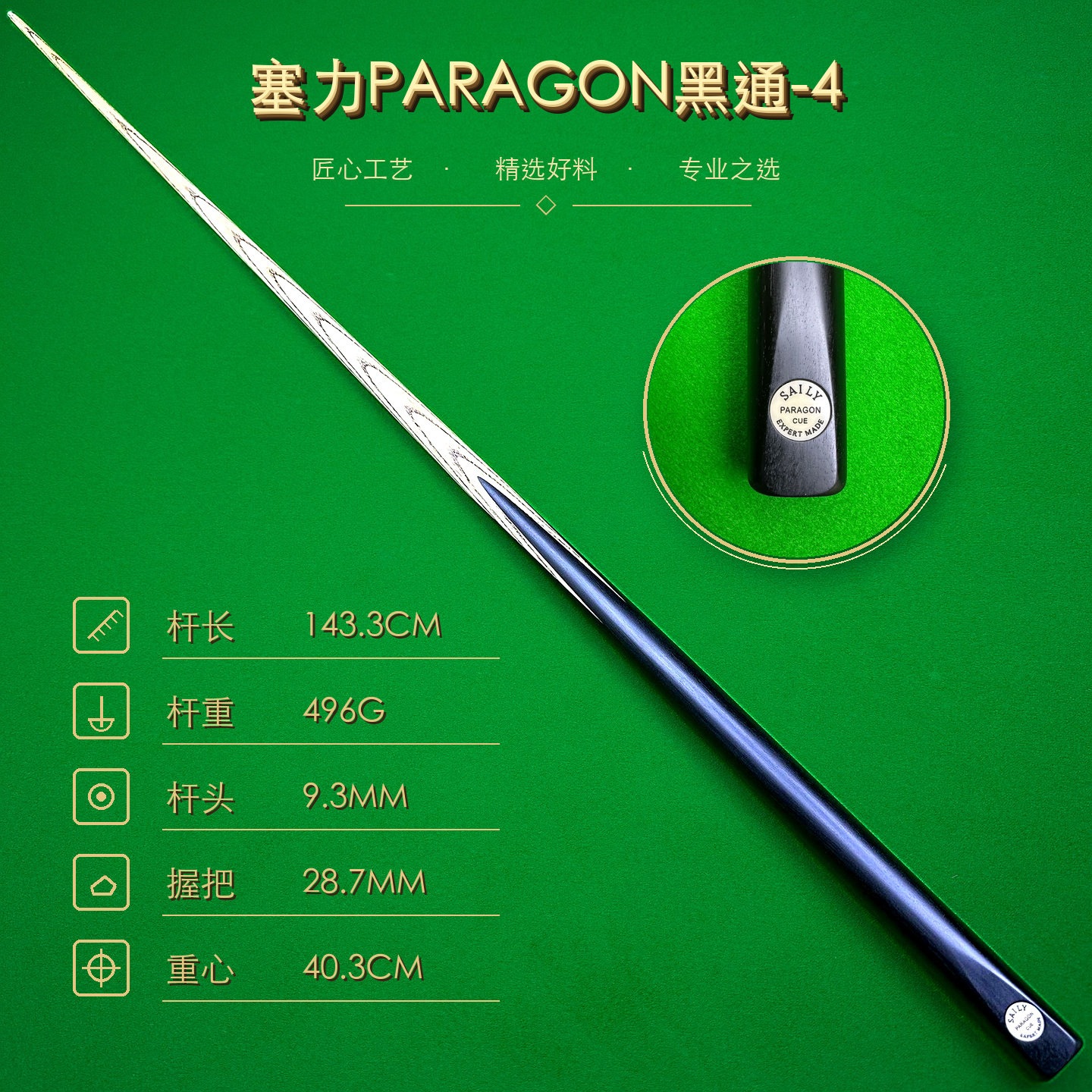
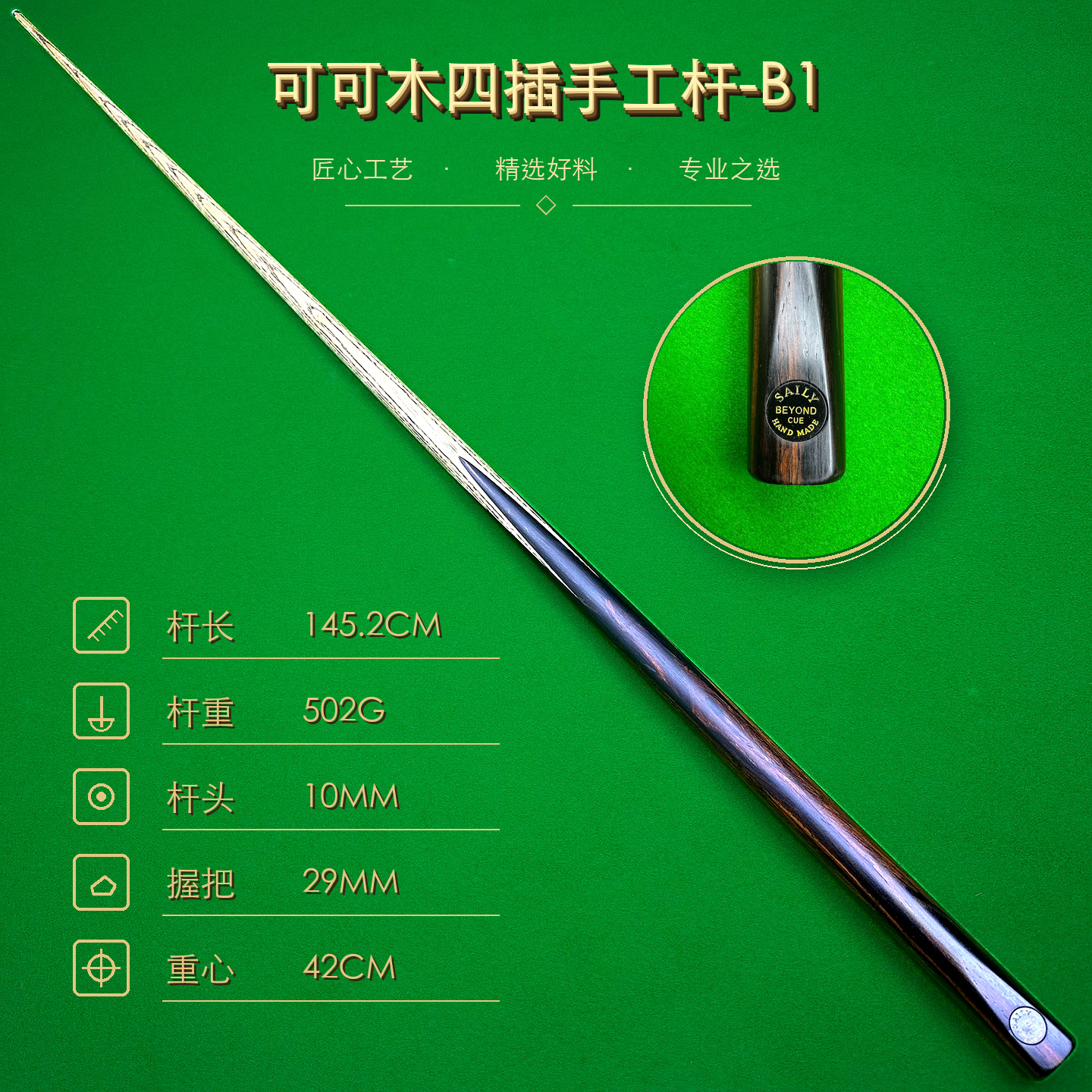
SAILY CUE’s current English catalogue contains individually recorded cues rather than a universal junior range. For example, the Red Sandalwood E1, Paragon Ebony No. 4 and Cocobolo B1 each have their own listed measurements and real photographs. These are useful examples of how records differ; none should be treated as suitable for a particular junior without a separate fit assessment.
Measure the longest cue section and any extensions before choosing storage. The cue-case fit guide covers usable internal length, support and accessory space. A case should protect the exact cue without forcing the lid closed or allowing hard loose items to strike it.
Recheck fit instead of buying around a growth forecast
A junior player’s comfortable setup can change with growth, coaching and experience. Keep the cue’s documented measurements and a brief fit note, then repeat the same checks periodically. The trigger should be observable awkwardness, restricted reach or changed equipment—not a promise that a player must move to a longer or heavier cue at a fixed birthday.
A cue that fits today is not a guarantee of better results, and a different cue will not correct every technical issue. Use the equipment check to remove obvious fit problems, then let qualified coaching and ordinary practice address stance, cue delivery, speed and decision-making.
Junior snooker cue FAQ
What length snooker cue should a junior player use?
There is no single length that fits every child or teenager. Compare the complete cue length with the player’s comfortable standing approach, bridge reach, grip position and free backswing, then record the exact configuration tested.
Should I buy a very light cue for a young player?
Do not choose from weight alone. The player should be able to support and move the cue comfortably, while balance point, length, grip position and condition also affect how the complete cue feels.
Does a smaller tip automatically make a cue suitable for juniors?
No. Tip diameter is one specification, not an age rating. Check the cue-sports discipline, current tip condition, the rest of the cue’s measurements and the coach’s or player’s practical needs.
Can a junior simply grow into a full-length cue?
A cue that is awkward now can restrict reach, balance or cue clearance. Choose for the player’s current usable setup, reassess periodically and avoid buying solely around a predicted growth schedule.
SAILY CUE COLLECTION
Compare exact cue records carefully
Review real photographs and individual measurements, then ask about current availability and any detail needed for a supervised fit check.