
SNOOKER CUE CARE · STORAGE DECISION
Can You Store a Snooker Cue Assembled?
Check the exact cue, its support and the storage space before deciding whether to leave a jointed cue at full length.
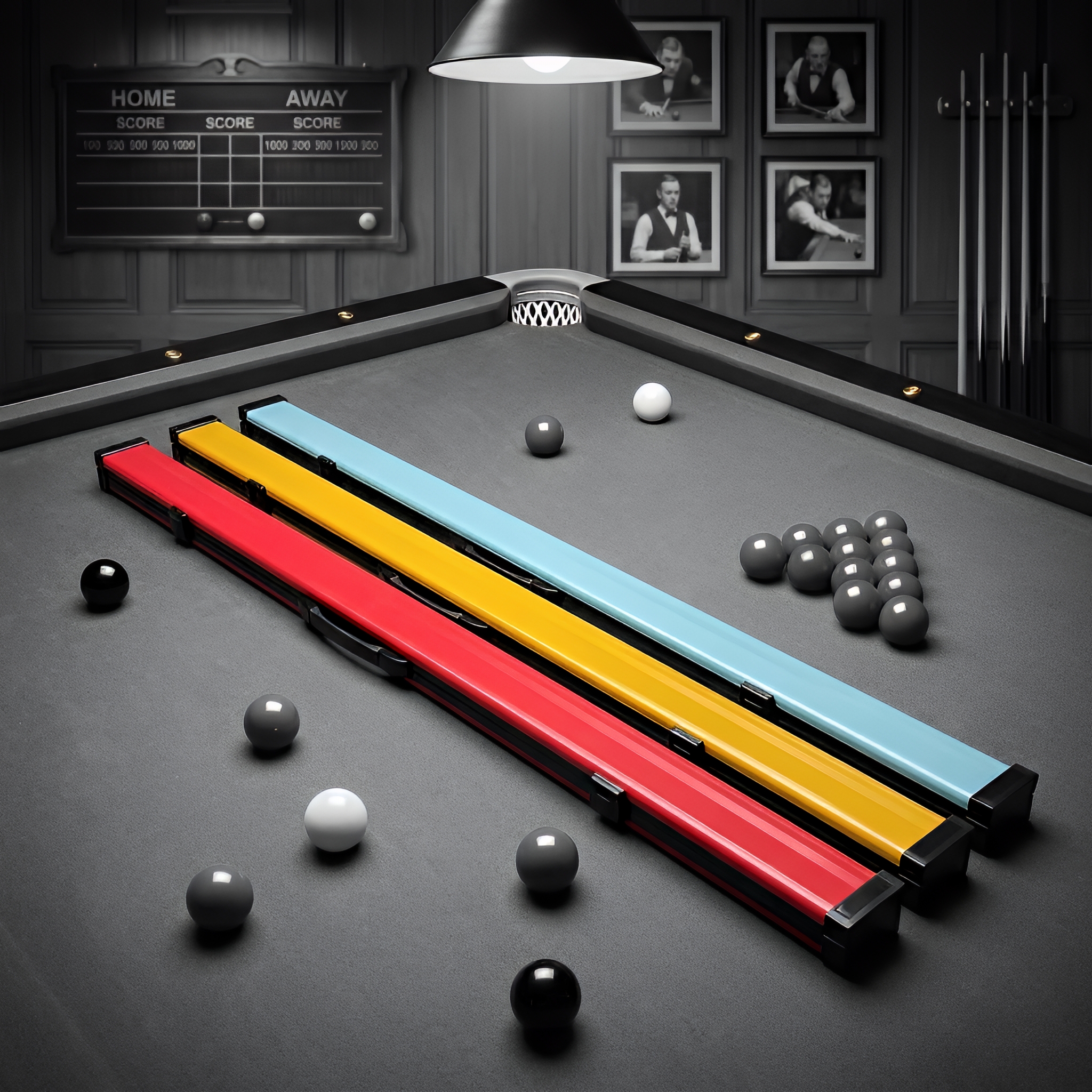
Short answer: an assembled snooker cue can remain at full length only when the exact cue is clean, the joint is fully and normally engaged, and the whole cue has stable support in a protected indoor space. It should not lean under its own weight, bridge between two narrow supports, rub against a wall, roll from a rack or sit where someone can knock it. If your case or rack is designed for separate sections, take the cue apart by hand and use that system as intended. Do not partly loosen the joint and do not force an assembled cue into storage that does not fit.
Start with support, not a universal rule
The useful question is not simply horizontal versus vertical or assembled versus separated. It is whether the exact cue is supported without concentrated pressure, unstable leaning or avoidable impact risk. A full-length cue needs more clear space than two sections and creates a longer object for people, doors, chairs and other equipment to catch.
Lay out the intended storage area before deciding. Check the full cue length, the number and position of supports, the surface touching the shaft and butt, and the route used to place and remove it. A cue balanced across a small gap may look secure while placing most of its weight on two narrow points. A cue standing in a corner may slide even if the room is normally quiet.
Keep the cue away from direct heat, strong sunlight, damp areas and places with rapid environmental changes. Do not invent a single safe temperature or humidity figure for every cue. The conservative approach in the snooker cue storage and care guide is to use a clean, stable indoor location and inspect the cue after any unusual exposure.
Do not assume a sectioned case supports an assembled cue
A jointed-cue case may have fitted channels, clips or padded areas for the shaft and butt as separate pieces. Those features can help limit movement when the sections match the compartment lengths and diameters. They do not prove that the same case can hold the cue assembled, and an open case is not automatically a full-length rack.
Measure or confirm the usable internal length and observe where the case supports each section. Check the closures without pressing the cue down. If a lid, zip, latch or padding pushes against the tip, ferrule, joint, shaft or butt, stop. Never bow a section, compress the tip or leave the case partly closed to make an unsuitable configuration fit.
Use the cue-case fit checklist to compare the longest stored section, internal dimensions, support and travel needs. The current cue cases and bags category provides a natural place to review available storage types, but the buyer still needs to confirm the exact cue-and-case combination.
Make one clear joint decision
If the cue remains assembled, the joint should be fully engaged in its normal playing configuration. A partly loosened joint can allow movement at the connection and creates an ambiguous state: the cue is neither supported as one complete piece nor safely separated into compartments.
If you choose sectioned storage, support both pieces before turning them apart. Use only your hands, keep the sections aligned and stop if there is abnormal resistance, looseness, a visible gap, damaged thread or an unfamiliar sound. The jointed-cue assembly guide explains the same no-force approach for putting the cue together again.
Once separated, inspect the joint faces and remove only loose surface dust with an appropriate clean dry method. Do not add oil, grease, adhesive or an unknown cleaner. Compatible joint protectors may protect an exposed connection in storage, but they must match the exact cue, fit by hand and still allow the case to close without pressure.
Choose the storage routine you can repeat safely
For frequent home practice, a purpose-built full-length support in a protected room may reduce repeated assembly and disassembly. That convenience matters only when placement and removal are controlled and the cue cannot fall or be handled by accident. Record which cue and configuration the support was checked against.
For transport, shared spaces or a case designed around separate sections, sectioned storage is usually the clearer routine. Check that the tip and ferrule have space, the shaft and butt sit in their intended supports, accessories cannot strike the cue, and the case closes normally. Keep chalk, damp cloths, metal tools and loose hard objects away from cue surfaces.
Do not switch casually between several unsuitable locations. A simple routine—inspect, separate or keep fully assembled, place in confirmed support, and close or secure the storage—makes it easier to notice when something has changed.
Inspect before the cue returns to play
After storage, look over the tip, ferrule, shaft, joint and butt under ordinary diffuse light. Check for a new catch, crack, gap, movement, changed joint fit or contact mark from the support. Do not roll one section and treat the result as proof of the whole cue’s condition; inspect the exact assembled configuration and compare it with earlier photographs or notes.
Reassemble by hand if the cue was separated. If it does not meet normally, stop instead of applying leverage or tools. A storage routine cannot guarantee condition, and a visually tidy case cannot rule out pressure or impact. When anything has changed, pause play and ask the cue maker or an experienced cue technician for cue-specific guidance.
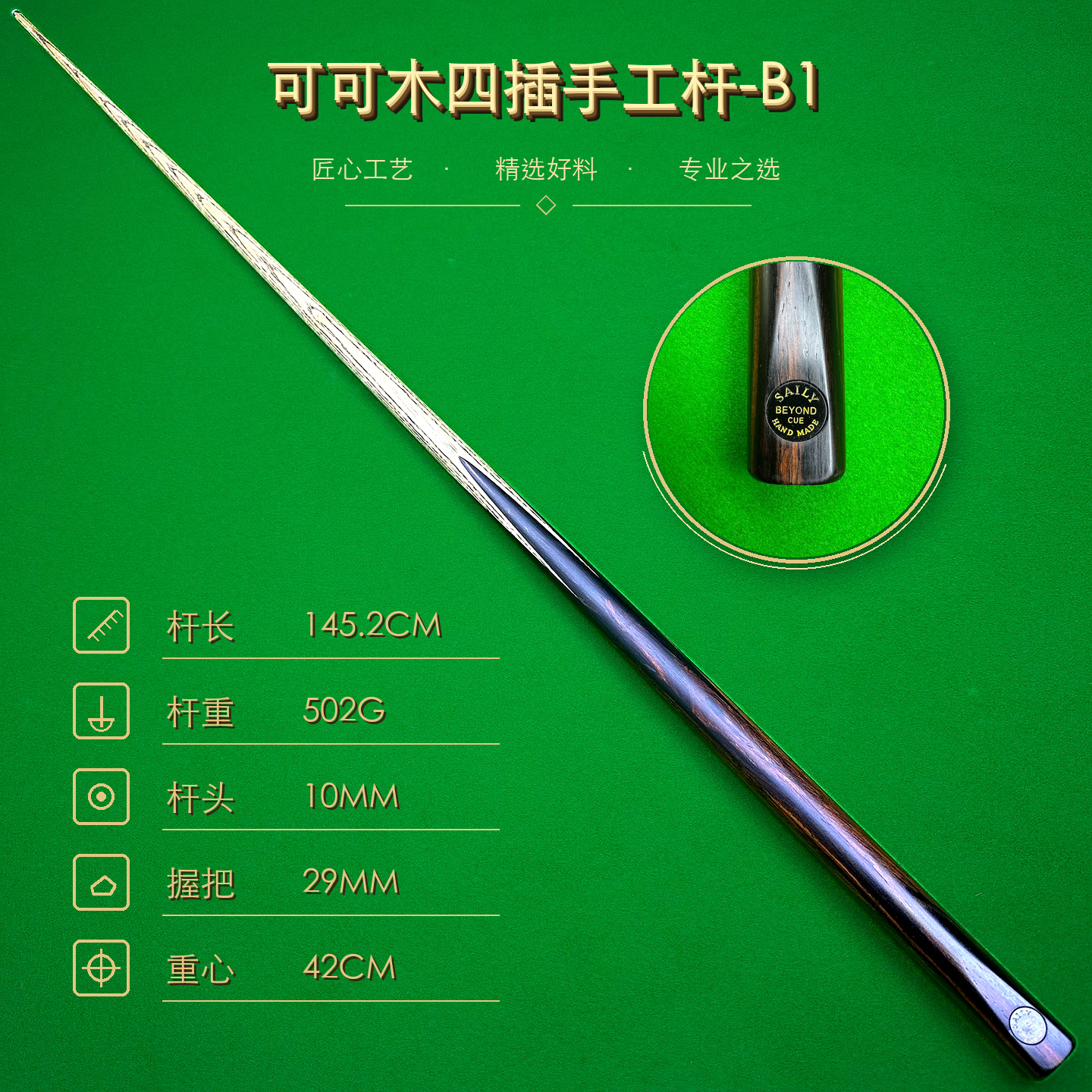
Browse the SAILY CUE English cue catalogue to see real individual cue photographs and recorded specifications. Those records are useful examples of identifying the exact cue before making storage, case-fit or maintenance decisions.
Assembled snooker cue storage FAQ
Can I leave a jointed snooker cue assembled between sessions?
Only when the complete cue has clean, stable, full-length support in a suitable indoor location and cannot roll, fall, bend against a tight support or be struck. If the storage system was designed for separated sections, use it as intended instead of forcing the assembled cue to fit.
Is a cue case suitable for storing an assembled cue?
Many jointed-cue cases are designed around separate sections, so check the actual internal length, supports, closures and maker instructions. A case that protects two sections does not automatically support the same cue at full assembled length.
Should I loosen the joint before storing the cue?
Do not leave a joint partly engaged. Either keep a confirmed assembled setup properly supported or separate the sections fully by hand, inspect the joint and store each section in its intended compartment. Stop if the joint feels unusually tight, loose or damaged.
Will storing a cue assembled make it warp?
Storage position alone does not let you predict a specific outcome. What you can control is support, impact risk, pressure, moisture exposure, heat sources and joint condition. Inspect the exact cue rather than relying on a universal guarantee.
SAILY CUE STORAGE CHECK
Match the support to the exact cue
Review real cue records and case options, then confirm the full assembled length or separated-section fit before storage.