
SNOOKER CUE · LISTING TERMS
What Is a High-Splice Snooker Cue?
Treat “high-splice” as one documented construction label, then verify the exact cue, photographs and measured record before you compare or buy.
Short answer: “high-splice” is a construction description used in the names of specific SAILY CUE catalogue products. It should be read beside the cue’s exact reference, current real photographs, separately stated material and individual length, weight, tip, butt and balance records. The phrase alone does not prove a manufacturing method beyond the documented label, wood origin, quality, rarity, value, feel or playing performance.
Start with what the listing actually says
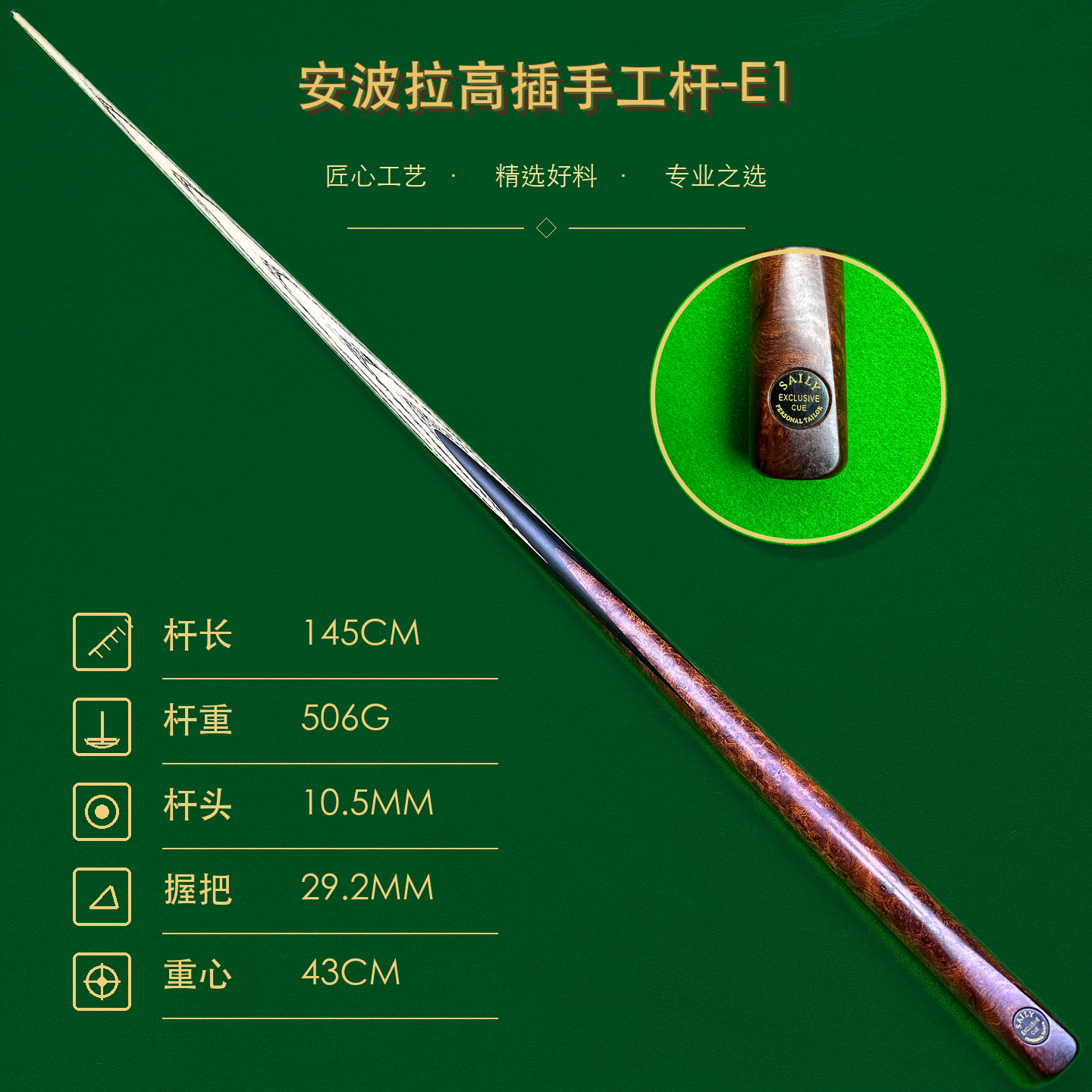
Online cue terminology becomes confusing when a product title combines material, construction, series and identity in one line. “Amboyna High-Splice Handmade Cue E1,” for example, contains several different fields. Amboyna is the material wording in that product record, High-Splice is part of the construction or series description, Handmade appears in the catalogue naming, and E1 is the individual reference.
The reliable conclusion is narrow: the SAILY CUE listing uses “high-splice” for that cue. Do not turn the phrase into an unsupported diagram of hidden construction, a claim about how much work was involved or a prediction of how the cue plays. If a detail is important and is not stated, ask for confirmation.
The related four-splice cue guide applies the same reading method to a different listing term. Neither phrase should be treated as a universal grade or a shortcut around inspecting the exact product.
Separate construction, material, series and measurements
Before comparing high-splice cues, copy the listing into separate fields. This prevents an attractive name from doing work that belongs to photographs and measurements.
The snooker cue series-label guide explains why a family name should remain separate from the exact reference. The cue wood-types guide keeps material names separate from construction and performance claims.
Compare three documented high-splice examples
The Amboyna High-Splice Handmade Cue E1 record lists Amboyna as the material wording, a 145 cm length, 506 g weight, 10.5 mm tip, 29.2 mm butt and 43 cm balance point. These figures describe that individual catalogue record; they are not target values for every high-splice cue.
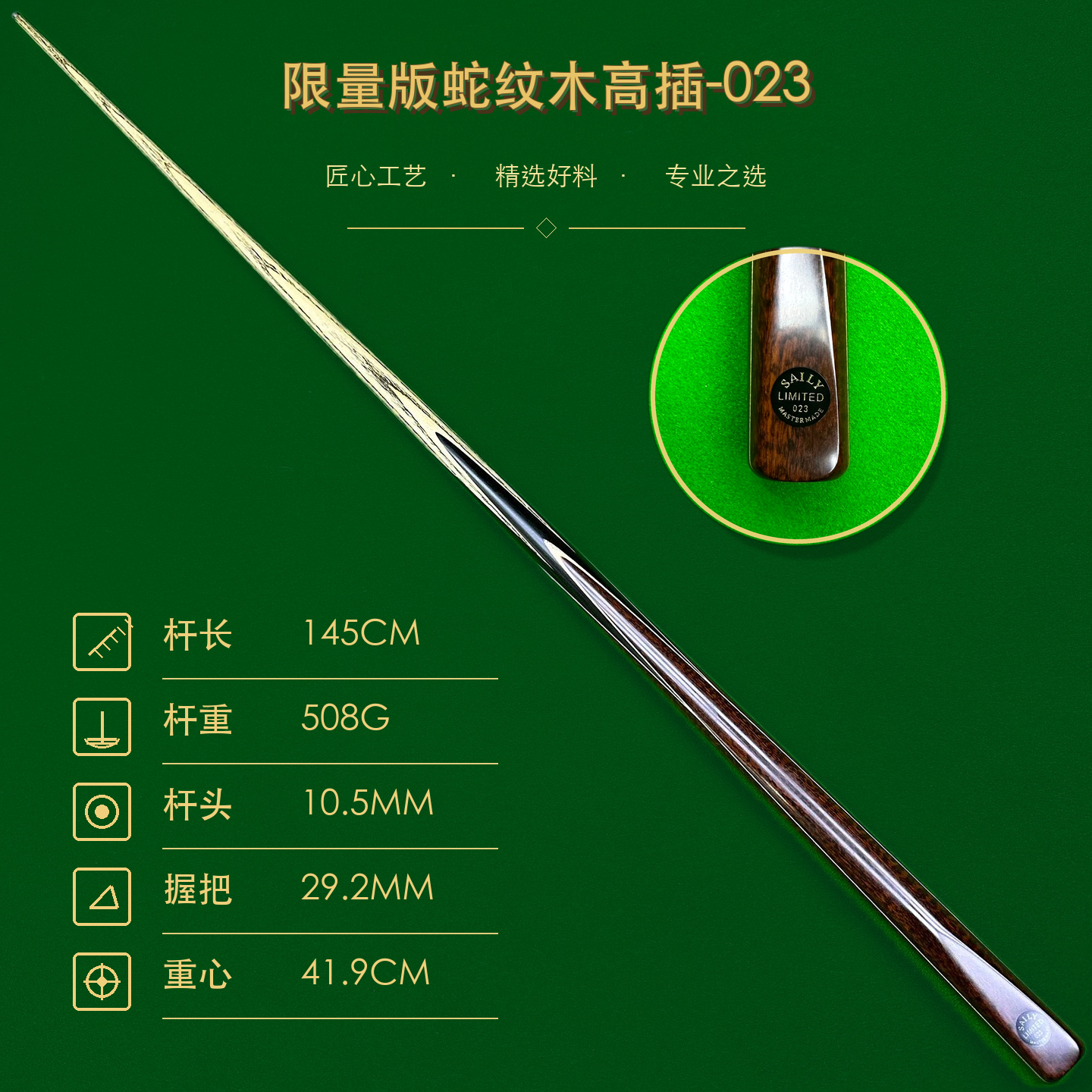
The Limited Snakewood High-Splice Cue 023 belongs to the Limited Series and lists Snakewood, 145 cm, 508 g, a 10.5 mm tip, 29.2 mm butt and 41.9 cm balance point. “Limited” should not be converted into an invented production total, resale value or rarity claim.
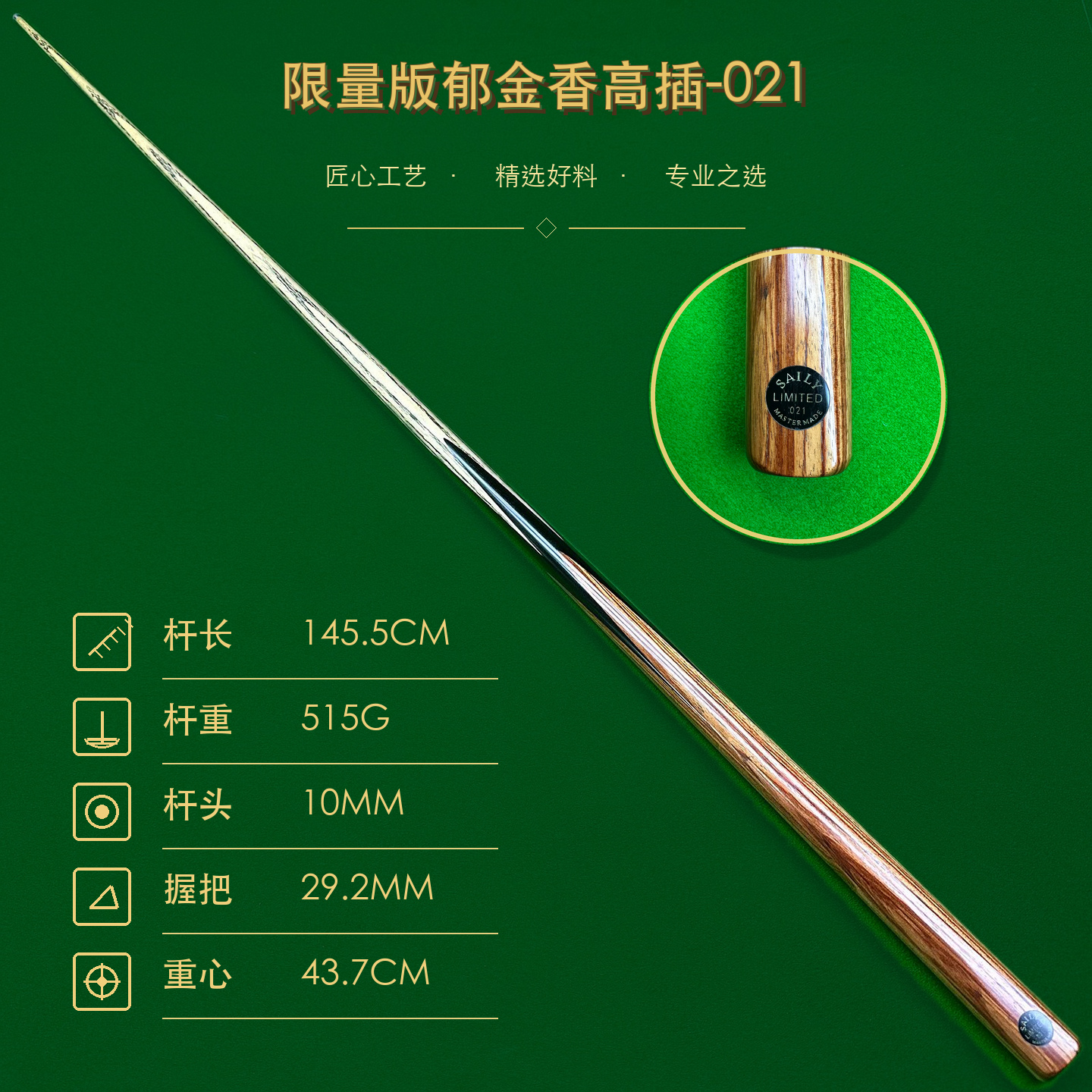
The Limited Tulipwood High-Splice Cue 021 record lists Tulipwood, 145.5 cm, 515 g, a 10 mm tip, 29.2 mm butt and 43.7 cm balance point. The numbers differ among these products because they are individual cues. They do not create a quality ranking among materials or prove what another high-splice cue will measure.
Use photographs to identify the exact cue, not to fill every gap
Check the full-length view and detail photographs against the product name and code. Look for a consistent cue across the gallery, clear views of the shaft, butt, tip, ferrule and joint where applicable, and enough resolution to ask about visible condition. Save the exact page and the date you reviewed it.
Photographs can show the visible design and help confirm identity. They cannot prove internal construction, material origin, straightness, durability, playing feel or future performance. Lighting, angle and image processing can also change the apparent colour and contrast of wood.
If a seller uses high-splice but does not provide a current product reference or real photographs, ask for them. A broad label without an identifiable physical cue is not enough for a careful online comparison.
Ask the questions the label cannot answer
Confirm whether the photographs show the exact cue currently available. Ask how each measurement was taken and whether the stated balance point uses the butt as its reference. Verify the current condition, configuration, included items, availability, currency, shipping scope and written order terms.
Read the snooker cue specifications guide before comparing measurements across shops. A 10 mm tip beside a 10.5 mm tip, or a 41.9 cm balance point beside 43.7 cm, is meaningful only when both sellers use clear and consistent methods.
Do not ask the construction label to choose the cue for you. Fit depends on the exact cue and player: complete length, weight, balance, tip, butt, cue format, normal bridge and personal comfort all belong in the decision. Browse the SAILY CUE English cue catalogue to compare real records on equal terms.
High-splice snooker cue FAQ
What does high-splice mean in a snooker cue listing?
At SAILY CUE, high-splice is a construction description used in the names of specific catalogue products. Read it with the exact product reference, photographs, separately stated material and measured specifications.
Is a high-splice cue automatically better than a four-splice cue?
No. Neither label is a quality score or performance guarantee. Compare the exact cues, their current records, condition, fit and listed measurements instead of ranking the terms.
Does high-splice identify the wood used in the cue?
No. SAILY CUE product records state material wording separately, such as Amboyna, Snakewood or Tulipwood. The construction label should not replace that field.
What should I ask before ordering a high-splice cue?
Confirm the exact reference, current real photographs, listed material, length, weight, tip, butt, balance, availability and terms. Ask directly about any construction detail that the listing does not document.
SAILY CUE COLLECTION
Verify the exact high-splice cue
Review real photographs, individual references and measured product records before asking any remaining construction question.