
SNOOKER CUE · LISTING TERMS
What Is a Four-Splice Snooker Cue? How to Read the Listing
Treat “four-splice” as one documented label in a cue record, then check the exact product, specifications and photographs before drawing conclusions.
Short answer: “four-splice” is a label used in the names of some SAILY CUE products. It should be read alongside the separately stated material, product reference, photographs, measurements, availability and terms. The label alone does not establish wood origin, construction process, quality, rarity, value, feel or playing performance.
What “four-splice” can tell you—and what it cannot
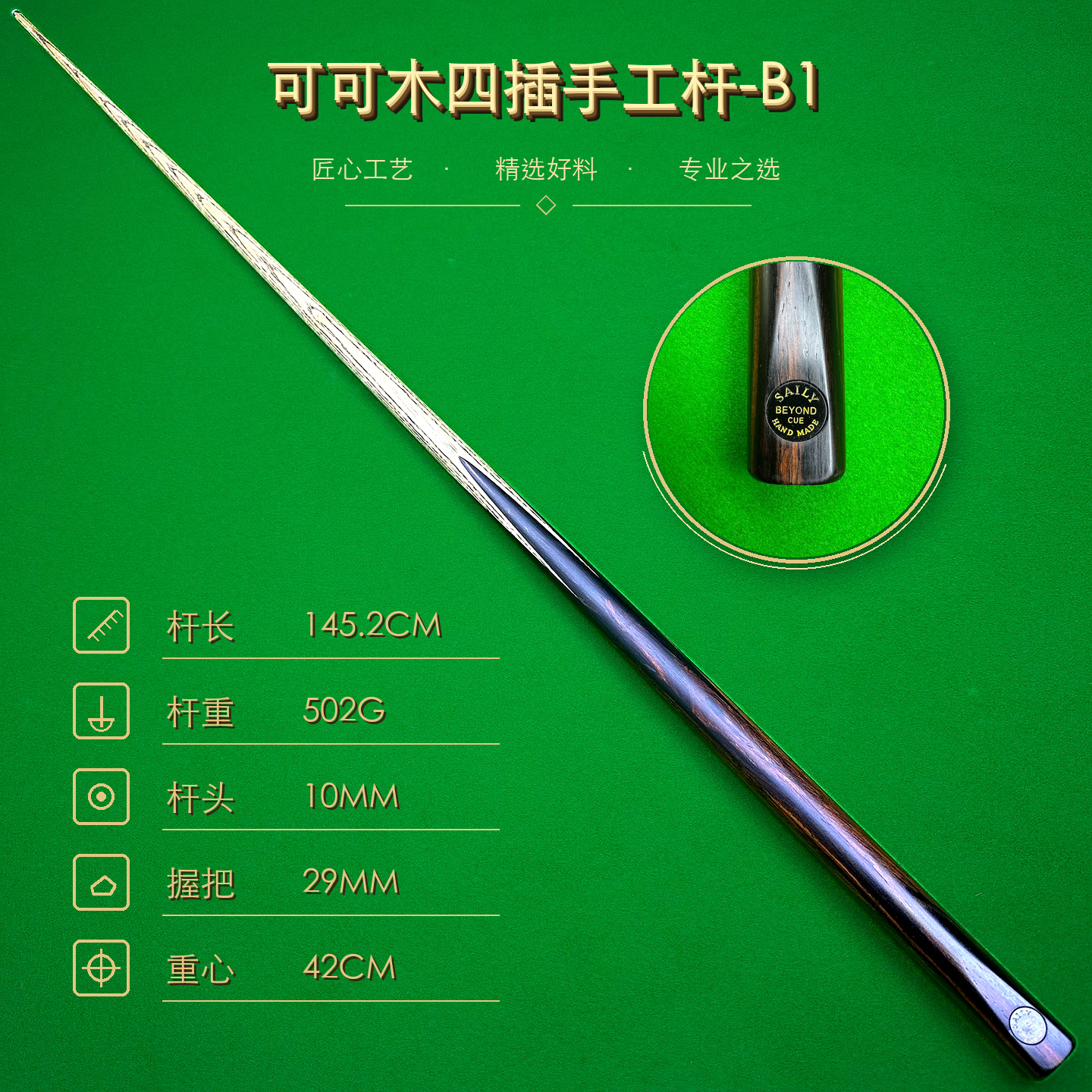
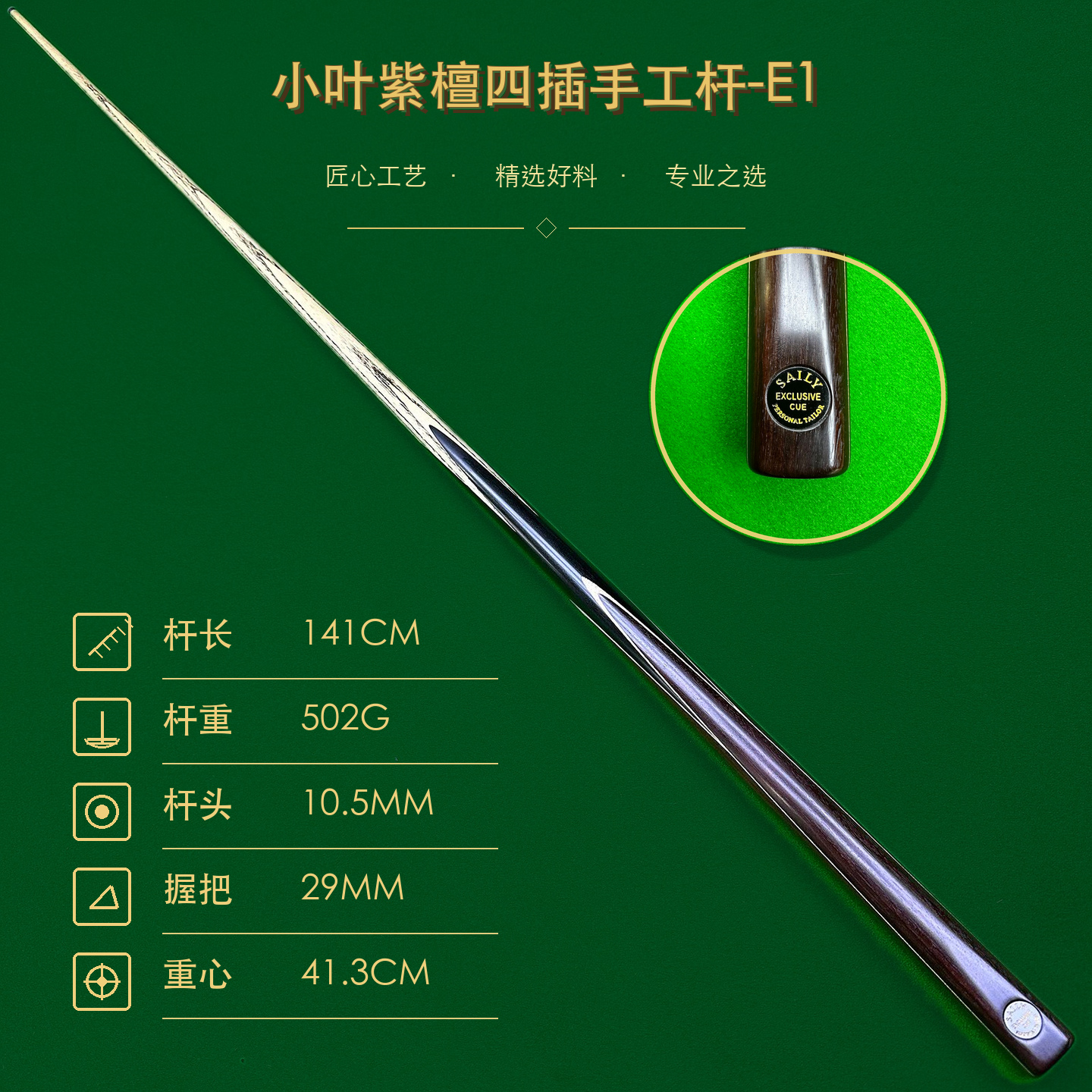
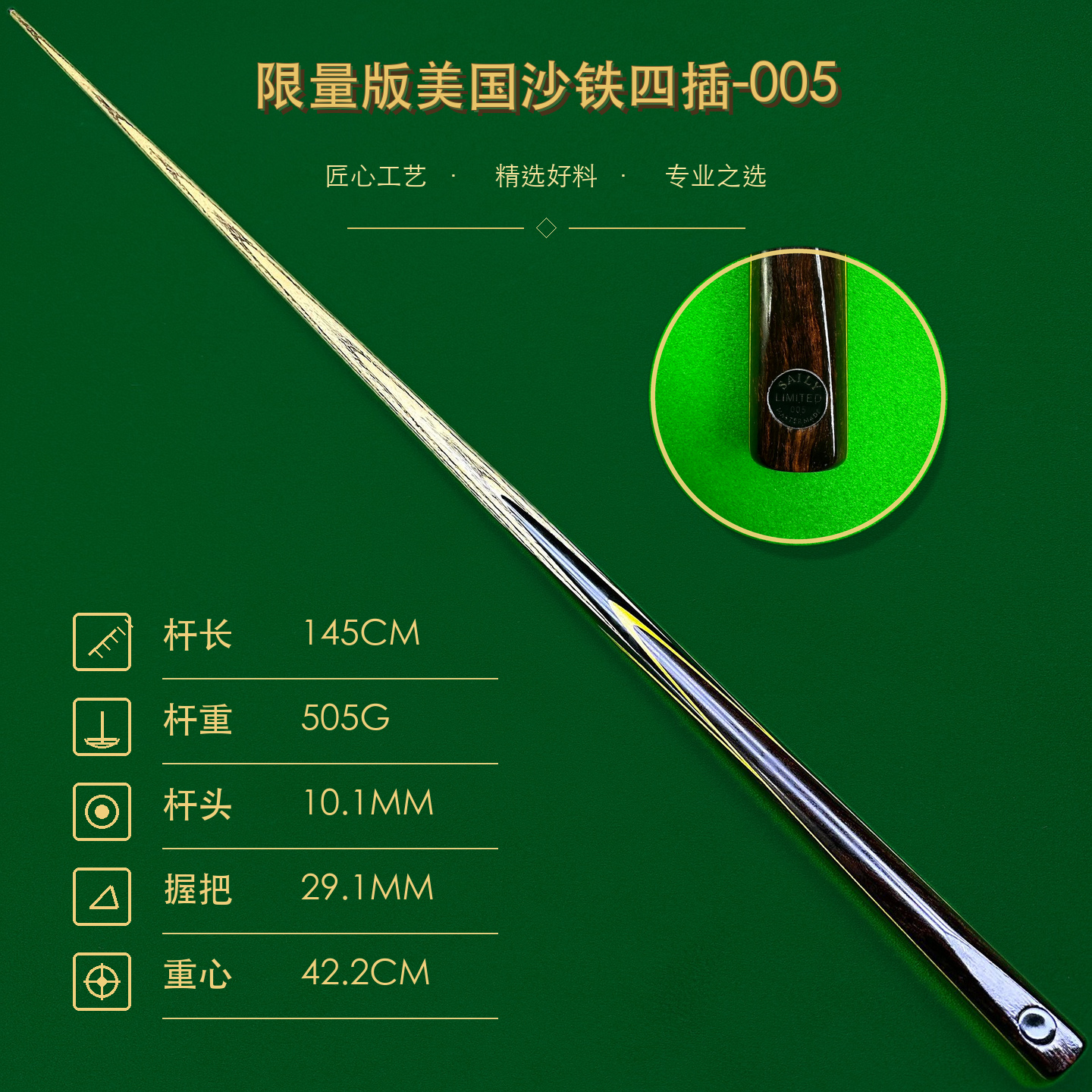
When you search for a four-splice snooker cue, the phrase may appear in a product title. On the SAILY CUE catalogue, it is part of the documented name for specific cues, including the Cocobolo Four-Splice Handmade Cue B1, the Red Sandalwood Four-Splice Handmade Cue E1 and the Limited American Desert Ironwood Four-Splice Cue 005.
That naming field helps identify which listing you are viewing. It does not replace the rest of the product record. “Four-splice” is not a wood species, a measurement or a rating. It also should not be turned into an unsupported explanation of how a cue was made. If a listing does not state a detail, the responsible answer is to ask for confirmation.
Keep terminology separate. The product’s material field identifies the material wording used in the record; the series field identifies the catalogue family; the dimensions describe the individual cue. The snooker cue wood-types guide and series-label guide explain those other fields without treating names as performance promises.
Read a four-splice cue as an exact product record
Start with the product reference and the current photographs. A cue title can be similar to another title, while the individual record may have different measurements, availability or material wording. Save the exact page you are considering, including its reference and the date you checked it.
Use one unit and reference at a time when comparing records. The snooker cue specifications guide covers how to read these fields. A four-splice label may help you find a style of listing, but the measurable fields are what let you identify the specific cue and ask a precise question.
Compare documented examples without inventing a ranking
The catalogue gives useful examples of how the label sits beside other fields. The Cocobolo B1 record lists 145.2 cm length, 502 g weight, a 10 mm tip, 29 mm butt and 42 cm balance. The Red Sandalwood E1 record lists 141 cm, 502 g, a 10.5 mm tip, 29 mm butt and 41.3 cm balance. These are individual listed records, not a contest between four-splice cues.
The Limited American Desert Ironwood 005 record lists 145 cm length, 505 g weight, a 10.1 mm tip, 29.1 mm butt and 42.2 cm balance. Its product name includes “four-splice,” “limited” and the material wording, but those words should remain separate fields. They do not, by themselves, prove rarity, value or a playing advantage.
Before ordering, compare the configuration with your normal setup and check whether the exact listing is available for inquiry. If you need information about an unstated construction detail, ask SAILY CUE directly. Do not substitute a generic internet definition for evidence about one particular cue.
Questions worth asking before you buy
Is the title describing the exact cue?
Confirm the product reference, images and record match. A descriptive phrase without an exact identity is not enough for an online purchase.
Which fields are measured and which are labels?
Length, weight, tip, butt and balance are listed specification fields. “Four-splice,” material and series are naming or catalogue fields. Keep them separate in your notes.
What does the listing leave unanswered?
Ask about any detail you need but cannot verify from the page. This is safer than assuming that a shared term guarantees a shared process, finish or playing feel.
Once you have checked the exact record, you can browse the full SAILY CUE English cue catalogue and compare documented products on equal terms.
Four-splice snooker cue FAQ
Does “four-splice” identify the wood used in a snooker cue?
No. At SAILY CUE, four-splice appears as part of some product names, while the material is listed separately. Read the material field, product reference and photographs as separate evidence rather than treating the splice label as a wood name.
Does a four-splice label prove that a cue is better?
No. It is a listing or construction label, not a quality score, rarity claim or performance guarantee. Compare the exact cue’s documented condition, configuration and measurements instead.
Which SAILY CUE products use “four-splice” in the name?
The English catalogue currently includes the Cocobolo Four-Splice Handmade Cue B1, Red Sandalwood Four-Splice Handmade Cue E1 and Limited American Desert Ironwood Four-Splice Cue 005. Their individual product records contain the relevant listed fields.
What should I check before ordering a four-splice cue?
Check the exact product reference, real photographs, material field, length, weight, tip, butt, balance, availability and the seller’s current terms. If a field or construction detail is not documented, ask before ordering rather than filling the gap with an assumption.
SAILY CUE COLLECTION
Start with the exact cue record
Review real photographs, product references and listed specifications before asking any remaining construction question.