
SNOOKER CUE · SHAFT MEASUREMENT
How to Measure Snooker Cue Shaft Diameter
Turn a vague “thin” or “thick” shaft description into a repeatable, clearly labelled measurement.
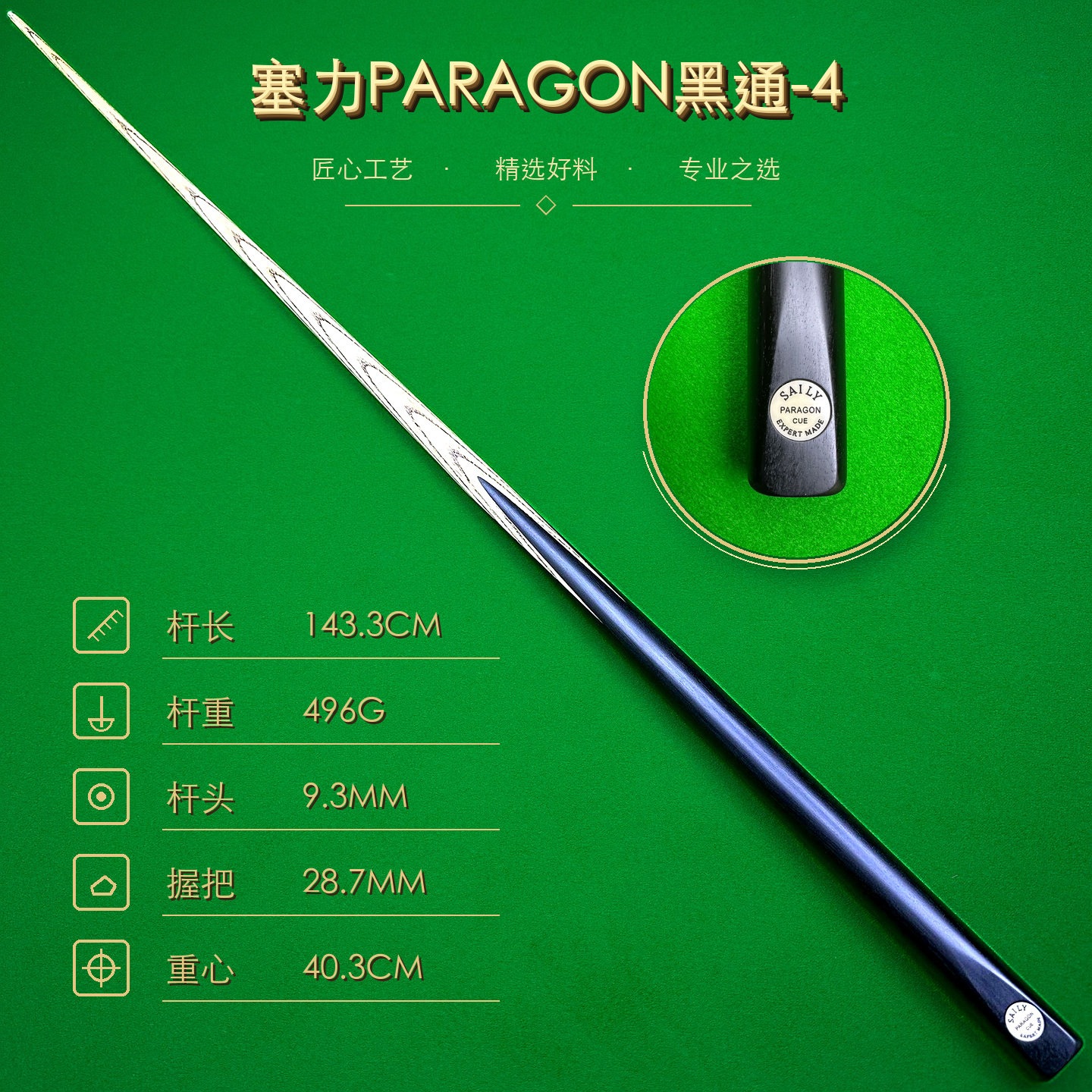
Short answer: support the clean, dry cue on a stable surface, choose a named point behind the tip and ferrule, and close smooth caliper jaws with only enough contact to read the diameter. Repeat the reading after rotating the cue, then record the value, unit, point and tool together.
First define what “shaft diameter” means
A cue shaft tapers, so there is no single diameter that describes every point between the tip and joint or butt. A seller who writes only “shaft: 10 mm” may mean the installed tip, the ferrule, the timber immediately behind the ferrule or another point farther down the shaft. Those are different measurements.
For a useful comparison, name one location behind the installed tip and ferrule. You might record a fixed distance from the tip face, but the wording must make clear whether that distance includes the tip and ferrule. The same point should be used on every cue in the comparison.
Shaft diameter is also different from snooker cue tip size. Tip size describes the installed tip at its stated measuring point. Do not copy a listed tip diameter into a shaft field or assume that the shaft immediately behind the ferrule has the same number.
Choose a tool that will not mark the cue
A clean caliper with smooth jaws is the clearest tool for a diameter record. Inspect the jaws for grit, burrs or sharp edges before they touch the cue. If the tool is unfamiliar or difficult to control, ask an experienced cue technician to measure instead of practising on a finished cue.
Do not squeeze. Close the jaws only until they make light contact with the shaft. Excess pressure can give a misleading reading and risks marking a finish. Avoid pliers, rough workshop clamps and any tool with serrated faces. A soft cloth can support the cue, but do not trap fabric between the jaws and shaft because that changes the reading.
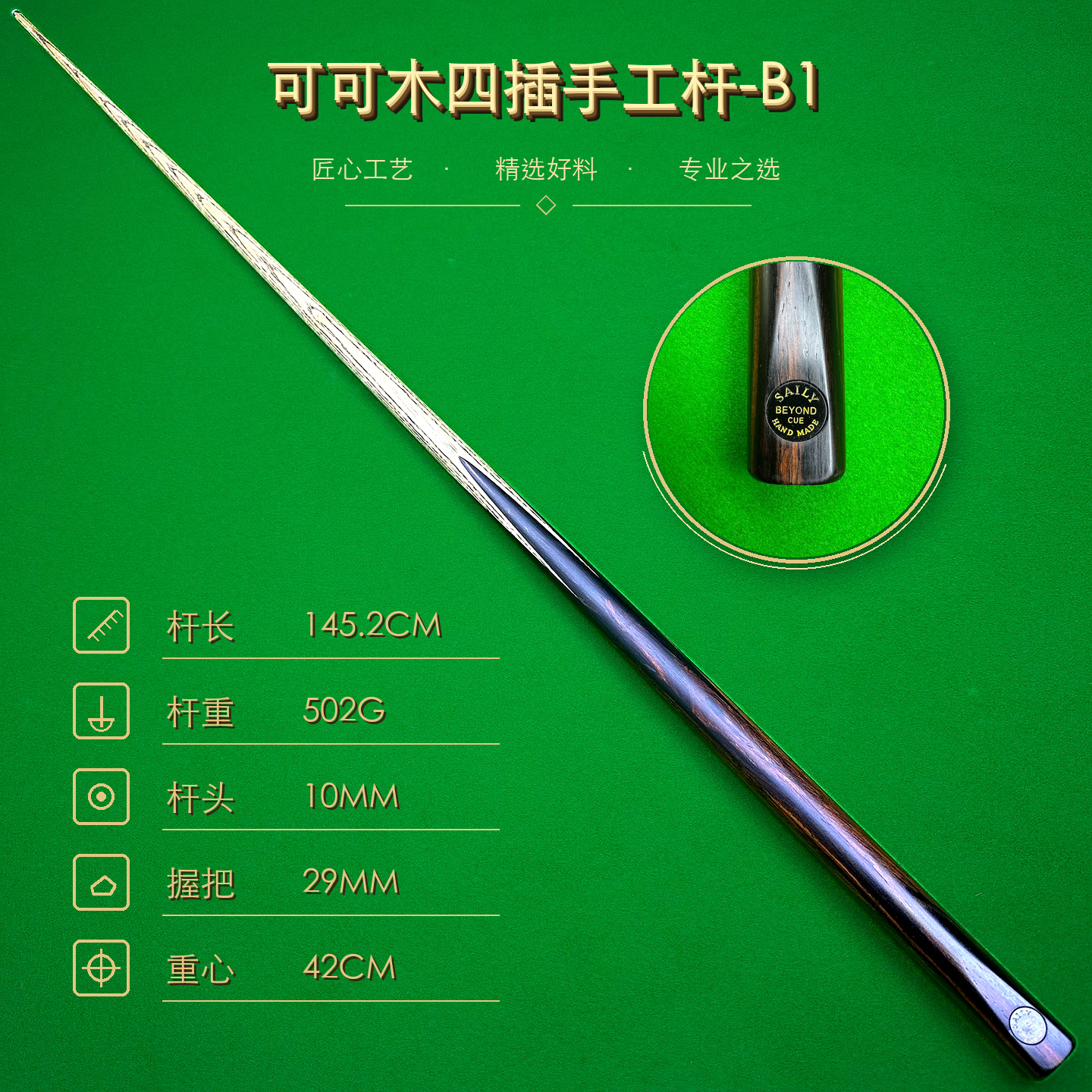
A ruler can help explain a rough visual scale, but it is not a precise diameter tool. If a seller can provide only an estimate, label it as an estimate rather than adding a false decimal place.
Measure the shaft diameter step by step
- Identify the exact cue.Record its product name, individual reference or another identifier before taking any dimensions.
- Remove loose dust.Use a clean, dry, soft cloth. Do not apply a new cleaner, abrasive or polish just to prepare for measuring.
- Support the cue.Place it where it cannot roll or fall. Keep the tip and shaft clear of hard edges.
- Name the measuring point.Mark the distance in your notes, not on the cue. State how the distance was referenced.
- Use light contact.Hold the caliper square to the shaft and close smooth jaws gently until both sides touch.
- Read the original unit.Record millimetres directly. If you also need inches, keep the millimetre figure as the original record.
- Rotate and repeat.Release the jaws, rotate the cue and take another light reading at the same point.
- Stop if anything feels unsafe.Do not force the tool around a tight display, joint or decorative area.
Two readings may differ slightly because of tool resolution, hand position or the physical shape at that point. Do not press harder to make the numbers agree. Check that the jaws are square, repeat gently and report the tool's sensible precision rather than claiming more certainty than the process supports.
Write a specification another person can reproduce
A strong record includes the exact cue, the measuring location, the original unit, the tool and whether the number was measured or estimated. For example, the structure can read: shaft diameter measured with smooth-jaw digital calipers at the stated point behind the tip assembly. Add the actual location and value from the physical cue; do not reuse a number from another item in the same series.
If you convert millimetres to inches, label the conversion and choose reasonable rounding. The converted value should not appear more precise than the original. Keep screenshots or written confirmation when the measurement is part of an online order.
SAILY CUE's English cue collection connects real photographs, individual references and listed measurements to physical cues. Shaft diameter is not currently one of the standard public fields, so overseas buyers should ask for this additional measurement on the exact cue when it matters to their comparison.
Compare shaft measurements without overreading them
Use only records taken at equivalent points. A smaller number close to the tip cannot be fairly compared with a larger number taken farther down a tapered shaft. If two sellers use different references, ask each for the missing method before deciding that one cue is thinner.
Diameter is one physical fact, not a quality score. Taper, tip, ferrule, complete length, weight, balance point, condition and the player's preference all contribute to how two cues differ. A smaller or larger shaft does not automatically make a cue more accurate, better made or more suitable.
Butt diameter is another separate reference; see the cue butt-diameter guide for that measuring point. Before an online order, combine each measurement with the exact cue identity, current photographs, condition and commercial terms in the snooker cue buying checklist.
If a listing does not state the shaft diameter or measuring point, request it from the seller. Photographs and a tip-size number cannot supply a precise shaft measurement.
Snooker cue shaft-diameter FAQ
Where should I measure a snooker cue shaft diameter?
Choose and record one repeatable point behind the installed tip and ferrule rather than measuring the tip itself. The exact distance matters less than stating it clearly and using the same reference for every cue you compare.
Is shaft diameter the same as cue tip size?
No. Tip size describes the installed tip at its measuring point. Shaft diameter describes the cue shaft at a named location behind the tip and ferrule. Do not substitute one number for the other.
Can I measure a cue shaft with a ruler?
A ruler can support a rough visual estimate, but it is not suitable for a precise diameter record. A clean, smooth-jawed caliper used with very light contact is clearer. If you do not have the right tool, ask the seller or a cue technician for the measurement.
Does a smaller shaft diameter make a snooker cue better?
No. Diameter is one physical specification. Taper, tip, ferrule, length, weight, balance, condition and personal preference also matter, and no single measurement guarantees quality or playing performance.
SAILY CUE COLLECTION
Compare documented cue records
Review real product photographs, individual references and listed measurements, then request any missing shaft reference for the exact cue.